
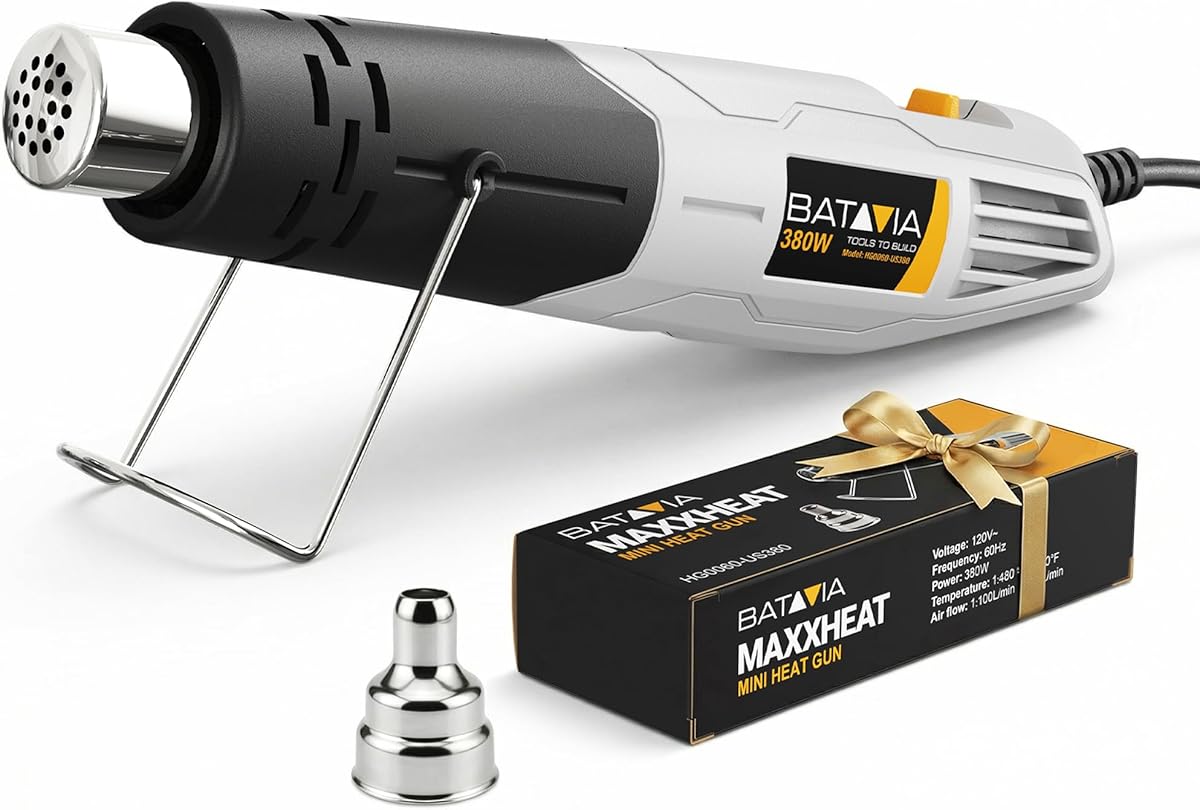
Choosing a Mini Heat Gun: Why Temperature Control and Safety Features Matter Most
When selecting a compact heat gun like the BATAVIA 380W model, focus on its dual-temperature settings (572°F/1022°F) and specific safety mechanisms. Unlike full-sized industrial tools, mini heat guns must balance sufficient heating power with precise control for delicate tasks like vinyl wrapping and shrink tubing. The inclusion of Uniform Heat Tech and dual protection fuses directly addresses common frustrations with hot spots and overheating in this category.
Key Considerations Before Buying
- Temperature range suitability: The 572°F setting is ideal for heat-sensitive crafts and vinyl, while 1022°F handles shrink tubing efficiently—verify your projects align with these specific ranges.
- Ergonomics and nozzle design: A lightweight mini gun should include a focused nozzle for targeted heating without damaging surrounding materials, crucial for detailed DIY work.
- Safety implementation: Overheat protection and dual fuses are non-negotiable for prolonged use; cheaper models often omit these, risking motor burnout or fire hazards.
What Our Analysts Recommend
Examine the heating element's distribution technology—true uniform heat prevents warping vinyl or uneven shrinkage. Quality mini guns feature robust thermal insulation around the handle to prevent heat transfer during extended use. Listen for consistent fan noise in reviews; erratic sounds often indicate poor motor quality.
Heat Guns Market Context
Market Overview
The mini heat gun market has expanded with DIY popularity, creating a divide between professional-grade compacts and underpowered hobbyist tools. Products like the BATAVIA 380W occupy a middle ground, offering more wattage than basic 200W craft guns but less bulk than 500W+ industrial models. This segment prioritizes versatility across crafts, electronics repair, and automotive detailing applications.
Common Issues
Many budget mini guns suffer from inconsistent airflow, creating hot spots that damage materials rather than evenly heating them. Others lack proper thermal cutoff switches, allowing motors to overheat during continuous use. The nozzle attachment point is another frequent failure area where plastic components melt under sustained high temperatures.
Quality Indicators
Superior mini heat guns feature ceramic heating elements rather than coiled wire for more stable temperature output. Look for dual-layer housing with heat-resistant composites near the nozzle. Genuine quality tools maintain temperature consistency even after 15-20 minutes of continuous operation, a key differentiator from disposable models.
Review Authenticity Insights
Grade B Interpretation
A Grade B authenticity rating with 15% estimated fake reviews indicates generally reliable feedback with some inflated positivity. For this BATAVIA model, the adjusted 4.50/5 rating (down from 4.89/5) suggests genuine satisfaction but with potential review manipulation around specific features like the Uniform Heat Tech claims.
Trust Recommendation
Focus on verified purchase reviews discussing specific applications like vinyl wrap removal or electronics shrink tubing—these contain actionable details about temperature accuracy and nozzle effectiveness. Be skeptical of reviews mentioning only 'great product' without describing actual use cases.
Tips for Reading Reviews
Prioritize reviews that mention both temperature settings separately, as this indicates actual testing. Look for comments about the 380W power sufficiency for your intended tasks—underpowered guns struggle with thicker materials. Note any mentions of the dual protection fuses activating during use, which reveals real-world safety testing.
Expert Perspective
The BATAVIA 380W presents a compelling option for serious DIYers needing precise temperature control without industrial bulk. Its 4.50 adjusted rating reflects genuine appreciation for the dual-temperature functionality and safety features. The 380W power rating is particularly noteworthy—it provides sufficient heat for most hobbyist applications while remaining manageable for detailed work. The inclusion of both overheat protection and dual fuses demonstrates thoughtful engineering uncommon in this price segment.
Purchase Considerations
Evaluate whether the fixed 572°F/1022°F settings match your most frequent projects, as some competitors offer adjustable dials. Consider the nozzle's compatibility with specialized attachments if you plan advanced applications. Weigh the compact size against your hand comfort during extended sessions—some users prefer larger handles for better control.
Comparing Alternatives
Compare the BATAVIA's fixed temperature settings against variable-temperature models if you work with diverse materials requiring intermediate heat levels.


