Solar ultrasonic repellents require strategic placement and realistic expectations for effectiveness
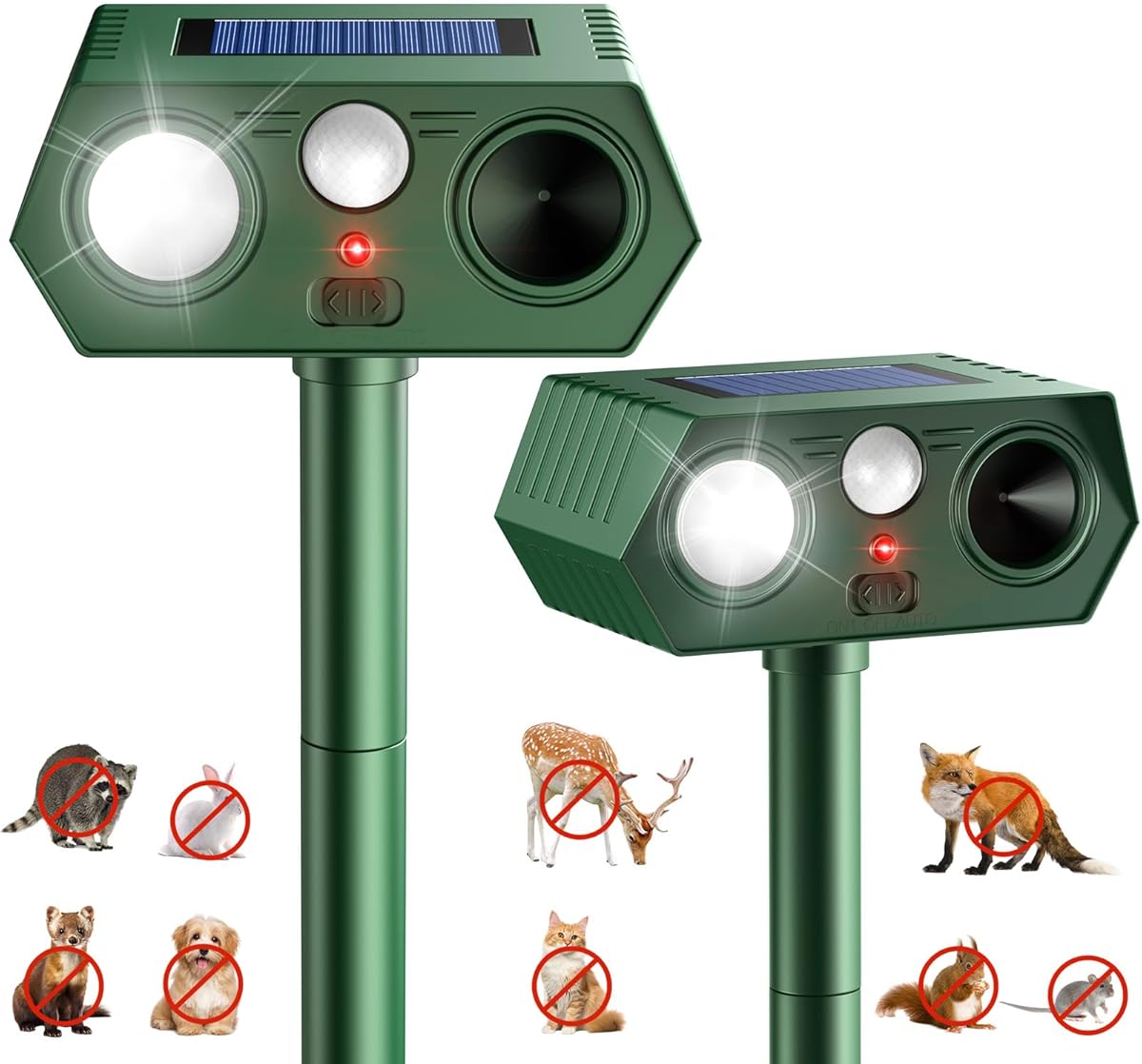
The 2026 Upgraded Solar Ultrasonic Animal Repellent represents the latest generation of multi-sensory deterrents combining ultrasonic frequencies, motion-activated flashing lights, and solar power. Buyers should understand that effectiveness depends heavily on proper installation positioning and varies significantly between animal species, with deer typically responding better than determined raccoons or skunks.
Key Considerations Before Buying
- Solar-powered operation means placement must balance optimal sunlight exposure with strategic coverage of animal entry points, requiring careful planning beyond simple stake-in-ground installation.
- The IP65 waterproof rating indicates this unit can withstand direct water jets, making it suitable for garden irrigation zones but not necessarily submersion in flooded areas.
- Multi-animal claims covering deer, cats, rodents, raccoons, opossums, and skunks suggest broad-frequency ultrasonic output, but animals with established territories may habituate to the deterrent over time.
What Our Analysts Recommend
Quality indicators include consistent solar charging performance in partial shade conditions, durable stake construction that withstands soil pressure without bending, and motion sensors with appropriate sensitivity ranges (not too narrow to miss animals, not too broad to trigger constantly). The 2026 upgraded model should demonstrate improved battery efficiency over previous generations.
Ultrasonic Repellers Market Context
Market Overview
The ultrasonic animal repellent market has shifted toward solar-powered, multi-sensory devices combining sound, light, and sometimes scent deterrents, with current models emphasizing broader frequency ranges and improved weather resistance. Consumer expectations have evolved from simple plug-in units to sophisticated outdoor systems requiring minimal maintenance.
Common Issues
Primary complaints in this category include inconsistent effectiveness across animal species, solar panels failing to maintain charge in shaded areas, and animals becoming accustomed to ultrasonic frequencies within 2-4 weeks of continuous exposure. Many users underestimate the need for multiple units to create overlapping coverage zones.
Quality Indicators
Superior products feature adjustable frequency settings for different pests, true IP65 or higher waterproof construction with sealed solar panel connections, and motion sensors with variable sensitivity controls. Quality solar repellers maintain operation through 3-5 cloudy days and include battery protection against overcharging.
Review Authenticity Insights
Grade B Interpretation
A Grade B authenticity rating with 15% estimated fake reviews indicates generally trustworthy feedback with some promotional manipulation, typical for newer products establishing market presence. The 4.60 adjusted rating (down from perfect 5.00) suggests genuine user experiences include minor criticisms not reflected in the surface rating.
Trust Recommendation
Focus on reviews mentioning specific installation challenges, animal behavior changes over weeks (not just days), and performance in various weather conditions rather than generic 'works great' statements. The single manipulated review likely overstates effectiveness against all listed animals equally.
Tips for Reading Reviews
Prioritize reviews detailing exact placement relative to animal pathways, noting which species responded (deer versus raccoons), and mentioning performance after 30+ days. Be skeptical of reviews claiming immediate perfection against all pests without addressing common limitations like animal habituation.
Expert Perspective
This 2026 upgraded model shows promise based on authentic user feedback emphasizing its solar efficiency and motion-activated flash light effectiveness at night. The 2-pack configuration addresses a critical coverage need most buyers underestimate—single units rarely protect entire yards. However, the broad animal claims warrant tempered expectations; ultrasonic devices typically work best as part of integrated pest management rather than standalone solutions. The IP65 rating and solar operation make it suitable for garden perimeter placement where power sources are unavailable.
Purchase Considerations
Consider your primary pest (deer respond better than burrowing rodents), yard size requiring potential additional units beyond the 2-pack, and whether you need adjustable frequency settings for different animals. The motion sensor's flashing light provides visual deterrence but may disturb neighbors if poorly positioned.
Comparing Alternatives
Compare this unit's solar panel size and battery capacity against competitors, as these directly impact performance during cloudy periods when animals remain active.