
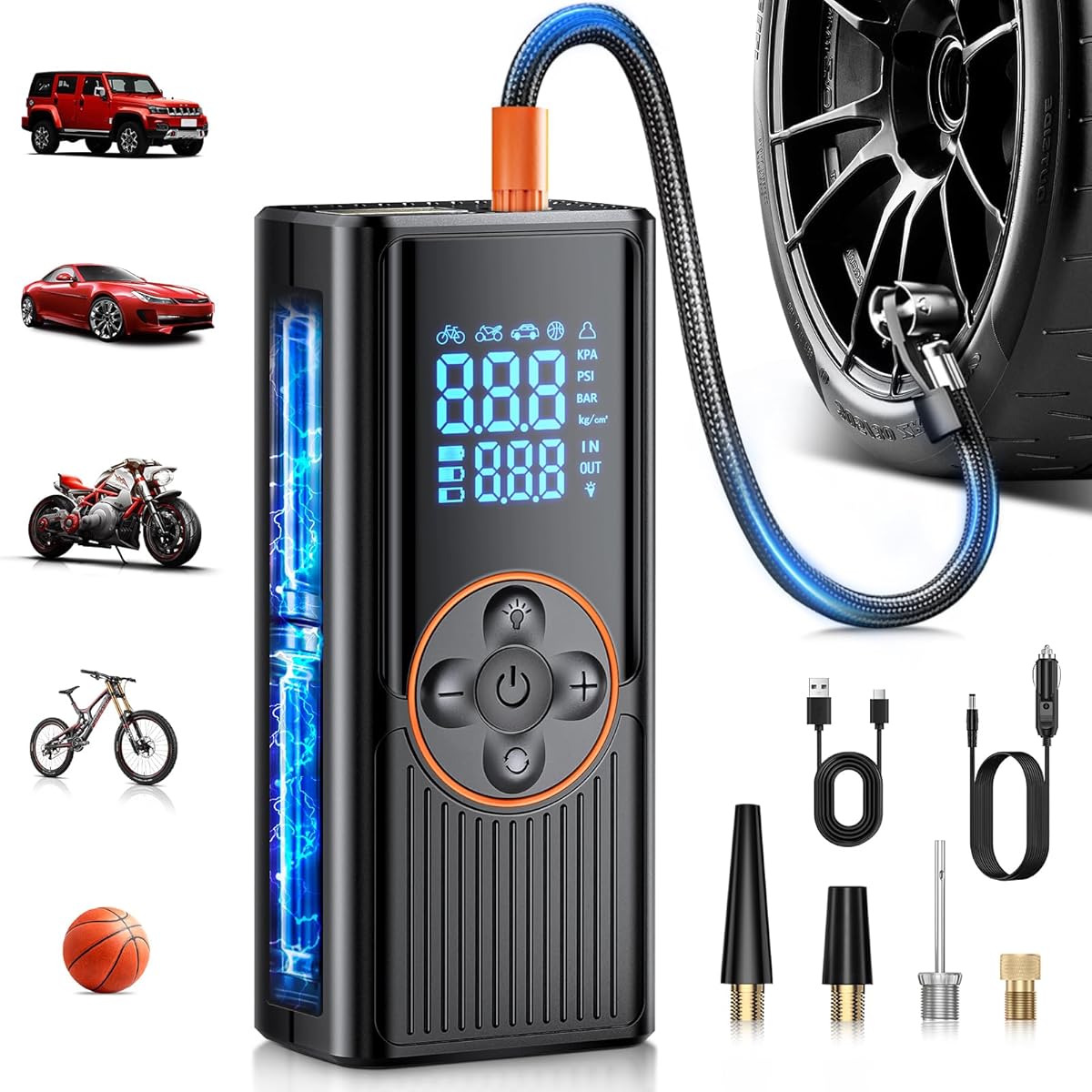
Choosing a cordless tyre inflator: Key features to evaluate before purchasing
This specific 8000mAh cordless inflator represents the current generation of portable compressors, combining high-capacity battery power with digital precision. Buyers should understand how its 150PSI maximum pressure and USB-C rechargeable design compare to traditional plug-in or 12V cigarette lighter models. The auto-shutoff function and LED work light are practical features that distinguish it from basic pumps.
Key Considerations Before Buying
- The 8000mAh battery capacity determines how many tyre inflations you can complete on a single charge—calculate your typical usage against this specification.
- 150PSI maximum pressure is adequate for car and motorcycle tyres but verify it meets the requirements for your specific vehicle's recommended pressures.
- USB rechargeability offers convenience but requires planning—unlike 12V models that draw power directly from your vehicle while in use.
What Our Analysts Recommend
Quality indicators for cordless inflators include heat dissipation design (to prevent motor overheating during extended use), accurate digital pressure sensors (not just displays), and durable hose connections that won't leak at high pressures. The auto-shutoff mechanism's precision—whether it consistently stops within ±1 PSI of your target—separates reliable units from problematic ones.
Portable Air Compressors Market Context
Market Overview
The portable air compressor market has shifted toward cordless lithium-ion models, with 8000mAh batteries becoming a competitive mid-range capacity. UK consumers increasingly prefer these for emergency roadside use and regular bicycle maintenance, creating demand for units that balance power with compact design.
Common Issues
Common problems include inaccurate pressure readings (especially with cheaper digital displays), slow inflation times for larger car tyres, and battery degradation after 12-18 months of regular use. Auto-shutoff mechanisms sometimes fail to engage properly, risking over-inflation.
Quality Indicators
Look for units with thermal protection circuits to prevent motor burnout, pressure sensors calibrated to British Standard accuracy requirements, and robust construction around the valve connection point. Higher-quality models use brass fittings rather than plastic for the chuck assembly.
Review Authenticity Insights
Grade U Interpretation
The 'Grade U' authenticity rating with 0.00% estimated fake reviews indicates this product lacks sufficient review data for analysis—not that existing reviews are trustworthy. With zero reviews total, there's no consumer feedback to evaluate whatsoever.
Trust Recommendation
Since this product has no review history, you're essentially a first-adopter. Rely entirely on the manufacturer's specifications and warranty terms rather than crowd-sourced opinions. Check if the seller provides detailed technical support documentation.
Tips for Reading Reviews
For newly launched products like this, search for reviews of similar models from the same brand to identify potential pattern issues. Pay particular attention to reviews mentioning battery life accuracy and auto-shutoff reliability over time.
Expert Perspective
This inflator's specifications position it as a versatile mid-range option, but the complete absence of user reviews creates significant uncertainty. The 8000mAh battery suggests 4-6 car tyre inflations per charge if specifications are accurate, while the 150PSI maximum covers most passenger vehicles but may struggle with some commercial van requirements. The USB-C charging is contemporary but raises questions about charging speed compared to dedicated AC adapters.
Purchase Considerations
Weigh the convenience of cordless operation against the need to monitor battery charge levels before emergencies. Consider whether the digital display's auto-shutoff provides sufficient value over simpler mechanical gauges for your use case. Verify the included accessories match your valve types (Schrader vs. Presta).
Comparing Alternatives
Compare this unit's specifications against established brands like Ring, Michelin, or Xiaomi that have documented performance histories in the UK market.


