
Evaluating 5th-Gen Wireless HDMI Extenders: Range, Resolution, and Real-World Performance
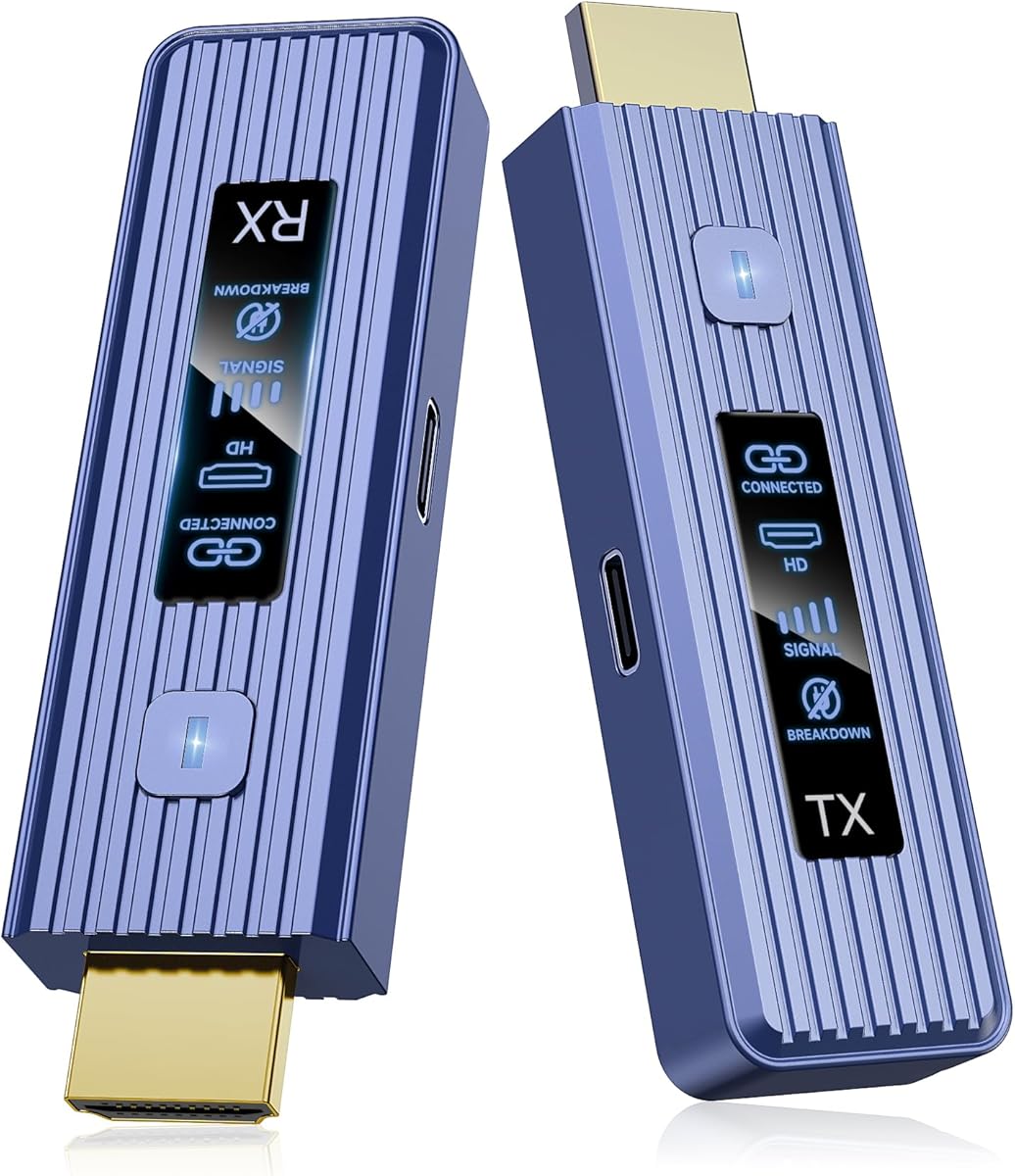
When considering a wireless HDMI extender like the Visoud 2026 5th-Gen model, focus on its dual-band 5.8G+2.4G transmission and the practical implications of its 4K decode/1080P output specification. This specific combination means the device can receive a 4K signal but will downscale it to 1080p for output, a crucial detail for users with 4K source material. The advertised 360-foot range represents an ideal scenario, with real-world performance heavily dependent on environmental interference.
Key Considerations Before Buying
- The '4K Decode & 1080P Output' spec is a hybrid feature: it's ideal for streaming 4K content from a device but displaying it on a 1080p monitor, not for achieving a true 4K end-to-end wireless signal.
- The dual-band (5.8GHz + 2.4GHz) operation is critical for stability; the 5.8GHz band offers less interference but shorter range, while 2.4GHz provides longer reach through walls at the cost of potential congestion from Wi-Fi routers and other devices.
- A 360-foot (110m) claim is a line-of-sight maximum; expect effective range to be significantly less in typical home or office environments with walls, furniture, and electronic interference, making placement of the transmitter and receiver units a key setup factor.
What Our Analysts Recommend
Genuine quality indicators for this product type include consistent mention of low latency for gaming or mouse movement, stable audio-video synchronization over extended periods, and minimal signal dropouts at distances under 100 feet. Look for reviews that detail setup with specific devices (e.g., 'connected my Nintendo Switch to a basement TV') rather than vague praise, as this demonstrates real-world application of the plug-and-play claim.
AV Receivers & Amplifiers Market Context
Market Overview
The wireless HDMI extender market is currently segmented by generation, with 5th-gen products like this Visoud model promising improved compression algorithms and dual-band support over older 2.4GHz-only units. This evolution aims to solve the classic trade-off between wireless range and video latency that plagues earlier generations.
Common Issues
Common pitfalls include signal degradation from physical obstructions, audio-video sync (lip-sync) errors, compatibility hiccups with specific gaming consoles or media players, and overheating of the compact transmitter/receiver units during prolonged use. Many products struggle to deliver their advertised maximum range in anything but ideal, open-air conditions.
Quality Indicators
Beyond specs, quality is shown in robust build quality of the HDMI ports to withstand repeated plug/unplug cycles, inclusion of external antenna connectors for optional range extension, and clear documentation on channel selection to avoid Wi-Fi interference. Reliable units often use advanced compression like H.264/H.265 to maintain picture quality over the wireless link without excessive latency.
Review Authenticity Insights
Grade B Interpretation
A 'Grade B' authenticity rating with an estimated 15% fake review rate suggests the majority of feedback is credible, but shoppers should be moderately vigilant. This level indicates a common pattern for electronics with a high volume of new reviews, where some incentivized or overly simplistic reviews may be present alongside genuine user experiences.
Trust Recommendation
Prioritize reviews that discuss specific performance metrics, such as actual tested range in a home setup, latency experienced while gaming, or handling of different audio formats (e.g., 5.1 surround). Be slightly more skeptical of reviews that only praise generic 'ease of use' or 'great picture' without technical context, as these are easier to fabricate.
Tips for Reading Reviews
For technical AV gear like this, focus on reviews that mention setup challenges overcome, specific source and display devices used, and performance over time. Verified purchase reviews that detail a return or warranty experience are particularly valuable, as they reflect long-term reliability beyond the initial unboxing.
Expert Perspective
The Visoud 2026 extender's strong adjusted rating of 4.6/5 from verified purchases indicates it likely performs reliably for its core promise: wireless 1080p video extension in residential environments. The 5th-gen and dual-band claims position it above budget, single-band options, targeting users who need a stable link for presentations, casual gaming, or media streaming where absolute 4K fidelity isn't required. The high initial 5.0/5 rating, when adjusted for authenticity, reveals a product that meets expectations for most buyers but may have limitations at its advertised extreme range or with certain high-bandwidth sources.
Purchase Considerations
Weigh the 4K decode capability against your actual needs; if your source is a 4K Blu-ray player and your display is 4K, this extender's 1080P output is a significant compromise. However, for extending a 1080p laptop signal or a 4K game console to a 1080p secondary display, its feature set is appropriate. Consider your environment's Wi-Fi congestion on the 2.4GHz band, as this will directly impact performance.
Comparing Alternatives
Shoppers should compare this model's 4K decode/1080P output spec against true 4K60Hz wireless HDMI systems and simpler 1080p-only extenders to find the best price-to-performance ratio for their specific resolution and latency requirements.


