Choosing the right thermal pad thickness and conductivity for your specific components
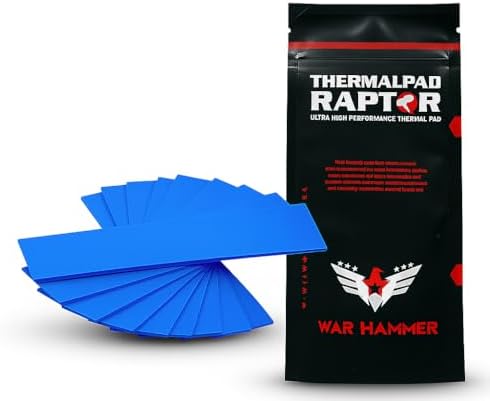
The WAR HAMMER Raptor's 12.0 W/mk conductivity rating and three thickness options (0.5, 1.0, 1.5mm) make it versatile, but selecting the correct variant is crucial. Unlike thermal paste, pads require precise thickness matching to ensure proper contact pressure without component damage. This German-engineered silicone formulation claims high performance, but real-world application depends on your specific VRAM, VRM, or chipset requirements.
Key Considerations Before Buying
- Measure your component gaps precisely before choosing between the 0.5, 1.0, or 1.5mm variants - incorrect thickness can cause poor contact or excessive pressure.
- The 12.0 W/mk conductivity rating is competitive for silicone pads, but verify if your components (especially high-power VRAM) require higher-end phase-change materials instead.
- Consider whether you need the pad's compressibility for uneven surfaces or if a more rigid material would provide better long-term stability for your specific application.
What Our Analysts Recommend
Genuine high-performance pads maintain consistent thickness across the sheet and exhibit minimal oil bleed-out. Check for precise cutting edges on pre-cut sheets and verify the material's tear resistance during installation. For the WAR HAMMER specifically, examine whether the claimed German engineering translates to manufacturing consistency in the actual pads you receive.
Thermal Pads Market Context
Market Overview
The thermal pad market has become increasingly segmented, with silicone-based options like the WAR HAMMER Raptor competing against graphite, phase-change, and hybrid materials. Indian consumers face particular challenges with availability of specific thicknesses and genuine high-conductivity products. The 12.0 W/mk segment represents a mid-to-high performance tier where brand claims often exceed actual performance.
Common Issues
Users frequently encounter pads that compress too much over time, losing thermal contact, or materials that dry out and become brittle. Thickness inconsistency within the same sheet can create hot spots, while overly sticky pads can damage components during removal. Many products claiming 'German engineered' or similar origins actually manufacture elsewhere with varying quality control.
Quality Indicators
Look for consistent cell structure when examining pad edges, minimal residue transfer when handling, and appropriate tackiness that holds position without being adhesive. High-quality pads maintain their stated thermal conductivity over multiple heat cycles rather than degrading quickly. Packaging should protect against compression during shipping, which can alter the pad's original thickness specifications.
Review Authenticity Insights
Grade B Interpretation
A Grade B with 15% estimated fake reviews suggests generally reliable feedback but requires careful scrutiny. For this WAR HAMMER product, it indicates most reviews reflect genuine experiences, though some may be incentivized. The drop from 4.50 to 4.20 when excluding suspicious reviews reveals modest inflation, common in competitive cooling accessory categories.
Trust Recommendation
Prioritize reviews discussing specific installation scenarios, thickness accuracy, or long-term performance over generic praise. Since all reviews show verified purchase status, focus on those mentioning compatibility with particular GPU models or comparing against other pads they've used previously. Be skeptical of reviews that don't mention which thickness variant they purchased.
Tips for Reading Reviews
Look for reviewers who specify their application (GPU VRAM, motherboard VRMs, SSD heatsinks) and whether they measured temperature differences with tools versus subjective 'feels cooler' claims. Pay particular attention to comments about the pad's compressibility and whether the 12.0 W/mk rating delivered expected results compared to their previous thermal interface material.
Expert Perspective
The WAR HAMMER Raptor presents a compelling option for users needing multiple thickness options in a single purchase, which is valuable for complex cooling projects. The 12.0 W/mk rating, if accurate, positions it well against mainstream competitors like Thermal Grizzly Minus Pad or Gelid Solutions. However, the limited review sample (12 total) makes it difficult to assess consistency across production batches, a critical factor with thermal interface materials. The German engineering claim warrants verification through independent testing, as origin claims in this category often relate more to formulation than manufacturing location.
Purchase Considerations
Evaluate whether your specific components truly benefit from 12.0 W/mk conductivity or if a lower-rated pad would suffice at lower cost. Consider if you actually need all three thicknesses or if purchasing a single optimal thickness from another brand might provide better value. Factor in whether the pad's silicone composition is compatible with your components' surface materials, as some silicones can stain or react with certain metals over time.
Comparing Alternatives
Compare against established brands like Fujipoly, Thermalright, or Arctic for similar thickness options, paying attention to actual user-reported temperature reductions rather than just conductivity ratings.