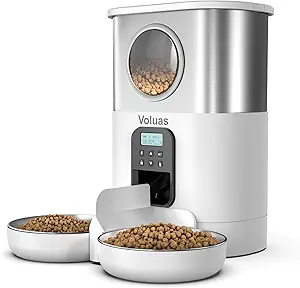
Selective RFID feeding solves multi-cat household food theft problems
The PETLIBRO RFID feeder addresses the specific challenge of managing multiple cats with different dietary needs or tendencies to steal food. Unlike standard automatic feeders, its collar tag system creates exclusive feeding zones, while WiFi app control allows precise portion management for each animal. This 3L capacity unit represents a specialized solution for households where scheduled, individual feeding is necessary.
Key Considerations Before Buying
- The RFID collar system requires consistent tag wearing by your cats—test your cats' tolerance for collars before committing to this technology.
- WiFi dependency means the app-based scheduling and feeding log features won't function during internet outages, though basic scheduled dispensing should continue.
- With a 3L hopper, this feeder suits regular dry kibble but may require more frequent refills for multi-cat households compared to larger 5L+ models.
What Our Analysts Recommend
For RFID selective feeders, examine the tag's durability and the sensor's reliability in various lighting conditions. Quality indicators include precise gram-based portion control (not just 'portions'), a secure, airtight hopper to maintain food freshness, and a backup battery system to preserve schedules during power interruptions.
Automatic Feeders Market Context
Market Overview
The automatic pet feeder market has evolved from basic timer models to smart, app-connected devices with specialized features like camera monitoring and individual pet recognition. The multi-cat segment increasingly focuses on selective access solutions, moving beyond simple multi-bowl setups to prevent food aggression and manage prescription diets.
Common Issues
Common failures in this category include jammed food dispensing mechanisms, unreliable WiFi connectivity affecting remote control, and inaccurate portion control that undermines dietary management. For selective feeders, sensor misreads and pet resistance to wearing required accessories are frequent pain points.
Quality Indicators
Look for feeders with dual power sources (AC adapter with battery backup), consistent portion accuracy verified in reviews, and durable food-grade materials in the hopper and bowl. App functionality should include detailed feeding logs and flexible scheduling, not just basic on/off controls.
Review Authenticity Insights
Grade B Interpretation
A Grade B authenticity rating with an estimated 10% fake review rate indicates generally reliable feedback with minor manipulation concerns. For this PETLIBRO model, the 4.10 adjusted rating (down from 4.33) suggests the authentic user experience is slightly less enthusiastic than the overall average implies.
Trust Recommendation
Focus on the 6 verified purchase reviews among the 9 analyzed, as these provide the most reliable insights. Pay particular attention to reviews discussing long-term reliability of the RFID sensor and app stability, as these are critical for the product's core functionality.
Tips for Reading Reviews
Prioritize reviews that mention specific multi-cat scenarios, RFID tag performance over weeks/months, and detailed app experiences. Be skeptical of overly generic praise about 'convenience' without addressing the selective feeding mechanism's actual effectiveness.
Expert Perspective
The PETLIBRO RFID feeder occupies a niche position for owners needing to control individual cat access to food, particularly for weight management, medication schedules, or preventing food aggression. Its 4.10 authentic rating suggests it generally delivers on its selective feeding promise, though the limited review sample (48 total) warrants caution regarding long-term reliability data. The combination of RFID technology with app control represents a sophisticated approach, but introduces complexity that requires pet compliance with collar tags.
Purchase Considerations
This feeder makes most sense if you have 2-3 cats requiring separate feeding regimens and your cats tolerate collars well. Consider your home's WiFi reliability and whether you need remote portion adjustments versus just scheduled dispensing. The 3L capacity may require refilling every 3-7 days depending on portion sizes and cat count.
Comparing Alternatives
Compare with other selective feeders using microchip scanning (no collar required) or timed bowl covers if your cats won't tolerate RFID tags.