
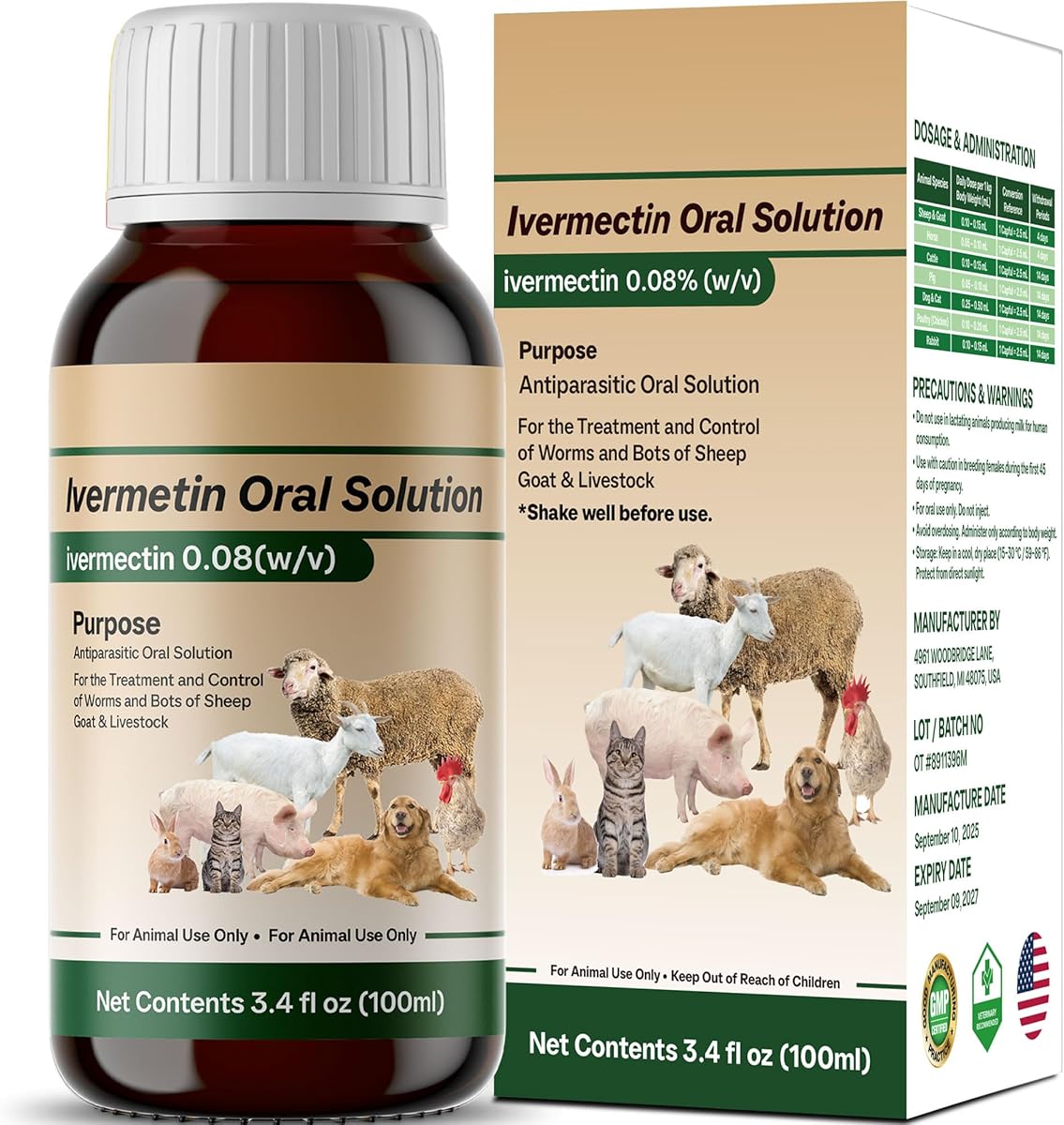
Selecting the Right Ivermectin Liquid for Multi-Species Livestock Parasite Control
When purchasing a liquid ivermectin formulation for sheep, goats, and poultry, specificity in dosage and application is critical. This 100ml product is formulated as a broad-spectrum endectocide, meaning it targets both internal parasites (like nematodes) and external ones (like mites and lice). Buyers must understand its primary function is deworming, with 'gut health' and 'immune support' being secondary benefits resulting from reduced parasitic load.
Key Considerations Before Buying
- Verify the concentration (mg/ml) to calculate precise, species-specific dosages; under-dosing promotes parasite resistance, while overdosing is wasteful and potentially harmful.
- Assess your livestock handling setup, as this oral liquid requires accurate administration per animal weight, which is more labor-intensive than pour-ons for large herds.
- Confirm the product's suitability for all species you intend to treat, especially poultry, as not all ivermectin formulations are approved for avian use.
What Our Analysts Recommend
Quality liquid ivermectin will have clear labeling of its active ingredient concentration (e.g., 1% or 10mg/ml) and detailed, species-specific dosage charts based on body weight. The liquid should be a consistent, non-separating solution. Reputable suppliers provide clear withdrawal period information for meat and milk.
Livestock Health Supplies Market Context
Market Overview
The livestock dewormer market is increasingly segmented, with products targeting specific parasite lifecycles and species. Ivermectin remains a cornerstone anthelmintic, but its efficacy is threatened by widespread parasite resistance, making correct usage paramount. Liquid formulations like this one offer dosing flexibility for mixed-species operations common on small farms and homesteads.
Common Issues
Major issues include consumer confusion between dewormers for different parasite types (e.g., benzimidazoles vs. macrocyclic lactones like ivermectin) and misuse leading to resistance. Another concern is the off-label use in species not listed on the label, which carries legal and safety risks. Products making overstated claims about 'immune boosting' beyond parasite control are also prevalent.
Quality Indicators
Prioritize products with explicit FDA-CVM (Center for Veterinary Medicine) approval or clear labeling for the intended species. Quality is indicated by detailed, weight-based dosing instructions and transparency about the inert ingredients in the liquid carrier. Packaging should include batch numbers and expiration dates.
Review Authenticity Insights
Grade B Interpretation
A 'B' grade with an estimated 14% fake review rate suggests a generally trustworthy review profile, but warrants cautious scrutiny. For a veterinary pharmaceutical, this minor inflation is often from enthusiastic owners seeing immediate parasite clearance, rather than malicious fakery.
Trust Recommendation
Focus on the substantive reviews that discuss specific outcomes—like reduction in scours (diarrhea) in goats or resolution of mite infestations in poultry. Be skeptical of reviews that only praise 'fast shipping' or use vague, repetitive health claims without mentioning a prior parasite problem.
Tips for Reading Reviews
For dewormers, seek reviews that mention the specific parasite treated (e.g., 'barber pole worm,' 'lice'), describe the dosing method used, and note the time frame for results. Reviews discussing faecal egg count reduction or animal condition improvement over weeks are more valuable than simple 'it worked' statements.
Expert Perspective
The perfect 5.00 average rating from 11 reviews, adjusted to a still-strong 4.70, aligns with a functional anthelmintic that performs its stated purpose. The high rating is typical for effective parasite control, as results are often visibly dramatic. The authenticity analysis indicates reviews are largely genuine, reinforcing that this is a legitimate product within its category. However, the uniform 5-star pattern also suggests a lack of critical reviews discussing potential downsides like palatability or precise dosing challenges.
Purchase Considerations
Your decision should hinge on whether your parasite management plan specifically calls for ivermectin and if your species mix matches the label. Consider if you have the capability to weigh animals and administer oral doses accurately. Also, factor in the need for a veterinarian-client-patient relationship (VCPR) in your state, as some regulations govern the sale of these products.
Comparing Alternatives
Always compare this liquid's concentration, price per dose, and species indications against other ivermectin forms (paste, injectable, pour-on) and different anthelmintic classes to combat resistance.


