
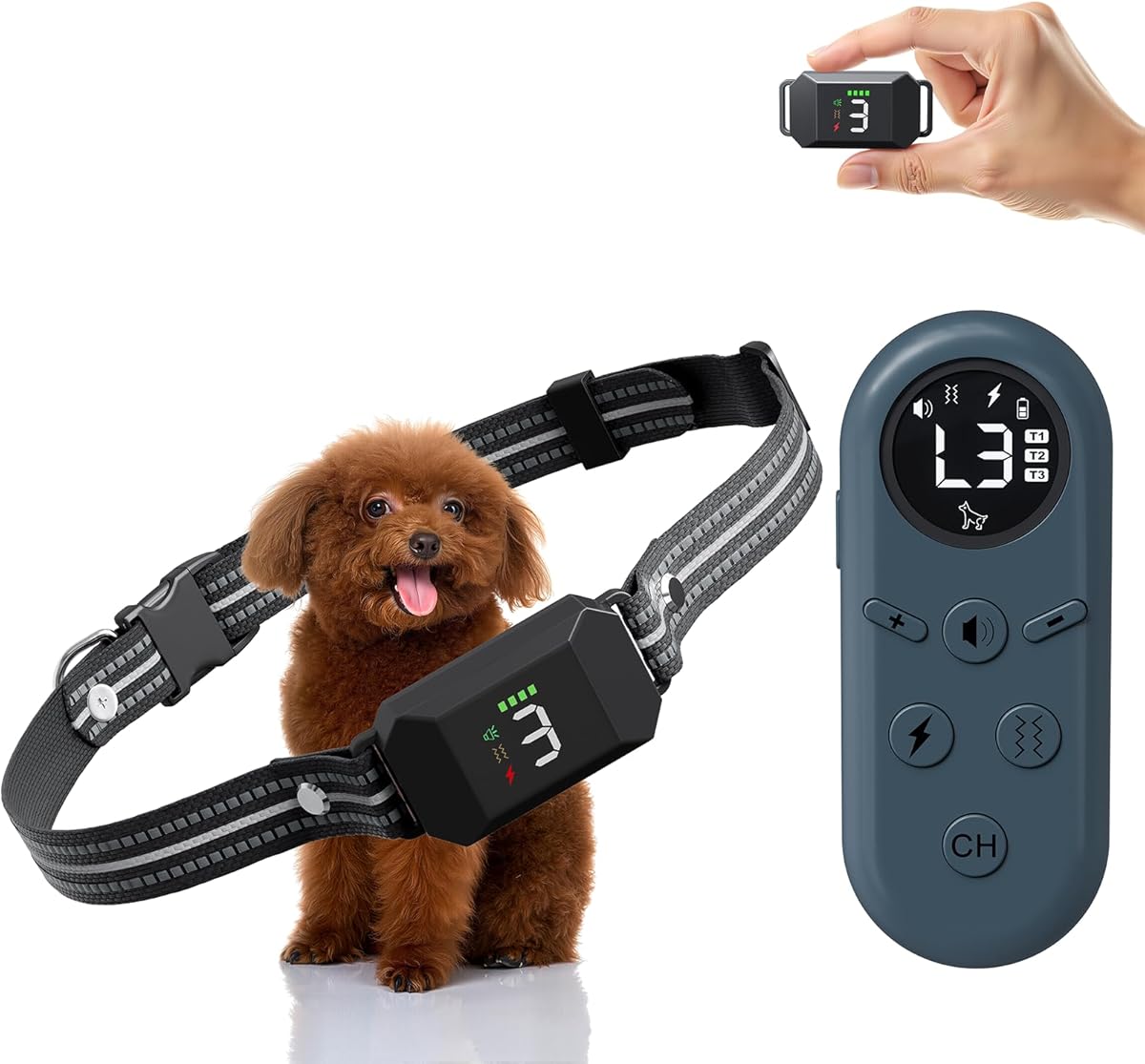
Choosing a Shock Collar for Small Dogs Under 30lbs: Key Safety and Fit Factors
For small and medium dogs between 5-30lbs, selecting an electronic training collar requires careful attention to size and stimulus intensity. This specific Ultra Small model emphasizes compact receiver dimensions and adjustable static stimulation levels, which are critical for smaller breeds with sensitive necks. Buyers should prioritize products with multiple correction modes like beep, vibration, and adjustable shock to ensure humane training.
Key Considerations Before Buying
- Receiver size and weight are paramount for dogs under 30lbs; this collar's 'ultra small' claim must be verified against your dog's neck circumference to prevent discomfort or slippage.
- The 1300ft range is substantial for suburban use, but effective training typically occurs at much closer distances where you can observe your dog's reaction to stimuli.
- Waterproof construction is essential for training in various conditions, but verify if both the receiver and remote carry an IPX rating, not just water resistance.
What Our Analysts Recommend
Quality indicators include a rechargeable lithium-ion battery system (not disposable) and clear documentation on stimulus levels. For small dogs, look for collars that specify a 'safe shock' or 'static stimulation' system with progressive intensity adjustment, allowing you to find the minimal effective level, often just a tingling sensation.
Electronic Training Collars Market Context
Market Overview
The market for small-dog electronic collars has expanded with compact, lightweight designs, but products vary widely in build quality and ethical stimulus calibration. Many brands now emphasize 'humane' or 'safe' static correction, moving away from high-intensity shocks that are inappropriate for pets under 30lbs.
Common Issues
Common problems include poorly fitting receivers that chafe small necks, inconsistent remote-to-collar communication under 500ft, and vague intensity settings that make replicating training difficult. Cheap collars often fail within months, especially the charging contacts or remote buttons.
Quality Indicators
Identify quality by examining the remote interface—better units have distinct buttons and clear LCD screens for mode selection. The collar receiver should have rounded, smooth contact points and use medical-grade probes to prevent skin irritation, a critical feature for small breeds.
Review Authenticity Insights
Grade B Interpretation
A Grade B authenticity score with an estimated 15% fake review rate suggests most feedback is genuine, but shoppers should remain cautious of overly effusive 5-star reviews. The adjusted 4.60/5 rating from verified purchases is a strong, credible indicator of customer satisfaction.
Trust Recommendation
Focus on reviews that discuss specific use cases with small breeds like Chihuahuas, Pomeranians, or terriers, and mention the collar's fit and adjustable intensity. Be skeptical of reviews that only praise packaging or delivery speed without detailing training outcomes.
Tips for Reading Reviews
Look for reviews that mention the product's performance over weeks or months, not just initial impressions. Pay close attention to comments about battery life per charge and the actual effectiveness of the vibration mode, which is often a preferred first-step correction for small dogs.
Expert Perspective
The product's high adjusted rating (4.60/5) from verified purchasers, combined with its specific design for 5-30lb dogs, indicates it likely delivers on core promises of size and basic functionality. The 1300ft range and waterproof claim position it as a mid-tier option for backyard and neighborhood training. However, the 'safe shock' terminology requires validation—look for descriptions of multiple intensity levels (often 1-16 or 1-99) to ensure you can find a truly low-level stimulus.
Purchase Considerations
Weigh the compact design against your dog's fur type; short-haired breeds may need extra padding to prevent irritation. Consider if you need all three modes (beep, vibration, shock) or if a vibration-only collar might suffice for basic boundary training with a sensitive small dog.
Comparing Alternatives
Shoppers should compare this model's receiver dimensions and stimulus level granularity with other collars specifically rated for dogs under 15lbs, as 'small & medium' can be a broad category.


![INVIROX Dog Training Collar with Remote [Spark K9] 1100 Yard Range, 124 Levels of Control, Beep, Vibration & E-Stim Modes, IP67 Waterproof E Collar for Dogs Training](https://m.media-amazon.com/images/I/81igQjgJD-L._AC_SY300_SX300_QL70_FMwebp_.jpg)


