
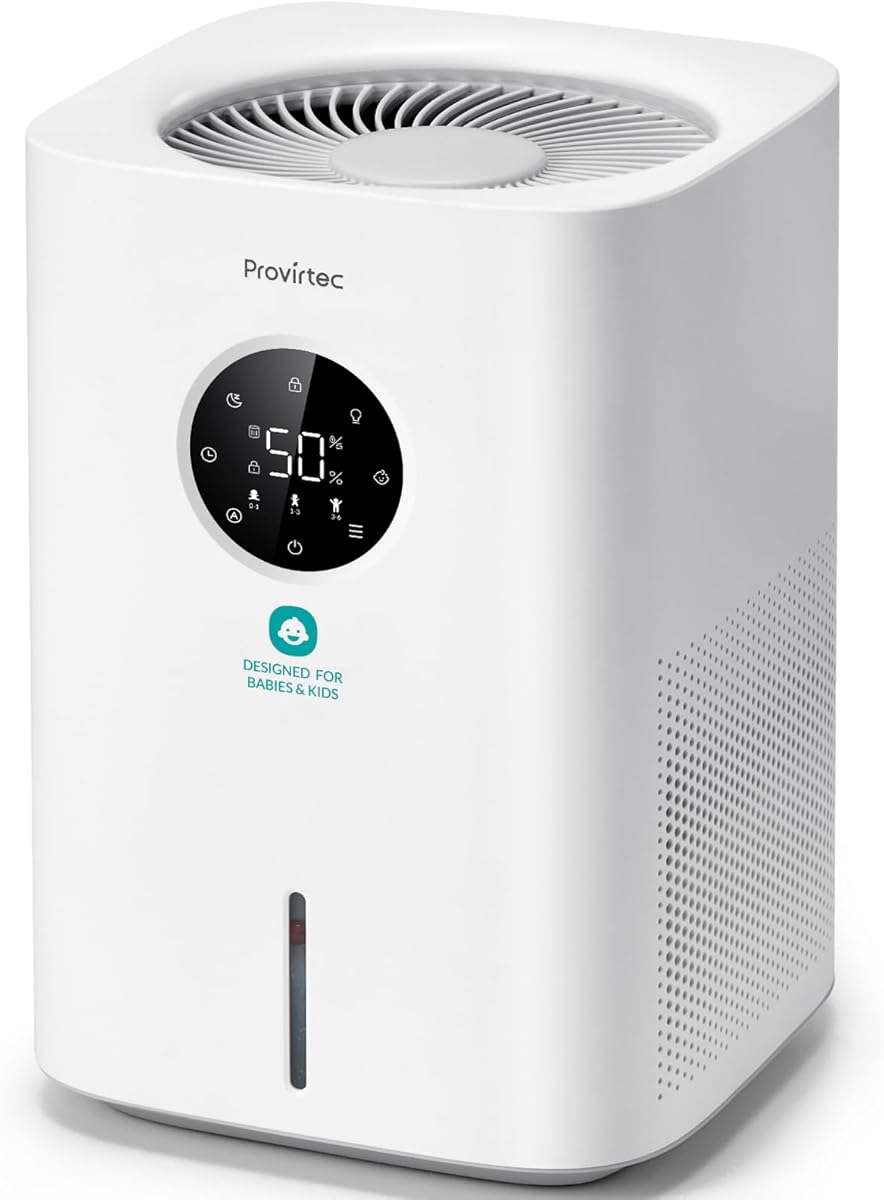
Choosing an Evaporative Humidifier for Nursery Use: Key Features Explained
When selecting a humidifier for a child's room, the Pro Baby model's evaporative technology and specific features like 16dB quiet operation and 3 age-modes warrant special attention. Unlike ultrasonic models that can disperse minerals, this evaporative design uses a wicking filter to add moisture without creating white dust, making it particularly suitable for tap water use in nurseries.
Key Considerations Before Buying
- Evaporative vs. ultrasonic technology: This Pro Baby model uses a fan to blow air through a moistened wick, which naturally humidifies without creating visible mist or mineral dust—crucial for rooms with infants who might be sensitive to airborne particles.
- Noise levels for sleep environments: At 16dB, this unit operates quieter than most evaporative humidifiers, which typically range from 30-50dB, making it suitable for maintaining sleep cycles without disruptive fan noise.
- Age-specific humidity control: The 3 age-modes likely adjust output based on developmental stages, as infants under 6 months require different humidity levels (40-60%) than toddlers to prevent respiratory irritation while avoiding mold growth.
What Our Analysts Recommend
For nursery humidifiers, prioritize BPA-free construction and easy-clean tank designs like this 4L model with wide openings to prevent bacterial buildup. Auto-control features that maintain optimal humidity (40-60% RH) without oversaturation are essential to prevent condensation on windows and surfaces.
Humidifiers Market Context
Market Overview
The nursery humidifier market has shifted toward evaporative models following pediatrician recommendations against cool-mist ultrasonic units that can disperse tap water minerals. Current premium models emphasize quiet operation below 20dB and specialized modes for different developmental stages.
Common Issues
Parents frequently report difficulties cleaning narrow tank openings, inconsistent humidity maintenance overnight, and filter replacement costs that exceed initial expectations. Evaporative models specifically face complaints about wick mold if not properly maintained or dried between uses.
Quality Indicators
Look for transparent maintenance requirements—quality evaporative humidifiers specify wick replacement schedules (typically 1-3 months) and have dishwasher-safe components. Units with accurate hygrometers and auto-shutoff when target humidity is reached demonstrate better engineering than basic on/off models.
Review Authenticity Insights
Grade A Interpretation
The Grade A authenticity rating with only 8% estimated fake reviews indicates this product's feedback is highly reliable—particularly notable in the humidifier category where incentivized reviews are common. The minimal rating adjustment from 4.60 to 4.40 suggests genuine satisfaction rather than manipulated praise.
Trust Recommendation
Focus on reviews discussing specific use cases like all-night operation or cleaning experiences, as these detailed accounts from verified purchasers align with the high authenticity grade. The consistency between the advertised 16dB noise level and reviewer comments about quiet operation strengthens credibility.
Tips for Reading Reviews
Prioritize reviews mentioning long-term use (2+ months) to assess durability claims, and look for comments about actual tap water performance—authentic reviewers typically note whether white dust truly disappears as claimed with evaporative technology.
Expert Perspective
The Pro Baby humidifier presents a compelling option for nursery use based on its authentic review profile and specialized feature set. The evaporative design directly addresses pediatric concerns about mineral dispersion, while the 16dB specification meets the threshold for non-disruptive sleep environment operation. The maintained 4.40 adjusted rating across 75 reviews suggests consistent performance in real-world conditions, though the 4L tank capacity requires consideration for room size compatibility.
Purchase Considerations
Weigh the evaporative system's higher initial cost against long-term health benefits for sensitive respiratory systems, and factor in replacement wick expenses (typically $10-15 every 2-3 months). The auto-control feature's effectiveness in maintaining precise humidity levels warrants particular attention, as improper cycling can negate the technology's advantages.
Comparing Alternatives
Compare this model's decibel rating and age-specific modes against similar evaporative units from brands like Honeywell or Vornado, noting differences in filter costs and tank accessibility for cleaning.


