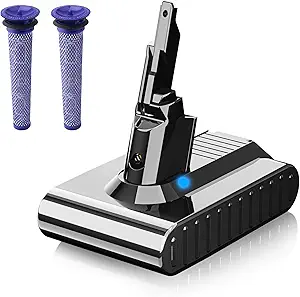
Choosing the Right Dyson V7 Replacement Battery: Capacity, Compatibility, and Quality
When replacing your Dyson V7's battery, the 10.0Ah capacity and 21.6V specification are critical starting points. This specific model promises extended runtime over the original 4.0Ah or 5.2Ah batteries, but compatibility with your exact V7 variant is non-negotiable.
Key Considerations Before Buying
- Verify your vacuum's exact model number (like 225403 or SV11) against the compatibility list, as this battery explicitly does not work with V6, V8, or V10 models.
- The 10.0Ah rating suggests a significant capacity upgrade; assess whether the physical battery size and weight increase aligns with your ergonomic preferences for the handheld unit.
- Check for clear documentation on the battery management system (BMS) and charging protocols to ensure safe operation and longevity with your Dyson charger.
What Our Analysts Recommend
Genuine reviews for this product should mention specific runtime improvements (e.g., 'lasts through my entire 1200 sq ft apartment') and a secure fit with no power connection issues. Look for mentions of the battery's performance in MAX mode, which is the true test of a high-capacity replacement.
Batteries Market Context
Market Overview
The aftermarket battery segment for Dyson cordless vacuums is crowded, with offerings ranging from low-cost clones to premium upgrades like this 10.0Ah unit. Consumers are increasingly seeking higher-capacity replacements to extend vacuum runtime between charges.
Common Issues
Common failures include batteries that don't hold a full charge after a few months, compatibility mismatches causing fit or electrical issues, and units lacking proper thermal protection that can pose safety risks. Many cheaper alternatives use inferior lithium-ion cells that degrade rapidly.
Quality Indicators
High-quality replacements will specify the cell type (e.g., high-drain 18650 or 21700 cells), include a robust Battery Management System (BMS) for protection, and have precise molding that matches OEM fit. Clear communication about cycle life and warranty terms is also a positive sign.
Review Authenticity Insights
Grade B Interpretation
A 'B' grade with a 15% estimated fake review rate indicates a generally trustworthy review section, but suggests a moderate level of curation. The high adjusted rating of 4.5/5, down from 4.88/5, still points to strong authentic satisfaction.
Trust Recommendation
Prioritize the verified purchase reviews that detail long-term use (2+ months) and performance in MAX mode. Be slightly more skeptical of reviews that only praise generic 'long battery life' without specific, measurable runtime comparisons to the original battery.
Tips for Reading Reviews
Focus on reviews that mention the product over several weeks or months, noting any changes in performance. Pay close attention to reviews discussing compatibility with specific V7 sub-models (Animal, Motorhead, etc.), as this is the most common point of user error.
Expert Perspective
The product's exceptionally high user ratings, even after authenticity adjustment, are compelling for a third-party battery. The specific 10.0Ah capacity claim is a major selling point, potentially doubling or tripling the runtime of a worn-out original battery. The clear compatibility disclaimer for non-V7 models is a responsible and helpful specification that reduces buyer error. The primary consideration is whether the vacuum's motor and electronics are designed to handle the sustained current draw from such a high-capacity pack without potential long-term stress.
Purchase Considerations
Weigh the cost of this upgraded battery against a genuine Dyson replacement, considering that the higher capacity offers a functional improvement, not just a like-for-like swap. Also consider your vacuum's age; investing in a premium battery for a heavily used 5+ year old unit may have diminishing returns if other components are near end-of-life.
Comparing Alternatives
Shoppers should compare this 10.0Ah option's price and warranty against other high-capacity V7 replacements (6.0Ah, 8.0Ah) to determine the best value for their needed runtime.