
Choosing a Rotary Cheese Grater: Key Features for Effortless Shredding and Cleaning
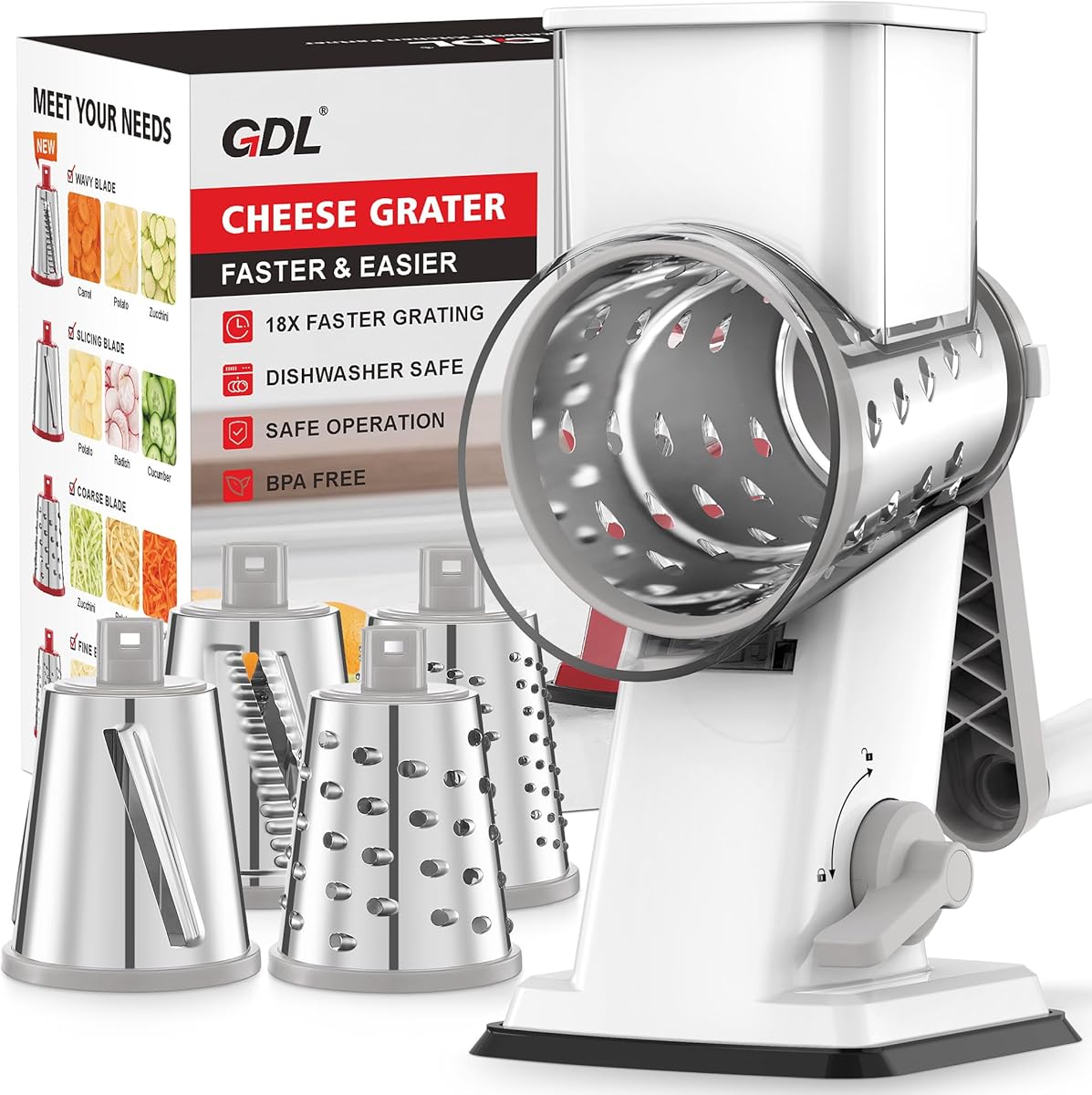
The GDL Rotary Cheese Grater represents a modern approach to manual grating, combining a hand-crank mechanism with four specialized blades for versatility. Unlike traditional box graters, this model's suction base and enclosed design aim to reduce mess while accommodating different textures from hard Parmesan to soft mozzarella. Buyers should evaluate how its specific blade configurations match their typical cheese types and whether the cleaning convenience justifies the countertop footprint.
Key Considerations Before Buying
- Assess the blade interchangeability system—the GDL's four blades (likely including coarse, medium, fine, and slicer) should lock securely and change without requiring tools, as loose fittings can compromise safety and shred consistency.
- Evaluate the suction base performance on your specific countertop materials; non-slip claims need verification on both dry and slightly damp surfaces, especially when grating harder cheeses that require downward pressure.
- Consider the hopper size and feed mechanism—this grater's capacity should accommodate block sizes you commonly use without requiring excessive pre-cutting, and the crank should turn smoothly without binding when processing softer or oilier cheeses.
What Our Analysts Recommend
High-quality rotary graters feature stainless steel blades with precisely stamped grating surfaces that resist clogging, unlike cheaper stamped metal that dulls quickly. The gear mechanism should feel substantial, typically using metal or reinforced plastic gears rather than all-plastic internals that can strip under torque. Look for dishwasher-safe components or designs where blades disassemble completely, as cheese residue in crevices is a common hygiene issue.
Graters Market Context
Market Overview
The rotary grater category has expanded beyond basic cheese shredders to multi-functional kitchen tools, with premium models now incorporating suction bases, multiple blades, and claims of vegetable/nut compatibility. Canadian consumers increasingly seek space-efficient alternatives to food processors for small-batch grating tasks, driving innovation in ergonomic designs and easy-clean features.
Common Issues
Many rotary graters struggle with soft cheeses like mozzarella that gum up blades, or hard cheeses that strain plastic gear mechanisms. Poor suction base adhesion causes instability during cranking, while blade storage solutions often lack proper organization, leading to dulled edges or misplaced components. Cleaning remains a persistent challenge, with cheese particles trapping in blade housings or crank assemblies.
Quality Indicators
Superior models use 420-grade stainless steel blades with micro-serrated edges that stay sharper through repeated use. The crank should have a weighted handle for momentum and connect to a metal drive shaft rather than plastic. Quality suction bases incorporate silicone rings with textured patterns for multi-surface grip, and housings should be BPA-free plastic with smooth interiors that minimize food trapping.
Review Authenticity Insights
Grade B Interpretation
The Grade B authenticity rating with 10% estimated fake reviews indicates generally reliable feedback, though shoppers should remain slightly cautious of overly enthusiastic claims. This grade suggests most reviews reflect genuine experiences, but the product's newness (only 11 reviews) means the sample size is still developing for comprehensive assessment.
Trust Recommendation
Focus on reviews discussing specific use cases like grating Parmesan versus cheddar, or cleaning experiences with the interchangeable blades. Given the 4.50 adjusted rating (down from 4.78), look for balanced feedback about the suction base's real-world performance and whether the 'upgraded' claims represent meaningful improvements over previous rotary grater generations.
Tips for Reading Reviews
Prioritize reviews that mention testing multiple blade types or describe cheese varieties shredded, as these demonstrate actual usage. Be skeptical of reviews claiming perfection across all cheese types—authentic feedback typically notes particular strengths (e.g., 'excellent for hard cheeses') while acknowledging limitations ('struggled with soft goat cheese').
Expert Perspective
The GDL Rotary Grater's high rating (4.50 adjusted) and authenticity grade suggest it performs well within its niche, particularly given the detailed positive feedback about blade versatility and suction stability. The 'upgraded' designation likely refers to the four-blade system and improved base, though the limited review count warrants cautious optimism. Its vegetable and nut compatibility claims extend functionality beyond typical cheese graters, but performance consistency across these different textures requires verification through more long-term usage reports.
Purchase Considerations
This product makes most sense for households that regularly grate multiple cheese types and value contained shredding over speed. The hand-crank mechanism suits smaller quantities better than electric alternatives, while the suction base addresses a common pain point of traditional rotary graters that slide during use. Consider your countertop material compatibility and whether you'll utilize the vegetable slicing functions to justify the storage space.
Comparing Alternatives
Shoppers should compare gear mechanisms and blade materials against similar multi-blade rotary graters, particularly examining how competitors address soft cheese clogging and cleaning accessibility.


