
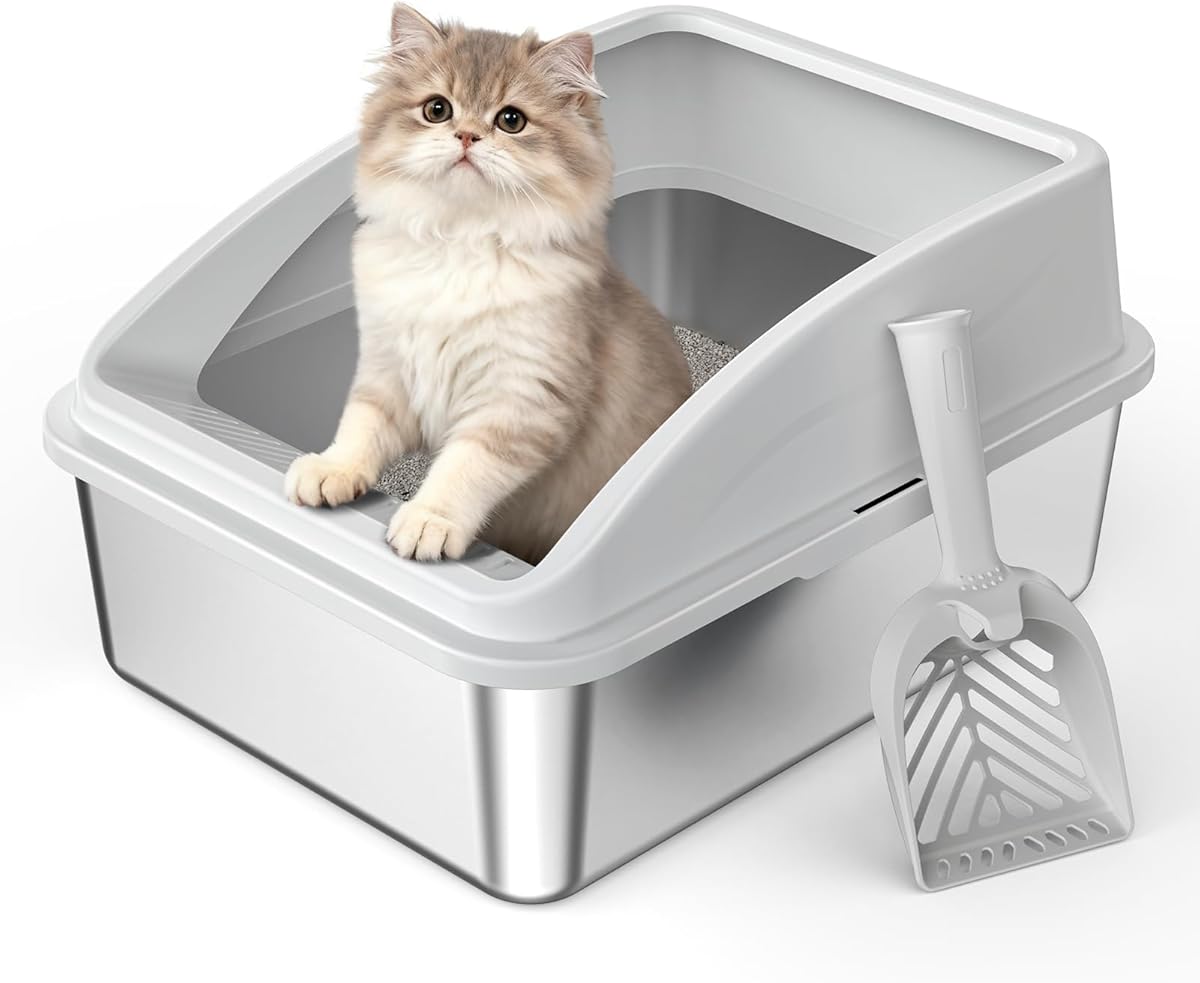
Stainless Steel Litter Boxes: When Metal Construction Justifies the Investment
Stainless steel litter boxes represent a premium segment in the standard litter box category, offering distinct advantages over plastic alternatives. This specific model combines metal durability with thoughtful design elements like a low entry threshold and high sides, targeting pet owners with mobility-challenged cats or seeking long-term odor control solutions.
Key Considerations Before Buying
- The 'non-stick' claim for stainless steel is primarily about surface smoothness—urine and waste are less likely to adhere compared to porous plastic, but regular cleaning is still essential for true odor-free performance.
- Low entry designs (like this 3-inch threshold) are crucial for kittens, senior cats, or post-surgical pets, but verify your cat can still comfortably turn around inside the 16x12 inch footprint.
- Metal construction eliminates the microscopic scratches where bacteria and odor embed in plastic boxes, but it can be noisy during use and may feel colder to your cat's paws.
What Our Analysts Recommend
Examine the welds and seams where stainless steel panels join—smooth, polished seams prevent waste accumulation and rust. Quality stainless boxes use 304-grade steel (food/service grade) rather than thinner 201-grade, which this product's description implies but doesn't explicitly state. The included scoop should complement the box's dimensions for efficient cleaning.
Standard Litter Boxes Market Context
Market Overview
The standard litter box market is dominated by plastic variants under $30, making stainless steel options like this $50-70 product a premium choice. Recent trends show growing demand for durable, hygienic materials as pet owners become more conscious of plastic degradation and odor retention.
Common Issues
Plastic boxes develop permanent urine odors within 6-12 months as microscopic scratches harbor bacteria, while cheaper metal boxes may use thin gauge steel that dents or develops surface pits. Many 'high-sided' designs fail to provide adequate interior space for larger cats to maneuver comfortably.
Quality Indicators
Premium stainless boxes feature rounded corners for easy cleaning, substantial weight (this 5.5lb box suggests adequate gauge thickness), and fully welded rather than riveted construction. The lid should fit snugly without sharp edges, and the finish should be brushed or polished to resist scratching.
Review Authenticity Insights
Grade B Interpretation
A Grade B with 10% estimated fake reviews indicates generally reliable feedback, though approximately 1 in 10 reviews may be artificially positive. The 4.60 adjusted rating (down from 4.89) suggests genuine satisfaction sits between 'very good' and 'excellent' rather than perfect.
Trust Recommendation
Focus on verified purchase reviews discussing specific use cases mentioned in the title—small cats, injured pets, or bunny owners. Be skeptical of reviews that don't mention the metal's temperature, cleaning experience, or how their pet adapted to the new material.
Tips for Reading Reviews
Prioritize reviews that mention long-term use (3+ months) to assess durability claims, and look for discussions about whether the 'non-stick' claim holds with clay versus silica litter. Reviews from multi-cat households will best test the odor-control assertions.
Expert Perspective
This product addresses specific pain points in the litter box market with material choice rather than gimmicky features. The 4.60 authentic rating from nearly 3,000 reviews suggests it delivers on core promises: durability, odor resistance, and accessibility. The combination of stainless steel with a low-entry, high-sided design fills a niche for pet owners who've experienced plastic degradation or have mobility-limited animals. The included scoop is a thoughtful addition but secondary to the primary value proposition of permanent odor resistance.
Purchase Considerations
Weigh the higher initial cost against not replacing plastic boxes annually. Consider your cat's preferences—some cats dislike metal's acoustic feedback or cooler temperature. The 16x12 inch interior may be tight for larger cats despite the low entry, so measure your cat's turning radius.
Comparing Alternatives
Compare with other stainless options on gauge thickness and seam construction, and evaluate whether plastic boxes with replaceable liners might offer similar hygiene at lower cost.


