
Choosing Washable Sanding Sponges: Grit Selection and Reusability Matter Most
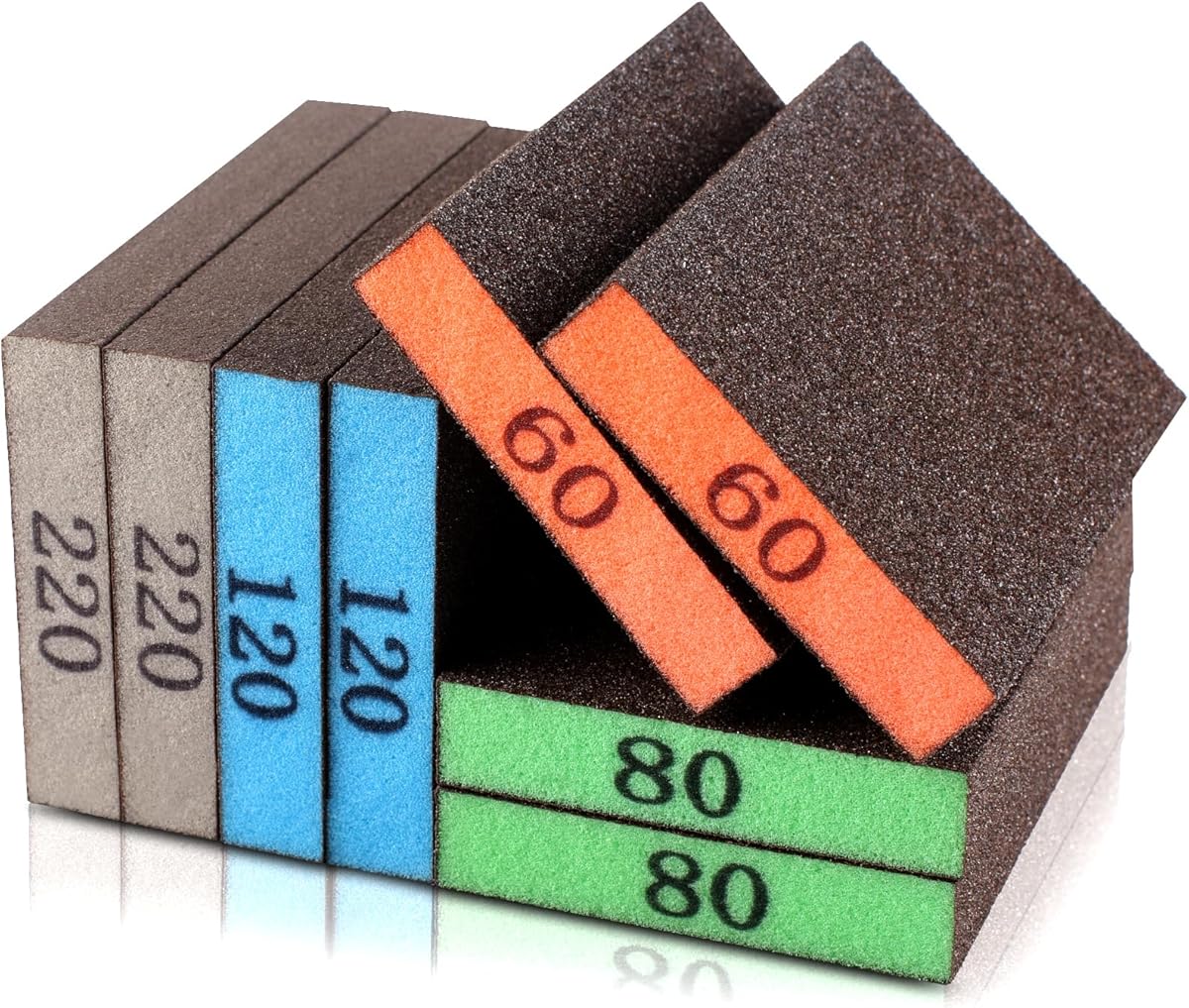
This 8-pack assortment of sanding sponges offers four essential grits (60/80/120/220) for a complete sanding workflow from coarse shaping to fine finishing. Unlike traditional sandpaper, these washable blocks combine the flexibility of a sponge with reusable abrasive surfaces, making them particularly suited for contoured surfaces on furniture, drywall seams, and metal prep work.
Key Considerations Before Buying
- Grit progression is critical: This set's inclusion of 60 (coarse removal), 80/120 (intermediate smoothing), and 220 (fine finishing) grits covers most common DIY projects, but verify it matches your material—60 grit may be too aggressive for softwoods.
- Washable claims vary: True reusability depends on adhesive strength and abrasive grain bonding; look for blocks that withstand multiple rinses without the abrasive layer peeling or disintegrating.
- Sponge density affects control: A firmer foam core provides more pressure for flat surfaces, while a softer sponge conforms better to curves; this product's medium density aims for a compromise suitable for general use.
What Our Analysts Recommend
Quality sanding sponges feature uniform grit distribution without bald spots and edges that are firmly bonded to prevent delamination. The foam should rebound after compression without permanent deformation, and the abrasive surface should remain effective through several cleaning cycles, not just one or two uses.
Sanding Blocks Market Context
Market Overview
The sanding sponge market has shifted toward multi-grit assortments and washable designs, moving beyond single-use blocks. Consumers now expect products that bridge the gap between disposable sandpaper and expensive power sanding systems, particularly for furniture refurbishment and drywall repair.
Common Issues
Lower-quality sponges suffer from premature wear where the abrasive coating separates from the foam core, especially when wet. Inconsistent grit application creates uneven sanding patterns, and some manufacturers use foam that collapses under pressure, reducing control and effectiveness.
Quality Indicators
Examine the bond between the abrasive layer and foam—it should be seamless. Higher-quality blocks use silicon carbide or aluminum oxide abrasives rather than cheaper glass paper, and they maintain their flexibility across temperature changes without becoming brittle.
Review Authenticity Insights
Grade B Interpretation
A Grade B authenticity rating with an estimated 15% fake review rate indicates generally reliable feedback but suggests some review manipulation exists. The adjusted rating of 4.30/5 (down from 4.67) reflects this filtering and is a more trustworthy performance metric.
Trust Recommendation
Focus on reviews that mention specific use cases like 'smoothing drywall seams' or 'prepping chair legs for stain,' as these demonstrate actual product experience. Be slightly skeptical of reviews that only praise the 'value of 8 pieces' without detailing performance across different grits or materials.
Tips for Reading Reviews
For sanding tools, prioritize reviews that discuss durability through multiple projects and compare grit effectiveness. Verified purchase reviews detailing how the sponge conformed to curved furniture or withstood washing provide more actionable insights than generic star ratings.
Expert Perspective
This product's strong adjusted rating of 4.30/5 from authentic reviews suggests it delivers on its core promises of reusability and multi-surface performance. The inclusion of four strategically chosen grits in an 8-pack provides practical versatility for common DIY sequences—starting with 60 grit for material removal and finishing with 220 for paint preparation. The washable feature appears genuinely functional based on reviewer comments about extending the product's life through cleaning.
Purchase Considerations
Consider whether you need all four grits or primarily work with just one or two; some users might prefer buying individual grits in larger quantities. The sponge format excels on curved surfaces but may lack the rigid backing preferred for perfectly flat sanding on tabletops or cabinet faces. Evaluate if the medium-density foam matches your pressure preferences.
Comparing Alternatives
Compare this assortment's grit selection and sponge firmness against single-grit packs or traditional sanding blocks to ensure it aligns with your specific sanding patterns and project types.


