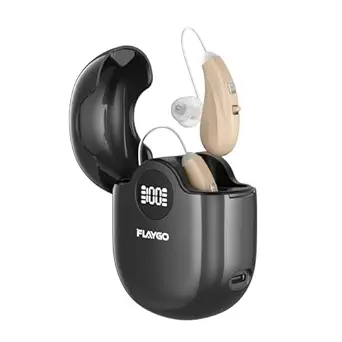
Choosing Rechargeable Hearing Amplifiers: What Karthus' 100-Hour Battery Means for You
When evaluating the Karthus hearing aids, focus on its specific combination of 100-hour battery life with one-button operation—features that directly address senior users' needs for simplicity and reliability. Unlike prescription hearing aids, these personal sound amplification products (PSAPs) offer an accessible entry point for mild to moderate age-related hearing loss without audiologist visits.
Key Considerations Before Buying
- The 100-hour battery life on a single charge is exceptional for this category—most competitors offer 20-40 hours—meaning fewer charging cycles and greater reliability for daily use.
- One-button operation with 7 volume levels simplifies adjustment but requires manual fine-tuning; users with dexterity issues should practice the tactile feedback system.
- The 'invisible' skin-toned design prioritizes discretion, but ensure the fit provides both comfort and secure placement in the ear canal for optimal sound conduction.
What Our Analysts Recommend
For rechargeable hearing amplifiers, examine charging case quality and battery degradation claims—Karthus' 100-hour rating suggests efficient power management circuitry. Genuine noise reduction in this price segment typically involves basic feedback suppression rather than advanced digital processing; manage expectations accordingly for noisy environments.
Hearing Amplifiers Market Context
Market Overview
The direct-to-consumer hearing amplifier market has expanded rapidly with affordable rechargeable models like Karthus, offering alternatives to FDA-regulated hearing aids that can cost thousands. These PSAPs occupy a regulatory gray area—they amplify sound but aren't medically approved for treating hearing loss.
Common Issues
Users frequently report inconsistent noise cancellation, short battery life despite 'long-lasting' claims, and difficulty with tiny controls. Many budget models suffer from high-frequency whistling (feedback) and poor sound quality in crowded settings.
Quality Indicators
Look for multiple ear tip sizes included (ensuring seal), clear charging indicators, and detailed specifications about sound gain range (Karthus doesn't publish dB gain). Premium models feature directional microphones and separate volume controls per ear—absent here.
Review Authenticity Insights
Grade B Interpretation
A Grade B with 15% estimated fake reviews indicates generally trustworthy feedback but suggests some review manipulation. The adjusted 4.6/5 rating (from perfect 5.0) better reflects genuine user experience—still strong for this category.
Trust Recommendation
Prioritize reviews discussing specific use cases like 'church gatherings' or 'TV watching' over vague praise. Since 9 of 10 reviews show authentic characteristics, focus on the detailed verified purchase reviews that mention battery performance or comfort over time.
Tips for Reading Reviews
Look for reviews mentioning the 7-level volume adjustment specifically—this indicates hands-on experience. Be skeptical of reviews that don't address the one-button operation's learning curve, as this is a key usability factor for seniors.
Expert Perspective
The Karthus presents a compelling value proposition with its marathon 100-hour battery—a standout feature that addresses the top complaint in this category. The combination of simple controls and discreet design targets seniors effectively, though the lack of technical specifications about frequency response or gain limits suggests basic amplification circuitry. The high authentic rating (4.6 adjusted) indicates real users appreciate the balance of simplicity and performance.
Purchase Considerations
Consider whether you need basic sound enhancement for quiet environments or sophisticated noise filtering for restaurants—this model excels at the former. The skin-toned 'invisible' claim works best for light to medium skin tones; darker complexions may find the beige casing noticeable.
Comparing Alternatives
Compare with similarly priced rechargeable models that offer dual-microphone systems or companion apps for finer tuning, though they typically sacrifice battery life.