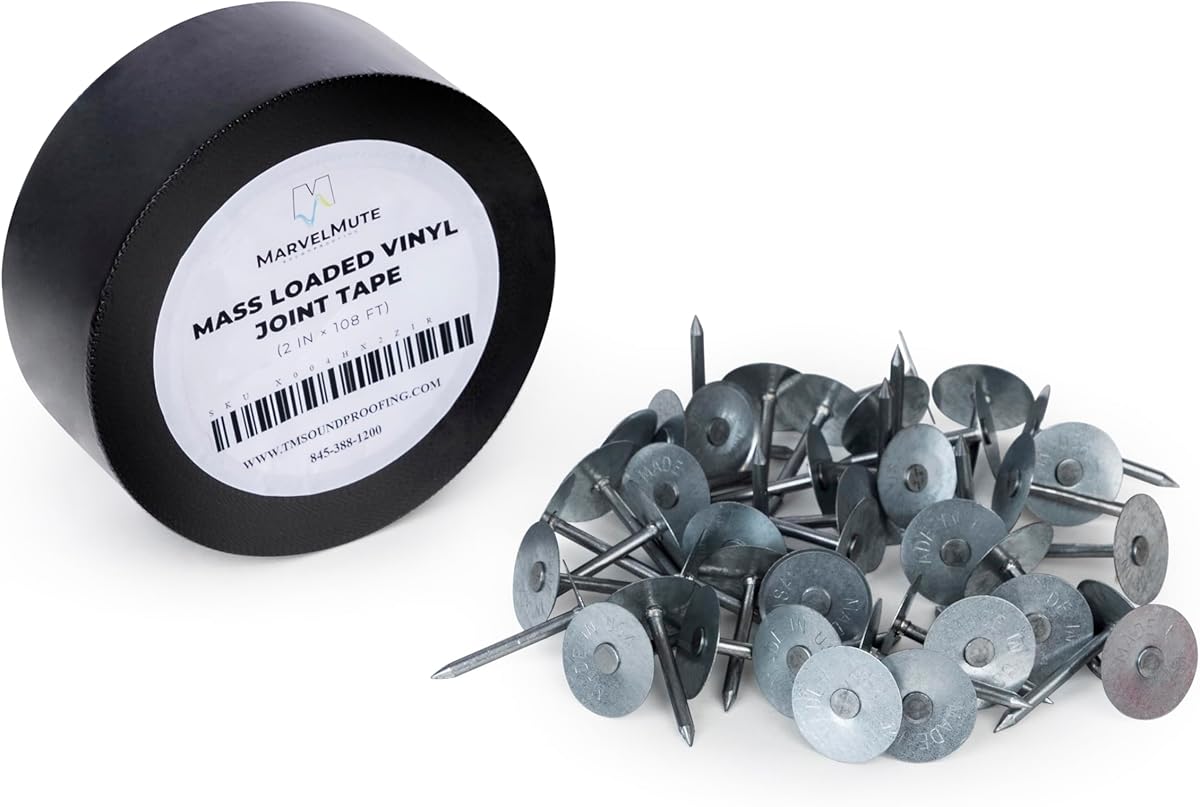
Essential Installation Kit for Mass Loaded Vinyl: Nails and Seam Tape Analyzed
This specific kit combines 100 wide-cap nails with a roll of seam tape designed for installing mass loaded vinyl (MLV) acoustic barriers. Unlike generic hardware, these components are engineered for the unique demands of MLV installation, where proper fastening and seam sealing directly impact sound transmission loss. Buyers should understand that installation accessories can make or break an acoustic treatment project's effectiveness.
Key Considerations Before Buying
- Wide-cap nails prevent MLV from tearing under its own weight and are essential for ceiling installations where gravity creates constant tension.
- Seam tape must be compatible with MLV's limp mass composition and create an airtight seal; incompatible adhesives can fail over time.
- The 100-nail count should be evaluated against your project's square footage and stud spacing—larger rooms may require multiple kits.
What Our Analysts Recommend
Quality MLV installation nails feature a true wide, flat cap (at least 3/4-inch diameter) to distribute pressure and prevent pull-through. The seam tape should be a butyl-based or high-tack acrylic adhesive specifically marketed for acoustic vinyl, not generic duct tape, as it must adhere to the vinyl's often waxy surface and maintain flexibility.
Acoustical Treatments Market Context
Market Overview
The market for MLV installation accessories is niche but critical, often dominated by a few specialty suppliers rather than general hardware brands. Kits like this aim to provide a convenient, matched solution, though component quality can vary significantly between manufacturers.
Common Issues
Common failures include nails with caps too small that tear through the vinyl, tape that loses adhesion due to MLV's off-gassing plasticizers, and insufficient fastener quantities leading to sagging panels and flanking noise leaks.
Quality Indicators
Look for products that specify compatibility with MLV by name, detail the nail's gauge and cap dimensions, and disclose the tape's adhesive type. Reputable suppliers provide technical data on holding strength and tape elongation properties.
Review Authenticity Insights
Grade C Interpretation
A 'C' grade and 33% estimated fake review rate indicate a concerning level of potentially manipulated feedback. For a specialized product with only 6 total reviews, this means approximately 2 reviews may be inauthentic, skewing the average rating from 3.60 up to 4.33.
Trust Recommendation
Prioritize the detailed reviews that discuss actual installation experiences, material feel, and project context over vague, overly enthusiastic praise. The adjusted 3.60 rating is a more reliable baseline than the displayed 4.33-star average.
Tips for Reading Reviews
Scrutinize reviews mentioning specific installation steps (like overlapping seams or nailing patterns) and project types (home studio vs. machine room). Be skeptical of reviews lacking detail on how the nails or tape performed during and after installation.
Expert Perspective
This kit addresses a genuine need for purpose-built MLV fasteners and sealing, components often overlooked in DIY acoustic projects. The significant discrepancy between the displayed (4.33) and adjusted (3.60) ratings, however, raises red flags about marketing practices. The mixed authentic feedback suggests the product concept is sound, but execution—particularly tape adhesion or nail quality—may be inconsistent. In acoustical treatments, installation hardware failure compromises the entire investment in MLV.
Purchase Considerations
Weigh the convenience of a bundled kit against the potential risk implied by the authenticity grade. For critical applications like professional studio isolation, consider sourcing high-grade cap nails and MLV-specific acoustic sealant tape separately from established acoustic material suppliers.
Comparing Alternatives
Shoppers should compare the nail specifications and tape details with standalone products from acoustic brands like Green Glue, Soundsulate, or professional building supply outlets.