
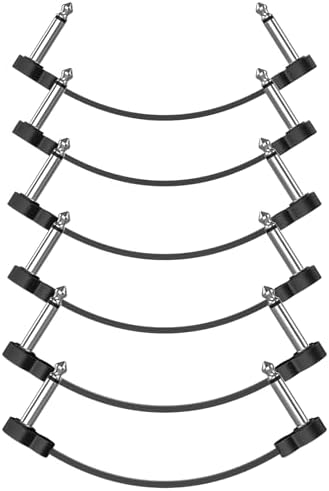
Selecting Guitar Patch Cables: Durability, Noise Reduction, and Connection Integrity
Guitar patch cables are the critical links between your pedals, where signal degradation most commonly occurs. Unlike generic instrument cables, these short-run connectors must withstand frequent bending and unplugging while maintaining clean signal transfer. For Canadian musicians, choosing cables that perform reliably in varied studio and stage environments is essential.
Key Considerations Before Buying
- Cable flexibility and strain relief are paramount for pedalboards, where tight routing and constant foot pressure demand cables that won't kink or fail at the jack.
- Shielding effectiveness directly impacts noise floor; look for cables specifically designed to reject interference from power supplies and other pedals on crowded boards.
- Jacket durability matters more than with standard cables, as patch cables experience more physical stress from being stepped on and rearranged frequently.
What Our Analysts Recommend
Quality patch cables feature molded strain relief at both ends and oxygen-free copper conductors for consistent signal transfer. The best options use neutrik-style connectors with positive locking mechanisms that won't work loose during performances. For pedalboard use, low-profile right-angle connectors prevent accidental disconnections while saving space.
Patch Cables Market Context
Market Overview
The patch cable market has shifted toward solderless systems for custom lengths, though pre-made cables still dominate for reliability. Canadian musicians increasingly seek cables that perform equally well in cold rehearsal spaces and humid summer festival conditions.
Common Issues
Intermittent signal loss often stems from poor solder joints at the connector, while crackling noises typically indicate inadequate shielding or corroded contacts. Many budget cables fail at the strain relief point after repeated pedalboard reconfigurations.
Quality Indicators
Superior cables use multi-layer shielding (foil plus braid) and gold-plated connectors that resist corrosion. The jacket should feel supple yet durable, not stiff or rubbery. Quality manufacturers specify capacitance per foot—lower values preserve high-end clarity in longer signal chains.
Review Authenticity Insights
Grade B Interpretation
A Grade B authenticity rating with 10% estimated fake reviews suggests generally reliable feedback, though shoppers should remain discerning. The 4.60 adjusted rating (down from 4.80) indicates some review inflation but still reflects strong genuine satisfaction.
Trust Recommendation
Focus on verified purchase reviews that mention specific use cases like 'pedalboard reorganization' or 'replacing noisy cables.' The one potentially manipulated review likely lacks these concrete details while overusing generic praise.
Tips for Reading Reviews
Look for reviews discussing performance over time—quality patch cables should maintain reliability after months of use. Reviews mentioning comparison to other brands or technical aspects like 'noise reduction' typically indicate genuine experience.
Expert Perspective
With a 4.60 adjusted rating from verified purchases, these cables appear to deliver reliable performance for most guitarists' needs. The high rating suggests they successfully address common patch cable failure points like connector integrity and noise rejection. The authenticity grade indicates reviews generally reflect real-world experience, though the slight adjustment suggests some enthusiastic exaggeration exists. For Canadian musicians, the product's performance across temperature variations would be a key consideration given our climate extremes.
Purchase Considerations
Consider your pedalboard layout—right-angle connectors save space but may not fit all pedal jacks. If you frequently reconfigure your board, durability at connection points becomes more critical than absolute audiophile-grade specifications. Musicians using high-gain distortion should prioritize shielding quality to prevent unwanted noise.
Comparing Alternatives
Compare connector design and warranty terms with similar-priced options, as repair/replacement policies vary significantly among cable manufacturers.


