
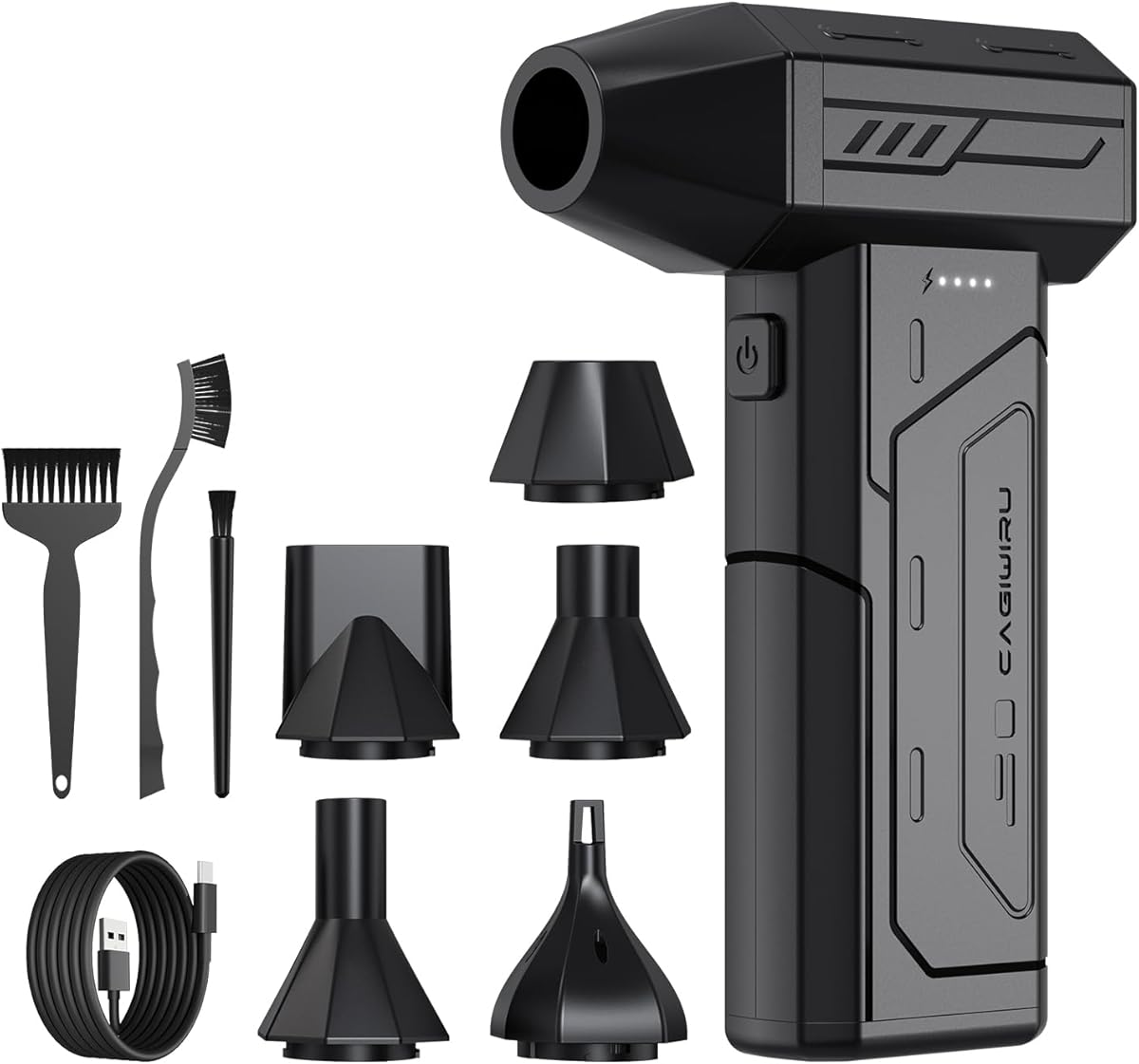
Evaluating Cordless Air Dusters: Power, Battery Life, and Build Quality Considerations
When considering this specific 130,000 RPM cordless air duster with brushless motor technology, buyers should understand that advertised RPM figures don't always translate to effective cleaning power. The three-speed adjustment and LED light features suggest versatility, but the rechargeable nature introduces battery performance variables that canned air alternatives don't have.
Key Considerations Before Buying
- Brushless motor technology typically offers longer lifespan than brushed motors, but requires proper heat dissipation design to maintain the advertised 130,000 RPM performance during extended use.
- The 'super power' claim needs verification through actual airflow measurements (CFM), not just rotational speed, as effective dust removal depends on air volume, not just motor RPM.
- Cordless operation introduces battery degradation concerns over time - lithium-ion cells in these devices typically lose 20-30% capacity within 1-2 years of regular use.
What Our Analysts Recommend
Quality indicators include consistent performance across all three speed settings without power drop-off, durable nozzle construction that won't crack under pressure, and thermal protection that prevents motor overheating during continuous operation. The LED light should provide meaningful illumination in dark computer cases, not just be a marketing checkbox.
Compressed Air Dusters Market Context
Market Overview
The cordless air duster market has expanded rapidly as consumers seek eco-friendly alternatives to disposable canned air, but quality varies dramatically between brands claiming similar specifications. Products in the $40-80 range typically compete on paper specifications while cutting corners on battery quality and motor durability.
Common Issues
Common problems include battery cells that won't hold charge after 6-12 months, motors that overheat and throttle speed during use, and plastic housings that develop cracks near high-stress points. Many units also suffer from inconsistent airflow that diminishes at lower battery levels.
Quality Indicators
Look for products with documented CFM (cubic feet per minute) measurements rather than just RPM claims, thermal sensors that protect brushless motors, and batteries with documented cycle life. Quality units maintain at least 80% of advertised airflow through the battery's discharge cycle.
Review Authenticity Insights
Grade D Interpretation
The Grade D authenticity rating and 42% estimated fake review percentage indicate significant review manipulation concerns. This suggests the 4.80/5 rating is artificially inflated, with the adjusted 3.80/5 rating representing a more realistic assessment based on authentic feedback.
Trust Recommendation
Given the high fake review percentage, place greater weight on the critical 4-star reviews and any detailed 3-star reviews that may appear. The unnatural distribution (12 out of 15 reviews being 5-star with no lower ratings) suggests suppressed negative feedback.
Tips for Reading Reviews
Focus on reviews discussing specific performance metrics like battery runtime per charge, actual cleaning effectiveness on computer keyboards versus light dusting, and long-term durability reports. Be skeptical of reviews using nearly identical phrasing or emphasizing the same minor features.
Expert Perspective
This product presents a concerning discrepancy between its surface ratings and authenticity metrics. While the brushless motor and three-speed adjustment are legitimate features in this category, the review patterns suggest potential quality issues being masked. The cordless design offers convenience but introduces battery dependency that requires proven longevity. The LED light feature, while useful for computer cleaning, shouldn't distract from core performance evaluation.
Purchase Considerations
Weigh the convenience of cordless operation against the reliability concerns indicated by the authenticity analysis. Consider whether your use case justifies the premium over canned air, particularly if you need consistent high-pressure airflow for demanding cleaning tasks. The 130,000 RPM claim warrants verification through third-party testing.
Comparing Alternatives
Shoppers should compare this unit's actual airflow specifications and battery capacity against competing brushless models, paying particular attention to verified runtime and durability reports.


