
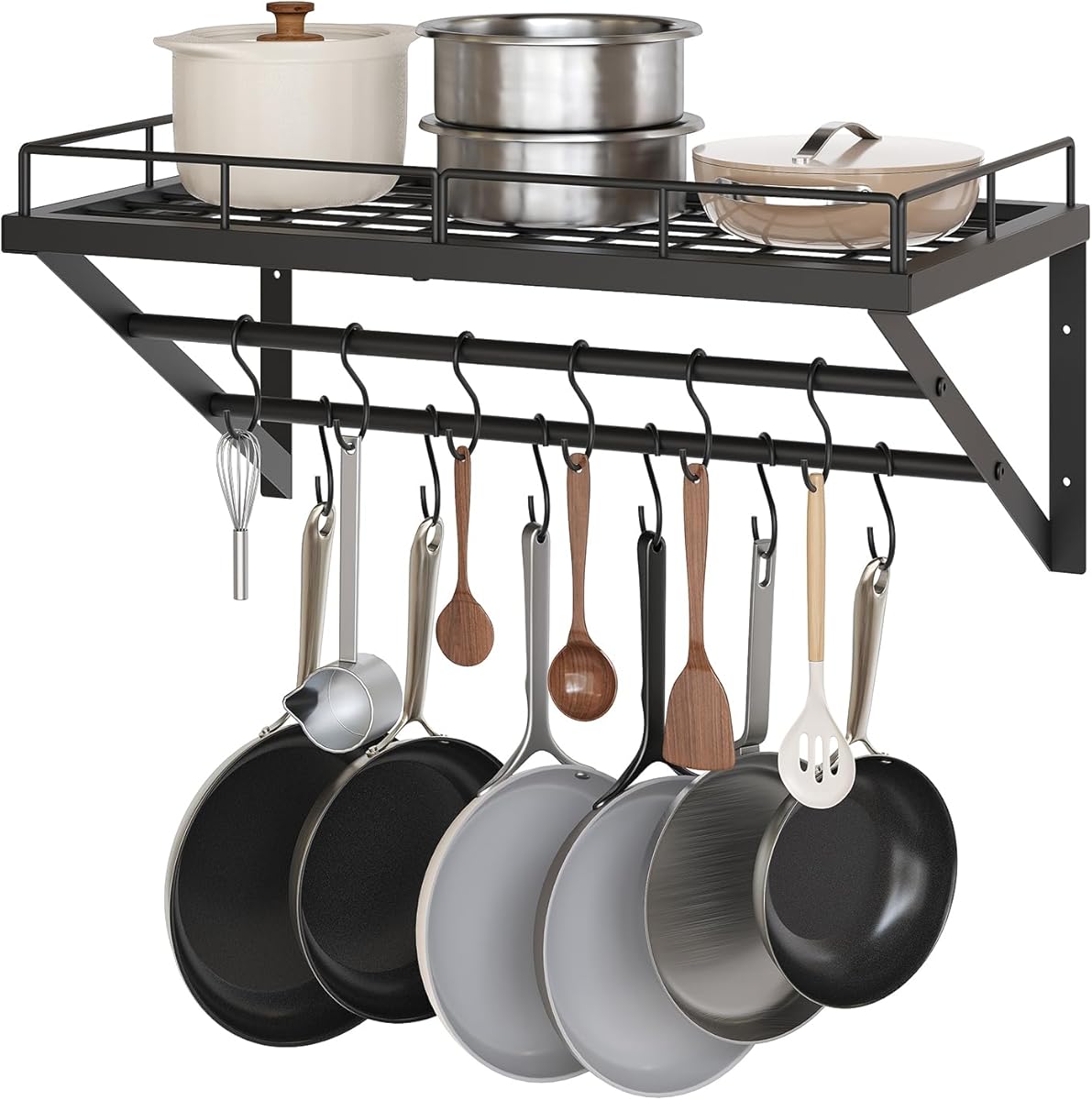
Choosing a Wall-Mounted Pot Rack: Maximize Space with Two-Tier Organization
This 23.8-inch black metal rack with dual hanging rails represents a specific solution for kitchens needing vertical storage without a ceiling mount. Buyers should understand that its 12 included S-hooks and two-tier design directly address the challenge of organizing cookware of varying sizes and handle lengths. The wall-mounted format is ideal for renters or those with limited overhead space.
Key Considerations Before Buying
- Assess your wall space and stud placement; this 23.8-inch unit requires secure mounting into wall studs or heavy-duty anchors for safety with loaded cookware.
- Consider your cookware collection; the two-tier rail design is excellent for separating frequently used pans from less-used items, but the total linear hanging space is finite.
- Evaluate finish durability; the black powder-coated finish on this model needs to resist scratches from metal S-hooks and daily utensil movement.
What Our Analysts Recommend
For wall-mounted racks, inspect the mounting hardware quality—robust brackets and multiple screw points are non-negotiable. The gauge and weld points of the metal frame indicate sturdiness; a wobbly single-tier rack won't support heavy cast iron. Quality S-hooks should have a thick, smooth finish to prevent scratching your cookware handles.
Pot Racks Market Context
Market Overview
The wall-mounted pot rack category is increasingly popular in smaller kitchens and open-concept designs, offering storage without sacrificing floor or counter space. Products like this two-tier black model compete directly with single-rail units and larger ceiling-mounted systems, focusing on modularity and a cleaner install.
Common Issues
Common failures include insufficient weight capacity leading to sagging rails, poor-quality powder coating that chips easily, and S-hooks that bend or slip off the rails. Improper mounting—relying solely on drywall anchors instead of studs—is a frequent installer error that causes catastrophic failures.
Quality Indicators
Look for racks with reinforced end caps on rails, visible, clean welds at joints, and a stated weight capacity that realistically accommodates a full set of pots and pans (50+ lbs is a good benchmark). High-quality racks often specify the type of steel used (e.g., carbon steel) and include a variety of hook types.
Review Authenticity Insights
Grade B Interpretation
A 'B' grade with an estimated 10% fake review rate suggests the vast majority of feedback is trustworthy, but a small portion may be inauthentic. The high verified purchase rate (all reviews marked 'V') significantly bolsters credibility for this specific rack.
Trust Recommendation
Focus on reviews that discuss long-term durability of the black finish, specific installation challenges with different wall types, and how the two-tier design functions after months of use. The adjusted rating of 4.5/5 is a reliable indicator of genuine customer satisfaction.
Tips for Reading Reviews
Prioritize reviews with photos showing the rack loaded with cookware, as these demonstrate real-world use. Pay close attention to comments about the sturdiness of the included mounting hardware and any mentions of the S-hooks' thickness and grip.
Expert Perspective
This product's exceptionally high 4.78/5 rating, even when adjusted to 4.50/5, indicates strong user satisfaction, particularly for its space-saving two-tier design. The 'B' authenticity grade suggests reviews reliably reflect experiences with this specific 23.8-inch black model. The key value proposition is its hybrid function as both a pot rack and a utensil organizer, which addresses two storage needs in one wall-mounted footprint.
Purchase Considerations
This rack is an optimal choice for someone with a medium-sized cookware collection and a suitable blank wall space near their cooking area. It is less ideal for those with very large, heavy cast iron collections or for walls without accessible studs at the required 23.8-inch span.
Comparing Alternatives
Shoppers should compare this two-tier design against single-rail wall racks for simplicity, or ceiling-mounted options if overhead space and structural support are available.


