
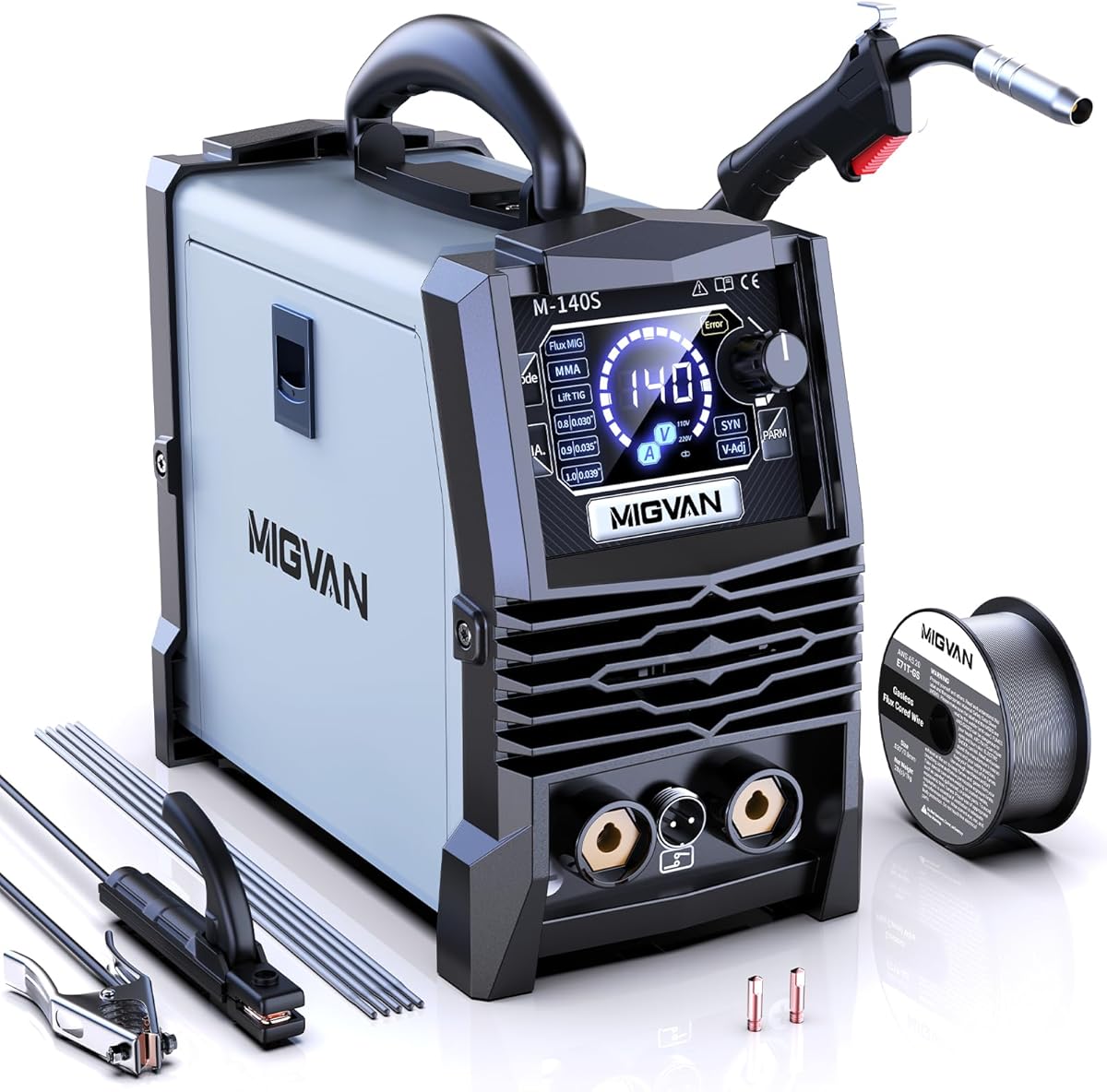
Evaluating a 3-in-1 IGBT inverter welder with synergic control and dual voltage
The MIGVAN welder presents a specific configuration for UK DIYers: a 140A IGBT inverter offering gasless flux-cored MIG, lift TIG, and stick welding. Its synergic control and one-click wire feeding aim to simplify setup, but understanding its capabilities relative to your projects is crucial. This machine's dual 110V/220V input makes it versatile for both garage and site work where power sources vary.
Key Considerations Before Buying
- The 140A maximum output is suitable for light to medium fabrication (up to ~4-5mm mild steel with flux-core wire), but may be limiting for continuous heavy-duty welding or thicker materials.
- Synergic control automates voltage/wire speed pairing, which benefits beginners, but advanced users should verify it allows manual override for fine-tuning on different joint types.
- The inclusion of lift TIG (scratch start) is a budget-friendly entry to TIG for steel, but lacks high-frequency start for aluminium and requires practice to avoid tungsten contamination.
What Our Analysts Recommend
For a machine in this class, inspect the duty cycle rating at 140A—often around 30-60% for DIY units—which dictates how many minutes per ten you can weld at full power before overheating. Quality is also indicated by a robust wire feed mechanism with minimal plastic components and clear, responsive controls on the LED display for adjusting parameters.
MIG Welding Equipment Market Context
Market Overview
The UK market for compact, multi-process inverters is competitive, with numerous brands offering similar 3-in-1 functionality at this price point. These machines primarily target hobbyists, automotive restorers, and farm maintenance rather than industrial production.
Common Issues
Common problems with budget multi-process welders include inconsistent wire feeding with flux-cored wire, fragile torch connections, and synergic programs that aren't optimised for all wire brands or diameters. Cooling fan noise and thermal protection triggering prematurely under sustained use are also frequent user reports.
Quality Indicators
Look for an IGBT inverter design (more efficient and reliable than older MOSFET tech), a metal gear wire feed system, and comprehensive safety features like thermal overload protection. A clear, detailed manual with UK-specific electrical guidance and accessible customer support for spare parts (like torches and liners) are strong positive signals.
Review Authenticity Insights
Grade U Interpretation
A Grade 'U' (Unrated) with a 0.00% estimated fake review rate and zero total reviews means there is absolutely no verified purchase feedback or established authenticity pattern for this specific MIGVAN model on Amazon.co.uk. It is a complete unknown in the review ecosystem.
Trust Recommendation
You must rely entirely on the manufacturer's specifications and any third-party technical reviews outside Amazon. Given the lack of data, pay particular attention to the warranty terms, return policy, and seller reputation. Consider this a first-adopter purchase with higher inherent uncertainty.
Tips for Reading Reviews
For a product with no reviews, search for reviews of the brand's other models or visually identical machines sold under different brand names—common in this category. Pay closest attention to reviews discussing long-term reliability over six months and the availability of technical support.
Expert Perspective
This welder's specification sheet targets the convenience-seeking DIY welder with its 3-in-1 capability and synergic control. The dual voltage is a significant practical advantage in the UK, allowing use with a standard 13A plug on 230V or a 110V transformer for construction sites. However, the complete absence of user reviews (Grade U) makes it impossible to assess real-world performance, common faults, or the accuracy of its synergic programs. The 'one-click' wire feed feature will be critical to its usability; if poorly implemented, it will cause constant frustration.
Purchase Considerations
Weigh the convenience of an all-in-one machine against the potential compromise in each process's performance compared to a dedicated MIG unit. Your decision should hinge on your primary use case: if it's occasional flux-cored MIG on steel, this could suffice, but if you plan serious TIG work, a dedicated DC TIG welder would be superior. The lack of community feedback means your purchase is essentially beta-testing the product.
Comparing Alternatives
Shoppers should compare this model's specifications and price directly against established UK brands like Sealey, R-Tech, or Parweld, which often have documented user feedback and local support networks.


