
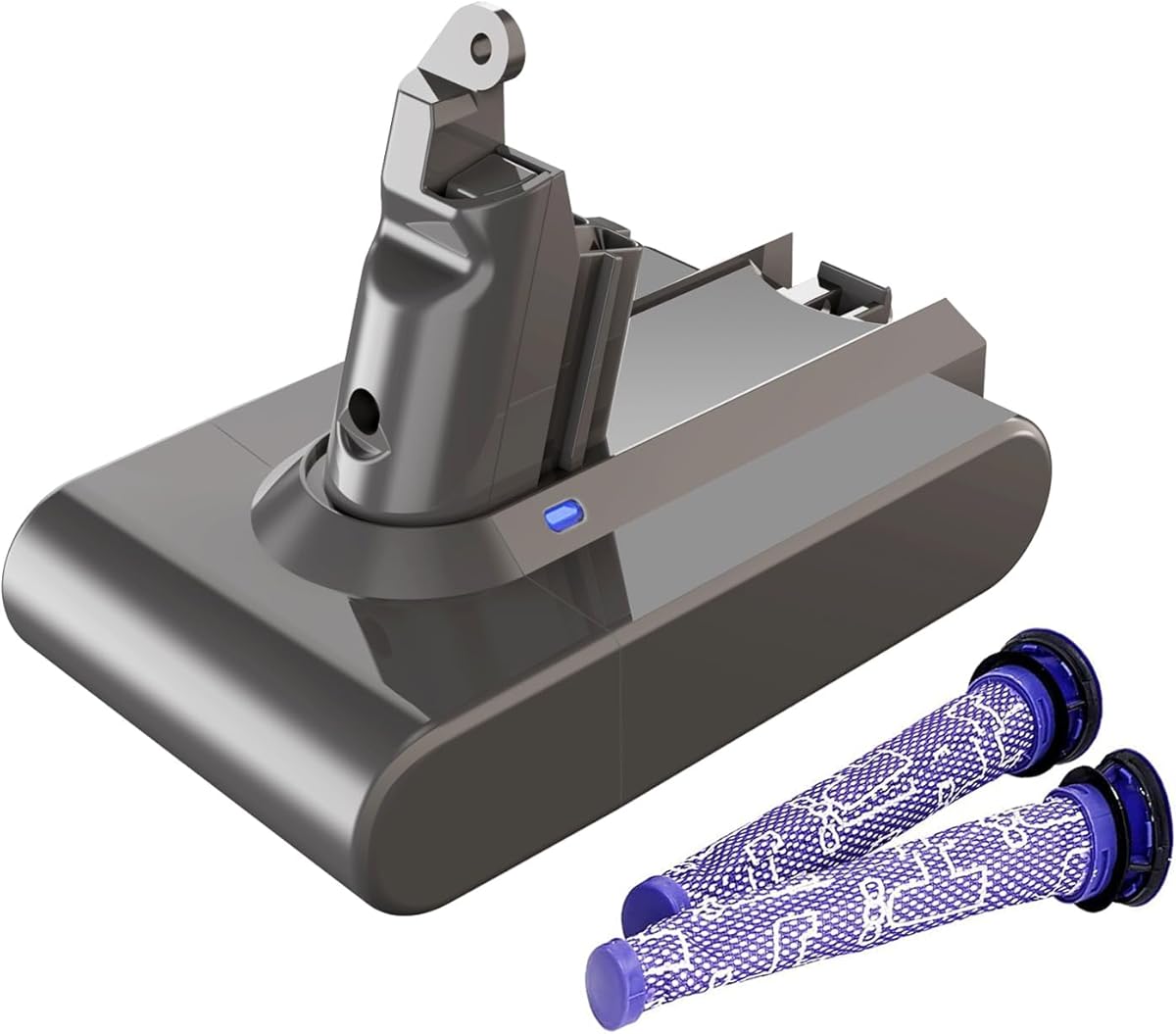
Choosing a Dyson V6 Replacement Battery: Capacity, Compatibility, and Charging Considerations
When replacing your Dyson V6 battery, the 7000mAh capacity upgrade is the primary feature to evaluate against your original. This specific third-party battery claims compatibility across numerous V6 models and includes bonus filters, but verifying exact fit for your SV03-SV09 or DC series vacuum is crucial. Unlike generic replacements, this product's advertised 7000mAh rating represents a potential runtime increase over Dyson's original 2100mAh battery, though real-world performance depends on battery cell quality.
Key Considerations Before Buying
- Verify your exact Dyson model number (SV04, DC62, etc.) matches the compatibility list, as V6 sub-models have subtle physical variations in battery compartment design.
- The 7000mAh rating suggests extended runtime but may increase weight and charging time; assess whether capacity or ergonomics matters more for your cleaning patterns.
- Included bonus filters indicate a bundled value approach, but filter quality may differ from Dyson OEM parts—check filter material and fit reviews specifically.
What Our Analysts Recommend
Genuine reviews will mention specific runtime comparisons (e.g., 'lasts 25 minutes on medium power vs. original 15 minutes') and physical fit details like 'snaps securely' or 'requires slight pressure.' Look for mentions of charging behavior—quality batteries maintain consistent power output until depletion rather than sudden shutdowns. The included filters should be examined for foam density and whether they create proper seals in the vacuum's filter housing.
Vacuum Replacement Parts Market Context
Market Overview
The Dyson V6 aftermarket battery segment is crowded with capacity claims ranging from 3000mAh to 7000mAh, with higher ratings often commanding premium prices but sometimes exaggerating actual performance. Canadian consumers face particular challenges with shipping costs and warranty support for third-party vacuum parts. Most replacement batteries originate from specialized power tool battery manufacturers adapting their technology to vacuum applications.
Common Issues
Common problems include batteries that physically fit but fail to communicate properly with the vacuum's onboard electronics, triggering error lights. Some higher-capacity batteries use inferior cells that degrade rapidly after 30-50 charge cycles, and charging circuitry may not properly balance cells, leading to reduced lifespan. Compatibility lists often overstate model fits, particularly for DC-series handheld variants with different latch mechanisms.
Quality Indicators
Quality batteries specify the cell type (like 18650 or 21700 cells) and protection features like temperature sensors and voltage cutoff circuits. Look for manufacturers that disclose the battery management system (BMS) specifications. Premium replacements often have slightly heavier construction due to more robust internal components and cleaner mold lines on the plastic casing where it interfaces with your vacuum.
Review Authenticity Insights
Grade B Interpretation
A Grade B authenticity rating with 15% estimated fake reviews indicates generally trustworthy feedback but suggests some review manipulation exists—typically through incentivized reviews that may overemphasize the 'bonus filters' or downplay compatibility issues. The adjusted 3.70/5 rating (down from 4.00/5) reveals that authentic experiences are slightly less positive than the overall average suggests.
Trust Recommendation
Focus on reviews that mention specific Dyson models you own (like DC59 or SV05) rather than generic praise. Be skeptical of reviews that only discuss the included filters without battery performance details. The 1356-review sample size provides substantial data, but prioritize recent reviews that reflect current manufacturing quality rather than older feedback.
Tips for Reading Reviews
Search for reviews mentioning '6 months later' or 'after 50 charges' to assess longevity claims. Pay particular attention to Canadian reviewers discussing winter performance, as lithium-ion batteries can be affected by cold storage conditions. Look for detailed complaints about fit—specific descriptions of latch mechanisms or connection issues are more credible than vague 'doesn't work' statements.
Expert Perspective
This battery represents the high-capacity segment of V6 replacements, with its 7000mAh claim requiring scrutiny given that quality 18650 cells typically max around 3500mAh each—suggesting either parallel cell configuration or optimistic ratings. The broad compatibility list covering SV03-SV09 and DC58-DC74 models is ambitious; historically, such wide claims sometimes overlook minor physical variations between sub-models. The inclusion of two filters adds perceived value but shifts the product from pure replacement part to accessory bundle, which may appeal to owners needing both components.
Purchase Considerations
Weigh whether you genuinely need 7000mAh capacity—which may provide 40+ minutes of runtime—or if a more moderate 4000-5000mAh battery would suffice with better weight distribution. Consider your vacuum's age: older V6 models may not benefit from extended runtime if the motor or suction is already degraded. The authenticity data suggests reasonably trustworthy reviews, but the adjusted 3.70 rating indicates some consistent drawbacks mentioned by verified purchasers.
Comparing Alternatives
Compare this bundle against pure battery replacements without filters, and verify whether competing batteries specify their cell chemistry (Li-ion vs. LiPo) and protection features more transparently.


