Evaluating 4-in-1 Gas and CO Detectors: What Plug-In Models Offer for Home Safety
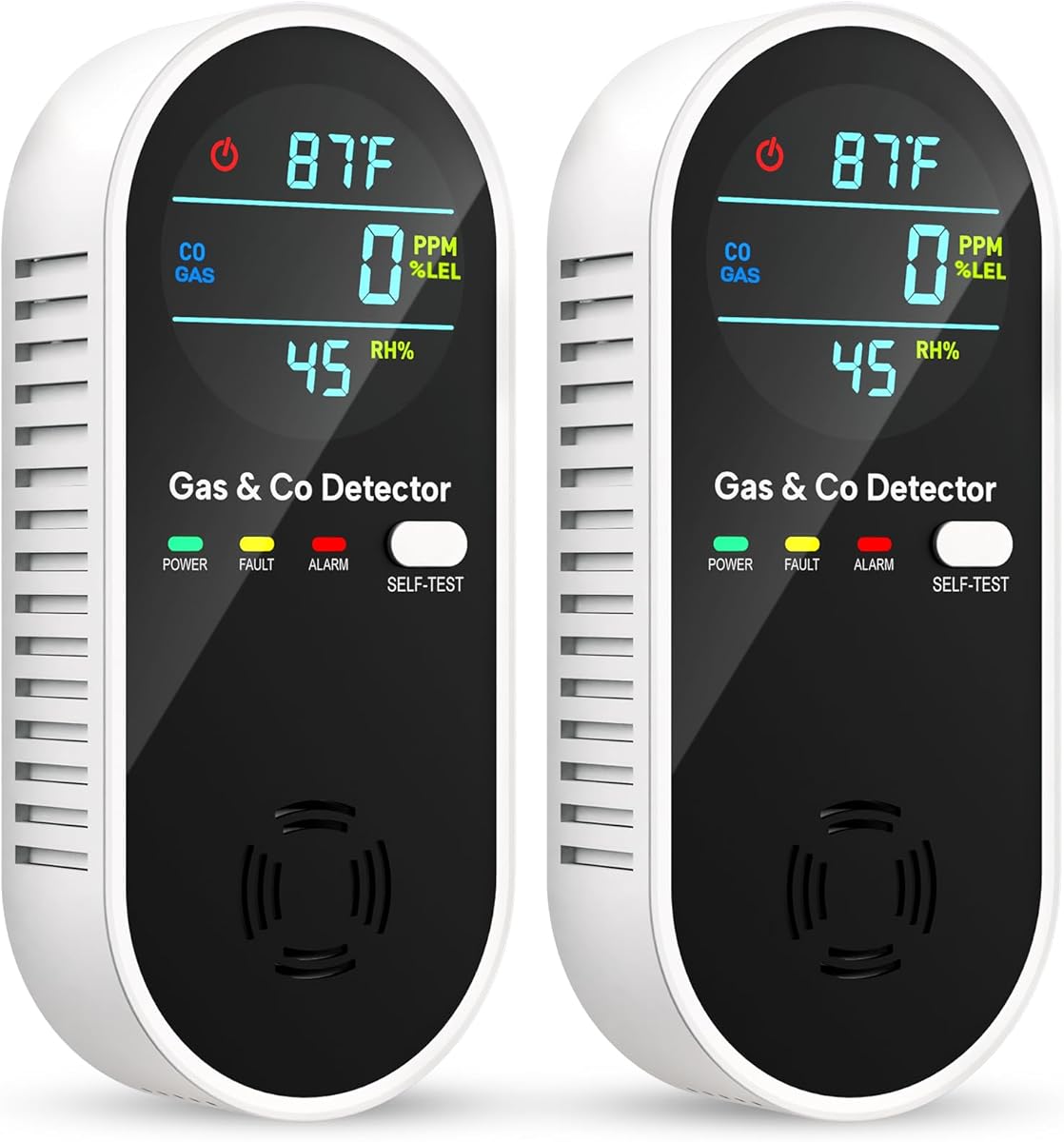
This 4-in-1 plug-in detector combines carbon monoxide, natural gas, temperature, and humidity monitoring in one unit, making it particularly suitable for RVs and homes with limited outlet space. Buyers should understand that plug-in models like this offer continuous power without battery changes but require permanent outlet placement near potential gas sources. The dual-pack configuration provides coverage for multiple risk areas like kitchens and furnace rooms.
Key Considerations Before Buying
- The plug-in design eliminates battery maintenance but limits placement to areas with accessible outlets, which may not be optimal for gas detection near ceilings where CO accumulates.
- Dual alarms for different gas types are essential—this unit distinguishes between CO and natural gas threats with specific alerts, preventing confusion during emergencies.
- The integrated temperature and humidity sensors add environmental monitoring but don't replace dedicated thermostats or dehumidifiers; they provide basic awareness of conditions that might affect gas appliance performance.
What Our Analysts Recommend
Quality combination detectors should have UL 1484 (CO) and UL 1484 (combustible gas) certifications, though this specific model's certifications aren't specified in available data. Look for clear voice alerts that distinguish between gas types, as this model reportedly offers, and test/silence buttons that are easily accessible without removing the unit from the outlet.
Combination Gas & Carbon Monoxide Detectors Market Context
Market Overview
The combination detector market has expanded beyond basic CO alarms to include natural gas/propane detection, with 4-in-1 units adding environmental sensors as differentiators. Plug-in models represent about 30% of the market, appealing to renters and RV owners who need non-permanent installation. Recent innovations include digital displays showing gas concentration levels, though this model appears to use LED indicators instead.
Common Issues
Many combination detectors suffer from false alarms triggered by humidity or temperature fluctuations, particularly in bathrooms or kitchens. Plug-in units can be accidentally unplugged or obstructed by furniture, compromising protection. Some models have confusing alarm patterns that don't clearly distinguish between CO and natural gas threats.
Quality Indicators
Superior combination detectors feature electrochemical CO sensors (more accurate than metal oxide) and semiconductor gas sensors calibrated for natural gas. Look for units with end-of-life warnings (typically 5-10 years) and loud alarms exceeding 85 dB. The best models offer both plug-in and battery backup options for uninterrupted protection during power outages.
Review Authenticity Insights
Grade B Interpretation
A Grade B authenticity rating with 15% estimated fake reviews suggests generally reliable feedback but warrants careful review scrutiny. The 4.60 adjusted rating (down from 4.93) indicates genuine satisfaction sits between 'very good' and 'excellent' rather than near-perfect. All reviews being verified purchases significantly boosts credibility compared to non-verified reviews common in this category.
Trust Recommendation
Focus on reviews discussing specific installation scenarios (RV, basement, kitchen) and long-term performance (3+ months), as these are harder to fabricate. Be skeptical of reviews emphasizing packaging or delivery speed over detection performance. The high number of reviews (308) provides sufficient data points to identify consistent patterns despite the estimated fake percentage.
Tips for Reading Reviews
Prioritize reviews mentioning actual alarm incidents or testing procedures with CO simulators/gas lighters. Look for discussions about placement limitations due to the plug-in design and humidity sensor accuracy. Reviews comparing this unit to single-function detectors or hardwired systems provide particularly valuable context for decision-making.
Expert Perspective
This product's exceptionally high adjusted rating (4.60/5) from verified purchasers indicates it reliably performs its core safety functions despite the authenticity concerns affecting 15% of reviews. The 4-in-1 functionality addresses multiple home environment concerns in one device, though experts note that combination units sometimes compromise on individual sensor quality compared to dedicated detectors. The plug-in design with dual-pack configuration makes it practical for covering multiple risk zones without complex installation, particularly appealing for temporary residences like RVs or rental properties.
Purchase Considerations
Weigh the convenience of plug-in installation against the safety ideal of ceiling placement for CO detection. Consider whether the temperature/humidity sensors provide meaningful value for your specific environment or if you'd prefer a dedicated CO/natural gas detector at a potentially lower price point. The dual-pack offers cost efficiency but requires two appropriate outlet locations near potential gas sources and sleeping areas.
Comparing Alternatives
Shoppers should compare this unit's features against hardwired interconnected systems for whole-home protection and battery-only models for placement flexibility away from outlets.