
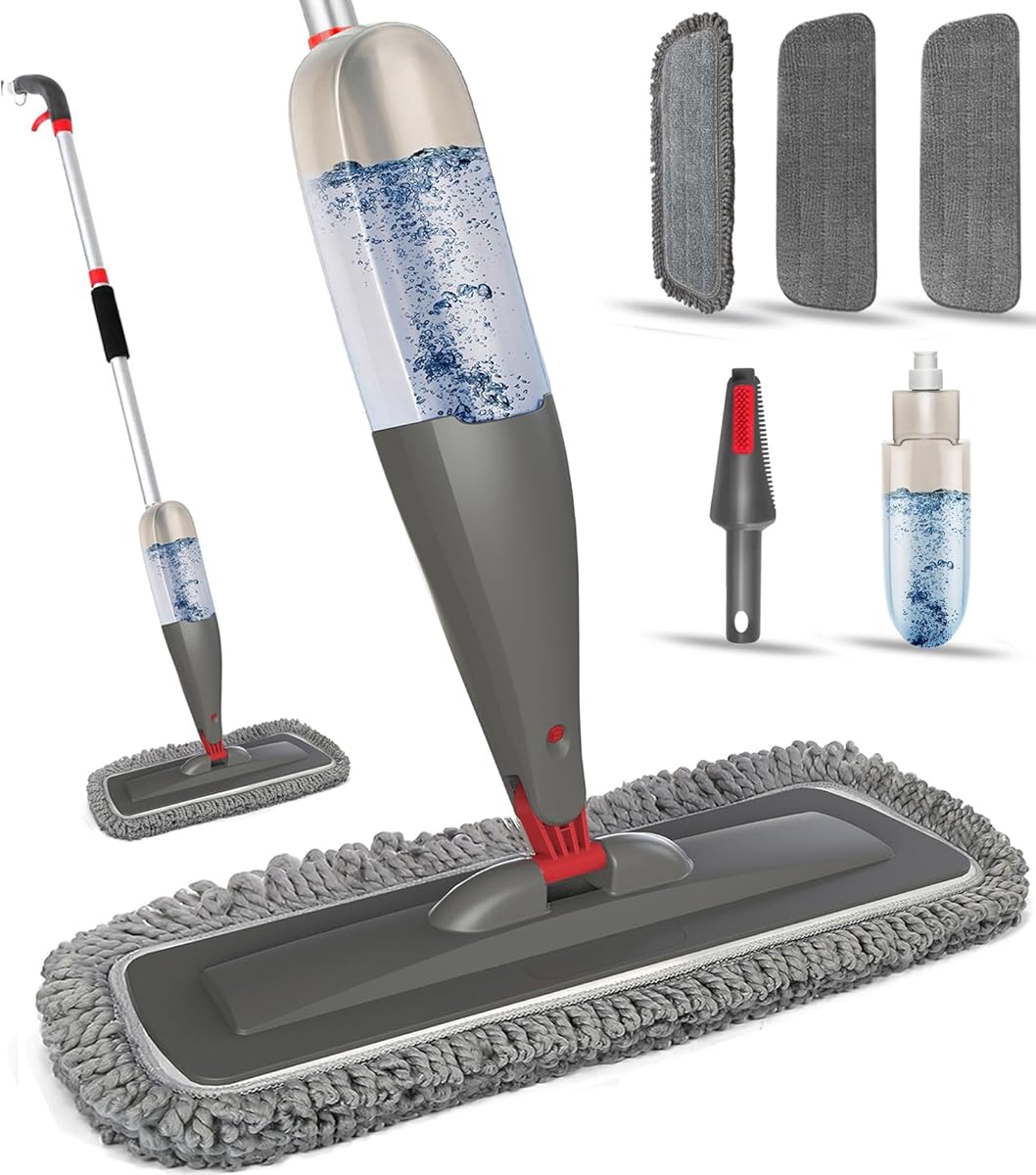
Choosing a Spray Mop: Balance Spray Control, Pad Quality, and Refill Capacity
When evaluating this specific spray mop with its 800ml refillable bottle and washable microfiber pads, focus on how its design addresses common cleaning frustrations. The combination of a large-capacity reservoir and reusable pads positions it as a potential solution for frequent hardwood and laminate floor maintenance without constant refills.
Key Considerations Before Buying
- Assess the sprayer mechanism's consistency; a common failure point in spray mops is a trigger that clogs or delivers uneven mist, which this product's 800ml pressurized system aims to prevent.
- Evaluate the washable pad's durability and attachment; pads that shift during use or degrade after washes compromise cleaning efficiency on vinyl and tile surfaces.
- Consider the mop's weight distribution with a full bottle; a top-heavy design can cause wrist fatigue during extended cleaning sessions on large floor areas.
What Our Analysts Recommend
High-quality spray mops feature a leak-proof connection between bottle and spray head, and microfiber pads with adequate thickness (at least 300 GSM) for both absorbing liquid and trapping dust. The mop head should pivot freely to reach under furniture without requiring excessive force.
Dust Mops Market Context
Market Overview
The reusable spray mop market is crowded with products promising convenience, but many compromise on either pad quality, spray mechanism durability, or fluid capacity. This model's 800ml bottle is notably larger than the typical 500-600ml standard, targeting users who clean larger areas.
Common Issues
Consumers frequently report spray nozzles clogging with homemade cleaning solutions, weak mist output after minimal use, and microfiber pads that lose their scrubbing power or lint after repeated washing. Handle durability at the connection points is another recurring failure.
Quality Indicators
Look for mops with commercial-grade trigger mechanisms, clearly labeled compatibility with various floor-safe cleaning solutions (not just water), and pads that specify GSM weight and include a scrubber strip for stuck-on debris.
Review Authenticity Insights
Grade B Interpretation
A Grade B with a 15% estimated fake review rate suggests generally reliable feedback, but advises cautious interpretation of overly effusive reviews. The adjusted rating of 4.50/5 from the original 4.89/5 indicates some review inflation, yet still reflects strong user satisfaction.
Trust Recommendation
Prioritize verified purchase reviews that mention specific, long-term use (e.g., 'after 3 months' or 'washed pads 10 times'), as these are harder to fake. Be skeptical of reviews focusing solely on unboxing or first-use impressions without substantive performance details.
Tips for Reading Reviews
For this product, pay special attention to reviews discussing the sprayer's performance after multiple refills and the pad's condition after 5+ washes. Authentic reviews often compare it to previous mop brands or detail use on specific flooring like textured laminate or glossy tile.
Expert Perspective
The product's high adjusted rating (4.50/5) and strong authenticity grade indicate it likely delivers on core promises: convenient spray application and effective cleaning with reusable pads. The 800ml capacity is a significant practical advantage for homes over 1,500 sq ft, reducing mid-clean refills. However, the presence of some manipulated reviews suggests potential variability in pad longevity or spray mechanism consistency between units.
Purchase Considerations
This mop is best suited for homeowners with predominantly hard-surface flooring who prefer using their own cleaning solutions and want to minimize disposable pad waste. Consider your willingness to launder pads separately and your need for heavy scrubbing power, as microfiber pads excel at dust and light soil but may struggle with deeply ingrained grout lines.
Comparing Alternatives
Shoppers should compare the pad attachment system and trigger mechanism with competing models from brands like O-Cedar or Libman to assess ergonomic differences.


