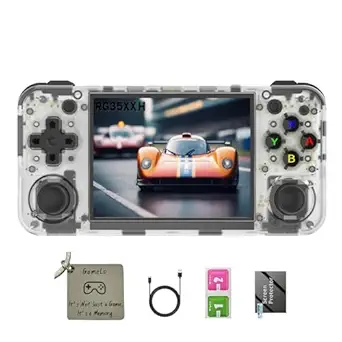
Evaluating the R36S: A Retro Handheld with Open-Source Flexibility and 21,000+ Games
The R36S Retro Handheld Game Console represents a specific niche: an affordable, open-source Linux device pre-loaded with classic games. Buyers should understand this isn't a licensed product from Nintendo or Sega, but a community-driven emulation device. Its value lies in the 3.5" IPS display, the massive pre-loaded library, and the ability to tinker with its open-source ArkOS-based system.
Key Considerations Before Buying
- The '21,000+ games' claim includes many duplicates, regional variants, and obscure titles; focus on the quality of emulation for systems like PlayStation 1, N64, and GBA that the RK3326 chip can handle.
- The open-source Linux system (ArkOS) offers customization but requires technical comfort for optimal setup, including managing ROMs, updating cores, and configuring controls beyond the out-of-box experience.
- Build quality varies in this price segment; specifically check reviews mentioning the D-pad responsiveness, shoulder button feel, and the durability of the plastic shell on this purple 128GB model.
What Our Analysts Recommend
Quality indicators include consistent praise for the 3.5" IPS screen's brightness and viewing angles, which is crucial for retro gaming. Look for mentions of reliable battery life (typically 4-6 hours) and the inclusion of a functional charging cable, as some units ship without. Positive notes on the included 128GB SanDisk or similar branded microSD card suggest better build consistency.
Handheld Games Market Context
Market Overview
The retro handheld market is flooded with RK3326 and RK3566-based devices, with the R36S competing directly with Anbernic's RG35XX and Miyoo Mini+ on price. Its differentiator is the open-source firmware and slightly larger screen, targeting users who prefer customization over a polished, closed ecosystem.
Common Issues
Common problems include poor-quality included SD cards failing prematurely, inconsistent button membranes leading to mushy inputs, and the need for immediate firmware updates to fix bugs. Many devices also lack reliable sleep/suspend functions, a key feature for portable play.
Quality Indicators
In this category, quality is signaled by community support and active firmware development. A device like the R36S with an active GitHub repository for ArkOS is a positive sign. Hardware indicators include a properly fitted screen without light bleed, clicky face buttons, and a weight that suggests adequate internal battery size.
Review Authenticity Insights
Grade B Interpretation
A 'Grade B' with a 15% estimated fake review rate indicates generally trustworthy reviews but suggests a moderate level of incentivized or biased feedback. For the R36S, this likely manifests as overly glowing 5-star reviews that downplay the technical learning curve.
Trust Recommendation
Prioritize verified purchase reviews that mention specific games played (e.g., 'N64 Zelda runs well') or detail setup steps, as these demonstrate real use. Be skeptical of reviews only praising the 'number of games' without commenting on performance or build.
Tips for Reading Reviews
Focus on 3 and 4-star reviews for balanced insights into the R36S's pros (screen, value) and cons (firmware quirks, button quality). Look for recurring technical terms like 'RetroArch,' 'scraping,' or 'BIOS files' to identify experienced retro handheld users.
Expert Perspective
The R36S presents compelling value, evidenced by its solid adjusted rating of 3.9/5 from verified buyers. Its strengths are the vibrant IPS screen, extensive game library, and open-source potential. The primary trade-off is a less refined user experience compared to more expensive competitors, requiring a willingness to engage with community firmware and forums. The data suggests most buyers are satisfied, but expectations must be set around its tinkerer-friendly nature.
Purchase Considerations
Purchase this if you value hardware customization and don't mind initial setup for optimal performance. Hesitate if you seek a plug-and-play experience equivalent to a Nintendo Switch. The 128GB version is advisable for the larger library, but plan to backup the included game files immediately due to card quality concerns.
Comparing Alternatives
Shoppers should compare the R36S's open-system approach with the more user-friendly, closed systems of the Anbernic RG35XX H or the data-packed PowKiddy RGB30.