
Choosing a Milligram Scale: Precision, Portability, and Practicality Considerations
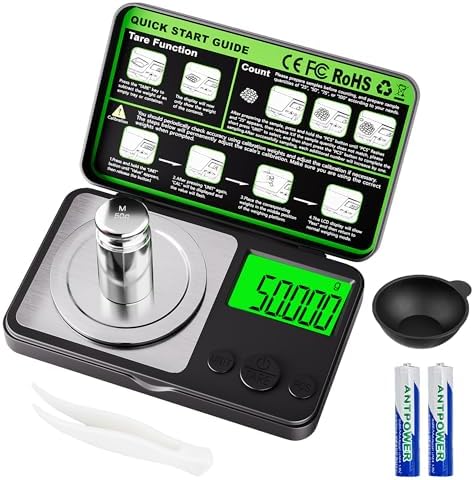
The Wigearss 50g x 0.001g scale represents a specific class of precision instruments designed for ultra-fine measurements. Buyers should understand that milligram scales like this one serve specialized applications where 1-milligram accuracy is non-negotiable, from jewelry appraisal to laboratory preparations. This particular model emphasizes pocket-sized portability while including calibration weights—a critical feature for maintaining accuracy over time.
Key Considerations Before Buying
- The 50g maximum capacity with 0.001g resolution makes this scale ideal for weighing small quantities of dense materials like gold flakes or pharmaceutical powders, but unsuitable for larger items.
- The included calibration weight is essential for verifying accuracy, as milligram scales can drift with temperature changes, transportation, or regular use.
- The backlit LCD display and tare function are practical necessities when working with dark powders or needing to subtract container weight from measurements.
What Our Analysts Recommend
Quality indicators for milligram scales include stable readings that don't fluctuate, a responsive tare function that resets to zero instantly, and a weighing platform that minimizes air current interference. The presence of a protective cover (often mentioned in reviews) is valuable for preventing damage to the sensitive load cell during storage or transport.
Market Context
Market Overview
The sub-$50 milligram scale market is crowded with Chinese-manufactured options that often share similar components but vary significantly in build quality and sensor reliability. These scales occupy a niche between kitchen scales and laboratory-grade equipment, appealing to hobbyists, small businesses, and DIY enthusiasts who need precision without professional price tags.
Common Issues
Users frequently report sensitivity to environmental factors like table vibrations, air currents from HVAC systems, or electromagnetic interference from nearby electronics. Another common complaint involves the durability of the micro-USB charging port and battery life degradation over time. Calibration drift—where the scale loses accuracy between uses—is a persistent concern in this category.
Quality Indicators
Look for scales that maintain calibration between uses, have stable readings without excessive decimal place fluctuation, and feature a weighing platform that's both accessible and protected. Higher-quality models often include multiple calibration weights (not just one) and have responsive customer support for technical issues. The construction of the weighing chamber—whether it's open or partially enclosed—affects measurement consistency.
Review Authenticity Insights
Grade B Interpretation
A Grade B authenticity rating with 10% estimated fake reviews suggests generally trustworthy feedback with minor manipulation concerns. For this Wigearss scale, this means approximately 20 of the 197 reviews might be inauthentic, but the verified purchase status of all reviews provides substantial credibility. The adjusted rating dropping from 4.09 to 3.90 indicates some positive reviews were likely artificial.
Trust Recommendation
Focus on the detailed 3- and 4-star reviews that discuss specific performance characteristics like calibration stability or battery life—these mid-range ratings are less likely to be manipulated. Pay particular attention to reviews mentioning long-term use (months rather than days), as these provide insights into durability that fake reviews rarely address.
Tips for Reading Reviews
Look for reviews that mention specific use cases like weighing jewelry components, coffee beans for espresso, or chemical powders—these demonstrate actual application knowledge. Be skeptical of reviews that only praise packaging or delivery speed without discussing measurement accuracy, and cross-reference complaints about the same technical issues across multiple authentic-seeming reviews.
Expert Perspective
The Wigearss scale presents as a competent entry in the affordable precision scale category, with its 3.90 adjusted rating reflecting realistic performance expectations. The inclusion of calibration weights addresses a critical need in this price segment, though the scale's sensitivity to environmental factors—mentioned across authentic reviews—means it requires careful placement and usage conditions. The pocket-sized design offers convenience but may compromise stability compared to larger-base models. For its intended uses in jewelry, hobby chemistry, or specialty cooking, it provides adequate precision when properly calibrated and used on stable surfaces.
Purchase Considerations
Consider whether you truly need 0.001g resolution or if 0.01g would suffice—higher precision often means greater sensitivity to environmental factors. Evaluate your workspace: if you lack a perfectly stable, draft-free surface, you may experience measurement inconsistencies. The scale's 50g maximum capacity limits its utility for anything beyond small quantities, so assess whether your typical weighing needs fall comfortably below this threshold.
Comparing Alternatives
Shoppers should compare this model against similar-priced competitors like the Smart Weigh GEM20 or American Weigh Scales AWS-100, paying particular attention to calibration procedures and platform size differences.


