Choosing a Magnetic Work Light: Why Magnet Placement and Gooseneck Flexibility Matter
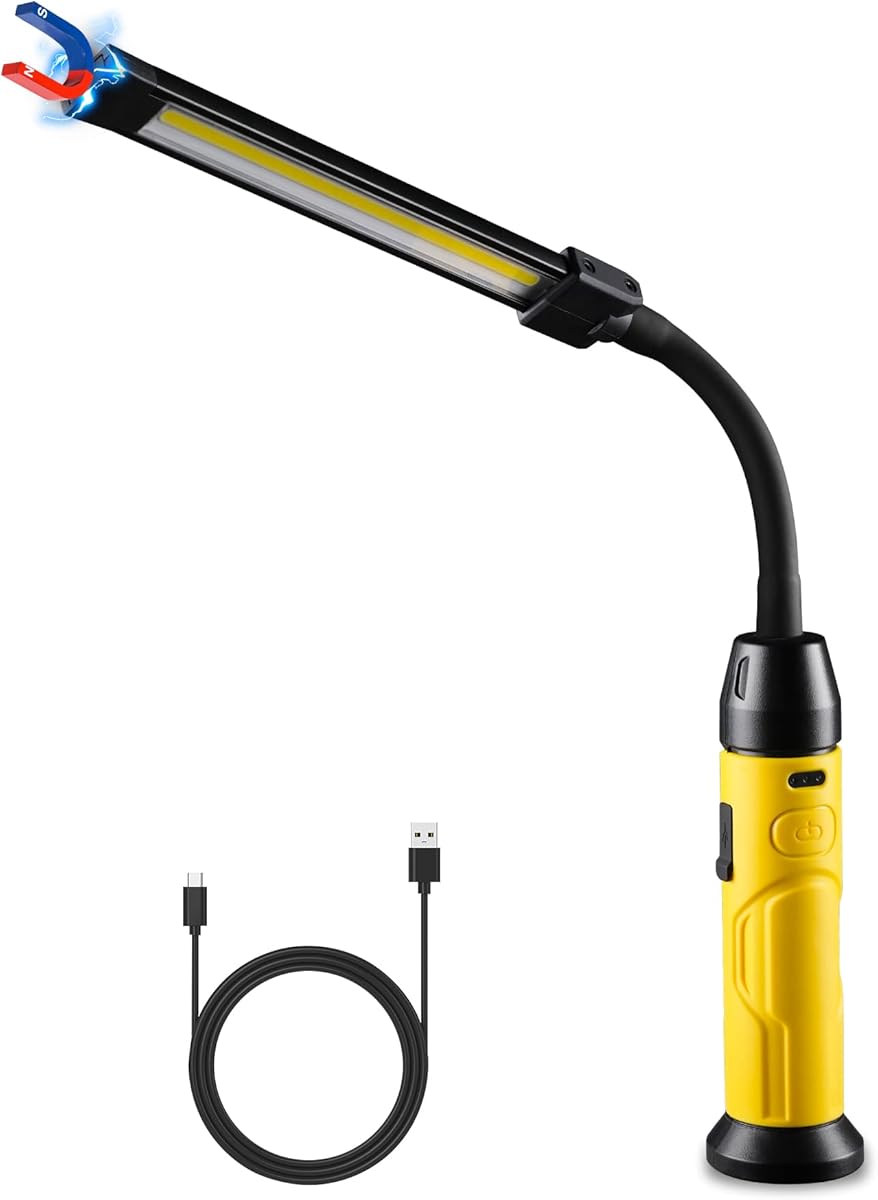
When selecting a magnetic LED work light like this 1000LM rechargeable model, the dual magnet system and gooseneck design create unique advantages for hands-free illumination. Unlike stationary work lights, this product's combination of flexible positioning and strong magnetic bases allows mechanics and DIYers to direct light precisely where needed in tight spaces.
Key Considerations Before Buying
- Dual magnet placement (top and base) enables attachment to both vertical surfaces like car hoods and horizontal surfaces like workbenches, providing more positioning options than single-magnet designs.
- The 1000 lumen output requires careful battery management—look for reviews mentioning actual runtime during intensive tasks like engine repairs rather than just maximum brightness claims.
- Gooseneck flexibility versus durability is crucial—quality lights maintain position without drooping while resisting metal fatigue from repeated bending during automotive work.
What Our Analysts Recommend
Examine reviews mentioning specific use cases like 'under-car inspection' or 'engine bay work' to gauge real-world performance. Quality indicators include consistent light output throughout battery life, magnets that hold securely on painted surfaces without scratching, and gooseneck joints that don't loosen over time.
Job Site Lighting Market Context
Market Overview
The magnetic work light category has shifted toward rechargeable LED models with higher lumen outputs, creating competition between brightness claims and actual battery efficiency. Products like this 1000LM flexible light compete directly with corded alternatives that offer unlimited runtime but lack portability.
Common Issues
Many magnetic work lights suffer from weak magnets that fail on textured surfaces, inconsistent brightness as batteries drain, or gooseneck designs that won't hold position under their own weight. Cheap models often use lower-grade LEDs that produce uneven beam patterns with dark spots.
Quality Indicators
Superior magnetic work lights feature rare-earth magnets with protective coatings to prevent surface damage, high-CRI LEDs that render colors accurately for identifying wire colors or fluid leaks, and thermal management systems to prevent overheating during extended use.
Review Authenticity Insights
Grade B Interpretation
The Grade B authenticity rating with 15% estimated fake reviews suggests mostly genuine feedback but warrants careful review reading. For this specific magnetic work light, the 4.60 adjusted rating (down from perfect 5.00) indicates some authentic reviewers noted minor drawbacks.
Trust Recommendation
Focus on reviews describing specific automotive repair scenarios or mentioning exact magnet strength comparisons—these details indicate genuine use. Be skeptical of reviews only praising brightness without mentioning runtime or heat generation during continuous operation.
Tips for Reading Reviews
Look for mentions of 'top magnet for hanging' versus 'base magnet for standing' applications to understand dual-magnet functionality. Authentic reviews often compare this light's flexibility against traditional flashlights or describe particular repair tasks where hands-free illumination proved essential.
Expert Perspective
This magnetic work light's combination of 1000LM output, dual magnet system, and flexible gooseneck addresses core needs in automotive and workshop environments where directional lighting is critical. The 4.60 adjusted rating from authentic reviews suggests strong performance with minor trade-offs, likely in battery life or magnet strength on certain surfaces. The product's design specifically targets mechanics who need to illuminate deep engine compartments or undercarriage areas where traditional lighting fails.
Purchase Considerations
Evaluate whether the rechargeable design suits your workflow—if you perform multi-hour repairs regularly, consider whether the runtime matches your needs or if a corded alternative might be better. The dual magnets provide versatility but require metallic surfaces; assess whether your work areas offer sufficient ferrous attachment points.
Comparing Alternatives
Compare this flexible gooseneck design against rigid-body magnetic lights that may offer stronger magnets but less precise beam positioning for intricate tasks.