
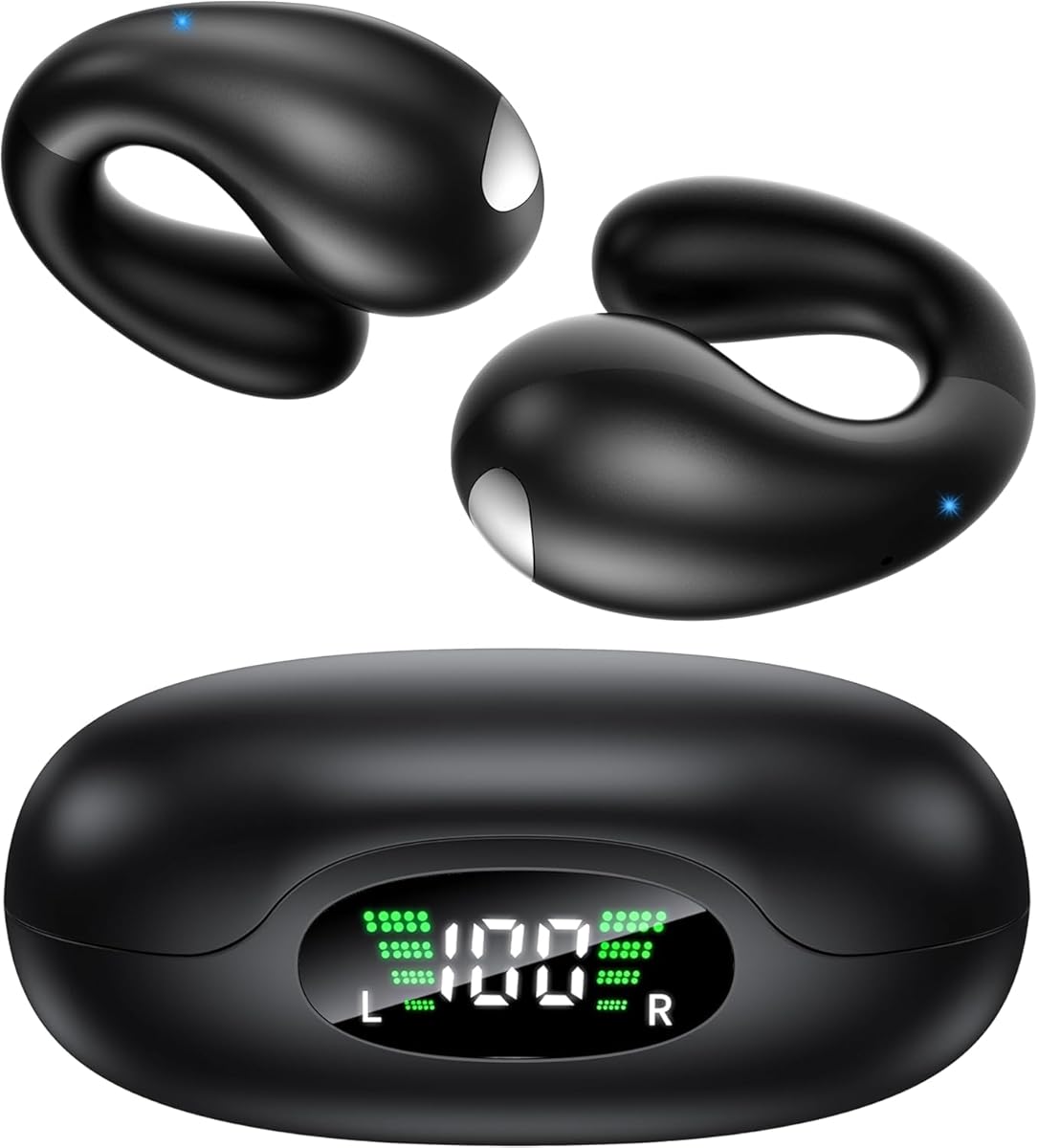
Open-ear clip-on earbuds with bone conduction: What to know before buying
This specific model combines flexible clip-on design with bone conduction technology, offering an alternative to traditional earbuds. The 36-hour battery life and IPX7 waterproof rating suggest it's positioned for active users who need situational awareness during workouts or outdoor activities.
Key Considerations Before Buying
- The flexible clip design must balance secure fit with comfort during extended wear—poorly executed clips can cause pressure points behind the ear.
- Bone conduction audio quality varies significantly between models; this technology often sacrifices bass response for environmental awareness.
- The LED display mentioned in the title is unusual for this category—consider whether you need battery status visibility on the earbuds themselves.
What Our Analysts Recommend
For clip-on open-ear designs, examine the hinge mechanism quality and padding material—these determine long-term durability. With bone conduction, check for vibration dampening technology to minimize uncomfortable buzzing sensations during use.
Open-Ear Headphones Market Context
Market Overview
The open-ear headphone market has expanded beyond traditional bone conduction to include clip-on and neckband designs, with Bluetooth 5.3 becoming the new standard for improved connection stability. Products in this category increasingly target fitness enthusiasts and professionals needing ambient awareness.
Common Issues
Many open-ear models struggle with audio leakage in noisy environments and inconsistent fit across different ear shapes. Some bone conduction headphones create uncomfortable vibrations at higher volumes, while clip-on designs may not maintain secure positioning during vigorous activity.
Quality Indicators
Look for multi-point contact designs that distribute pressure evenly around the ear, not just single pressure points. Higher-quality open-ear models incorporate directional audio drivers that minimize sound leakage while maintaining clear voice transmission during calls.
Review Authenticity Insights
Grade B Interpretation
The 'U' grade and 0.00% fake review percentage indicate this product has no verified reviews yet—common for new listings. This means there's no independent user feedback to validate the manufacturer's claims about battery life, comfort, or audio quality.
Trust Recommendation
Given the absence of verified reviews, prioritize sellers with reliable return policies and examine product images closely for build quality clues. Pay particular attention to the clip mechanism design and charging port protection given the IPX7 rating.
Tips for Reading Reviews
When reviews eventually appear, focus on comments about fit stability during movement and call quality in windy conditions—critical pain points for open-ear designs. Look for mentions of how the LED display functions in practical use.
Expert Perspective
This product represents a hybrid approach combining clip-on convenience with bone conduction technology, which could either solve multiple fit issues or create new compromises. The Bluetooth 5.3 specification suggests modern connectivity features, but the actual implementation quality remains unverified. The 36-hour claim requires scrutiny—bone conduction typically consumes more power than traditional drivers, making this battery life claim ambitious without knowing the battery capacity.
Purchase Considerations
Evaluate whether you truly need both clip-on design AND bone conduction, as each addresses different use cases. Consider your primary activities—clip-ons excel for stationary use while bone conduction performs better during movement. The IPX7 rating suggests swimming compatibility, but verify if the manufacturer explicitly states this.
Comparing Alternatives
Compare this hybrid design against dedicated bone conduction headphones and traditional clip-on models to determine which approach best matches your specific needs.


