
Compact 20-bar espresso machines: balancing pressure claims with real-world performance
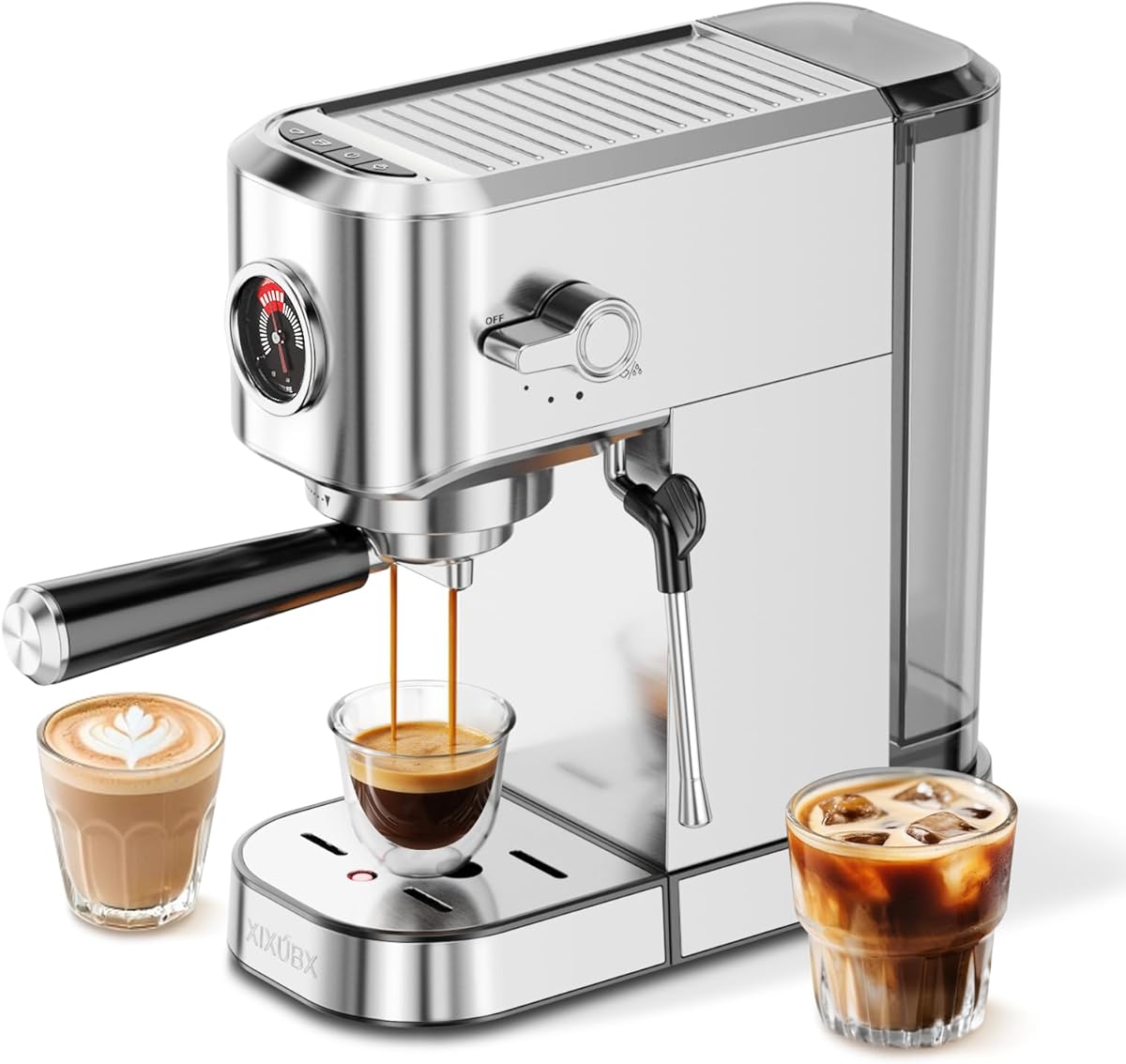
The 20Bar Espresso Machine targets home users seeking café-style drinks without commercial equipment bulk. Its 42oz water tank and integrated milk frother suggest convenience, but the 20-bar pressure specification requires scrutiny—true espresso extraction typically needs 9 bars, with higher numbers sometimes indicating pump capability rather than optimal brewing pressure. The visible pressure gauge is a useful feature for monitoring consistency, a key consideration for semi-automatic machines where user technique affects results.
Key Considerations Before Buying
- Pressure specifications: While marketed as 20-bar, authentic espresso extraction occurs at 8-9 bars; higher numbers may reflect pump maximum rather than optimal brewing pressure, requiring the machine's pressure gauge to verify stable extraction.
- Compact design trade-offs: The smaller footprint suits limited counter space but may compromise thermal stability and boiler capacity, potentially affecting back-to-back shot consistency compared to larger semi-automatic models.
- Integrated milk frother functionality: Combined steam wand/pannarello systems simplify milk texturing for beginners but offer less control than professional steam wands for microfoam quality in lattes and cappuccinos.
What Our Analysts Recommend
Genuine quality in compact semi-automatics shows in consistent temperature maintenance and pressure stability during extraction, not just maximum pressure claims. Examine the pressure gauge's behavior during shots—steady pressure around 9 bars indicates proper engineering. Also assess the steam wand's dry steam output and recovery time between brewing and frothing functions, as compact machines often struggle with simultaneous temperature management.
Semi-Automatic Espresso Machines Market Context
Market Overview
The sub-$300 compact semi-automatic market is crowded with machines emphasizing high pressure ratings and all-in-one convenience, often at the expense of precise temperature control and durable construction. Consumers increasingly seek café-quality results from smaller units, creating tension between marketing claims and engineering realities in this competitive segment.
Common Issues
Compact machines frequently exhibit temperature instability during consecutive shots, inconsistent steam pressure for milk frothing, and plastic internal components that degrade with regular use. The 20-bar pressure marketing often misleads consumers about actual brewing performance, with many machines unable to maintain stable 9-bar extraction despite high maximum ratings.
Quality Indicators
Look for machines with proper thermal blocks or boilers (not just thermocoil systems), brass or stainless steel group heads rather than plastic, and user-serviceable parts like replaceable shower screens. Genuine quality shows in consistent performance metrics, not just feature lists—observe actual pressure gauge readings and temperature consistency in detailed reviews.
Review Authenticity Insights
Grade D Interpretation
A Grade D with 42% estimated fake reviews indicates significant review manipulation, particularly concerning given the perfect 14 five-star and 1 four-star distribution. This pattern suggests coordinated efforts to inflate ratings for a product that likely has more nuanced performance characteristics than the reviews indicate.
Trust Recommendation
Approach this product's 4.93/5 rating with extreme skepticism—the adjusted 3.90/5 rating better reflects probable actual performance. Focus on the single four-star review and any critical feedback you can find, as these likely contain more authentic insights about the machine's real-world limitations and strengths.
Tips for Reading Reviews
For this machine, prioritize reviews discussing specific technical aspects: pressure gauge accuracy during extraction, steam wand performance consistency, and temperature stability across multiple shots. Be wary of reviews using identical phrasing about 'professional results' or 'café quality' without detailing the learning curve or technical observations.
Expert Perspective
The significant discrepancy between the advertised 4.93 rating and adjusted 3.90 rating, combined with high fake review probability, suggests this machine may not deliver the consistent performance its marketing claims. While the compact design and visible pressure gauge are legitimate features, the review manipulation indicates potential shortcomings in temperature stability, steam performance, or durability that sellers are attempting to mask. The 42oz water tank is adequate for home use but requires monitoring for scale buildup given the likely aluminum boiler construction common in this price segment.
Purchase Considerations
Weigh the convenience of the compact design against potential compromises in thermal stability and steam power. Consider whether you truly need 20-bar capability or would benefit more from a machine engineered specifically for stable 9-bar extraction. The integrated frother suits beginners but limits advanced milk texturing techniques.
Comparing Alternatives
Compare this unit's specifications and suspect reviews against similarly priced semi-automatics from established brands with more transparent review histories and documented temperature stability features.


