Choosing Smart Night Lights: Motion Sensors, Amber Light, and Adjustable Brightness
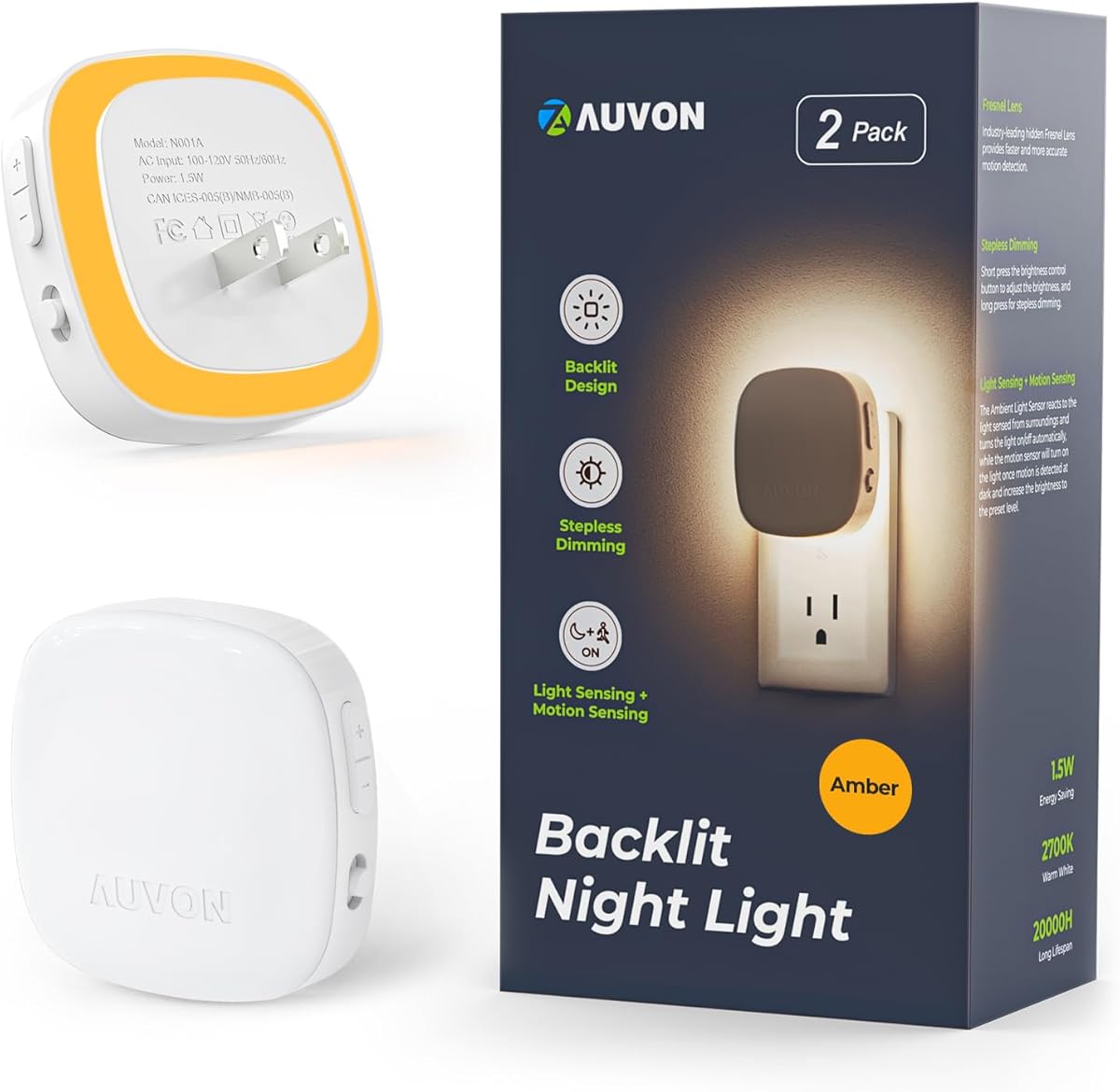
When selecting a plug-in night light like the AUVON model, focus on how its dual sensors and amber LED technology address specific safety and comfort needs. This particular product combines motion activation with dusk-to-dawn automation, requiring buyers to consider placement and brightness settings carefully. The adjustable 1-50 lumen range and amber color temperature are deliberate choices that differentiate it from standard white LED night lights.
Key Considerations Before Buying
- Evaluate whether the motion sensor's 10-foot detection range and 30-second auto-off timer align with your hallway or bathroom traffic patterns, as overly sensitive sensors can cause nuisance activation.
- Consider the amber light's 1800K color temperature specifically for preserving melatonin production during nighttime bathroom visits, unlike blue-spectrum white LEDs that can disrupt sleep cycles.
- Assess the dimmable brightness adjustment dial for creating the minimal illumination needed for safety without creating distracting light pollution in bedrooms or nurseries.
What Our Analysts Recommend
Quality plug-in night lights should feature precise sensor calibration that avoids false triggers from air vents or shadows. Examine the build quality around the plug prongs and light diffuser, as thin plastic housings can crack from repeated outlet insertion. Genuine reviews often mention specific performance details like sensor reliability in complete darkness and whether the amber glow is truly warm versus orange-tinted.
Night Lights Market Context
Market Overview
The plug-in night light market has evolved from simple always-on lights to sophisticated sensor-driven devices with health-conscious lighting. Current offerings increasingly feature amber or red LEDs for sleep-friendly illumination, with motion sensors becoming standard for hallway and stair applications. Premium models like this AUVON unit now incorporate both ambient light sensors and motion detection in compact form factors.
Common Issues
Many budget night lights suffer from poorly calibrated motion sensors that either fail to detect slow movement or trigger from minor air currents. Another frequent complaint involves harsh LED hotspots due to inadequate diffusers, creating glare rather than soft illumination. Plug designs that block adjacent outlets remain a persistent frustration in this category.
Quality Indicators
Superior night lights demonstrate consistent sensor performance across varying room temperatures and lighting conditions. Look for products mentioning specific lumen ranges (like this model's 1-50 lm specification) rather than vague 'dim' or 'bright' descriptions. Quality units maintain stable light output without flickering at lowest brightness settings, a technical challenge for many LED drivers.
Review Authenticity Insights
Grade B Interpretation
The Grade B authenticity rating with 15% estimated fake reviews indicates generally reliable feedback with some promotional content likely present. For this specific product, the high 4.89/5 rating should be tempered by the adjusted 4.50/5 score, suggesting some artificially inflated praise. The verified purchase status of all reviews significantly boosts credibility compared to unverified testimonials.
Trust Recommendation
Focus on reviews that describe specific installation scenarios, like 'placed in a 12-foot hallway' or 'used for nursery nighttime feedings,' as these demonstrate actual usage. Be particularly attentive to critical reviews discussing sensor range limitations or brightness adjustment quirks, as these often contain the most actionable insights for your purchase decision.
Tips for Reading Reviews
When evaluating reviews for sensor-based night lights, prioritize comments that mention testing periods longer than two weeks, as sensor reliability often reveals itself over time. Look for photographic evidence showing the actual amber light quality and how the unit sits in various outlet types, as these visual details are difficult to fabricate.
Expert Perspective
The AUVON night light presents a compelling package with its dual-sensor approach and scientifically-backed amber lighting, explaining its strong adjusted 4.50/5 rating. The combination of adjustable brightness and motion activation addresses the primary pain points in night lighting: providing enough light for safety while minimizing sleep disruption. The product's specific 1-50 lumen range indicates deliberate engineering rather than generic components, though the 15% estimated fake review rate suggests some caution when interpreting the perfect 5-star ratings.
Purchase Considerations
Weigh whether your primary need is for always-on pathway lighting (where the dusk-to-dawn sensor excels) or triggered illumination for occasional movement (where the motion sensor adds value). Consider that the amber light, while better for sleep, provides less visual clarity than white light for tasks like reading labels. The plug-in design may limit placement options compared to battery-operated alternatives.
Comparing Alternatives
Shoppers should compare this dual-sensor model against single-function night lights and consider whether they truly need both automation features, as simpler units often cost less and may suffice for stationary locations.