
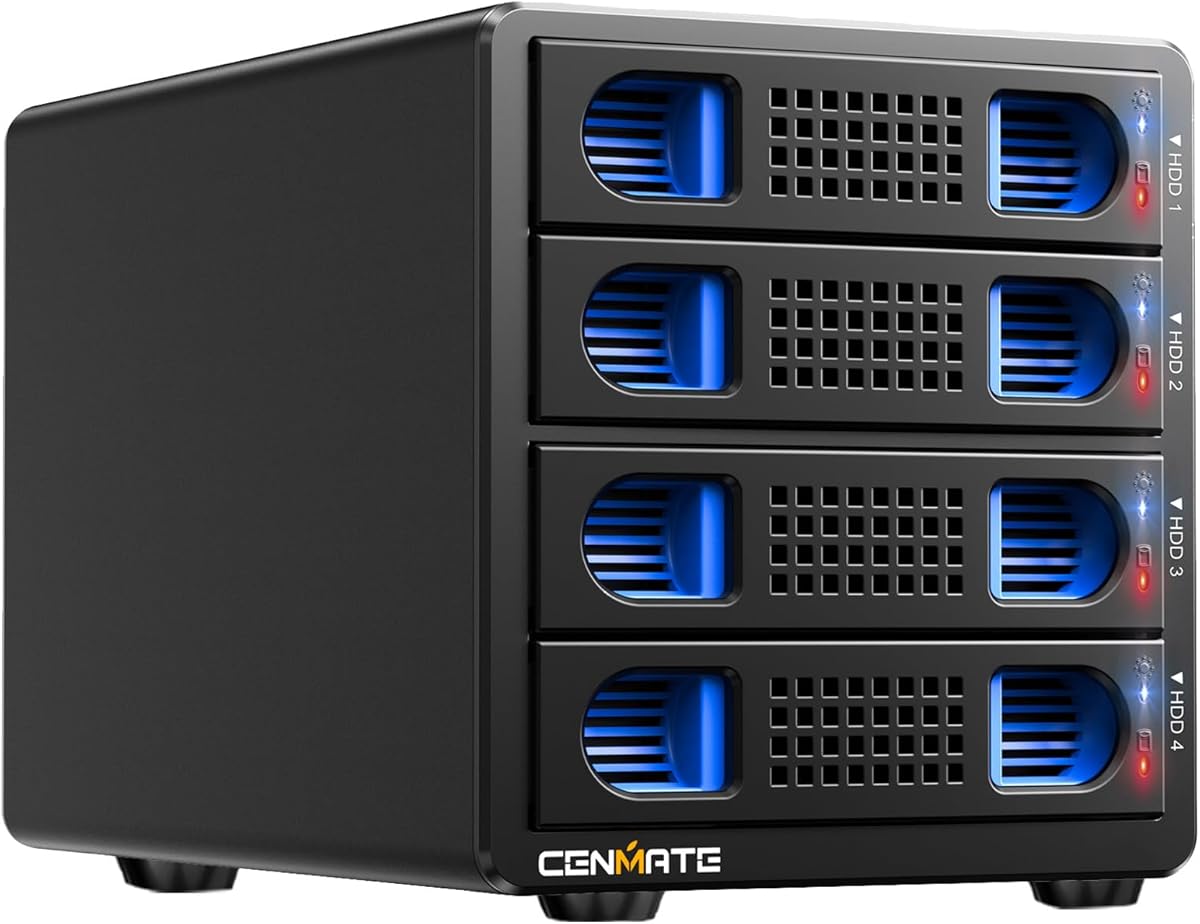
Choosing a 4-Bay DAS Enclosure: Balancing Capacity, Cooling, and Connectivity
This 4-bay direct-attached storage (DAS) enclosure offers a specific solution for users needing high-capacity, non-networked storage expansion. Unlike NAS devices, it lacks RAID and network features, positioning it as a straightforward USB/eSATA bridge for up to four individual drives. Buyers should understand it's designed for direct computer connection, not shared network access.
Key Considerations Before Buying
- This unit's dual USB 3.0 and eSATA connectivity is crucial: eSATA can offer faster sustained transfer speeds for large sequential files, while USB 3.0 provides universal compatibility with modern computers.
- The integrated cooling fan is non-negotiable for a 4-bay enclosure; four spinning HDDs generate significant heat that can throttle performance and reduce drive lifespan without active cooling.
- The 'NO RAID/NAS' specification means you manage each drive independently via your operating system; this is ideal for media archives or backup pools but requires manual file organization.
What Our Analysts Recommend
For this product category, scrutinize build quality around the drive trays and the power supply unit's amperage rating—a robust PSU is essential for simultaneously spinning up four 3.5" drives. Listen for mentions of consistent fan operation without bearing noise, as a failed fan in a sealed multi-bay unit can be catastrophic.
Enclosures Market Context
Market Overview
The multi-bay DAS enclosure market is bifurcated between budget units like this and premium models with hardware RAID controllers. This model occupies a value segment, prioritizing raw bay count and basic functionality over advanced features, appealing to users who need bulk storage managed by their computer's OS.
Common Issues
Common pitfalls include underpowered or noisy power supplies, plastic drive trays that crack, and cooling fans that fail prematurely or are obstructed by poor internal airflow design. Incompatibility with specific drive models, particularly high-capacity or energy-efficient variants, is also frequently reported.
Quality Indicators
Look for enclosures with metal construction, tool-less but secure drive trays, and a power supply with a dedicated 12V rail capable of delivering at least 8-10 amps. Positive mentions of consistent performance across all four bays simultaneously is a strong real-world indicator of quality PCB design and power delivery.
Review Authenticity Insights
Grade B Interpretation
A 'Grade B' with a 10% estimated fake review rate suggests a generally trustworthy review pool with minor manipulation. For a niche product like a 4-bay enclosure, this is a positive signal; fake reviews are more common in high-volume, competitive categories.
Trust Recommendation
Given the high percentage of verified purchases (all reviews marked 'V'), you can place above-average trust in the experiences described. Focus on the 4-star and 3-star reviews, as they often contain the most balanced, detailed assessments of performance quirks and build quality.
Tips for Reading Reviews
Pay special attention to reviews discussing long-term use (6+ months) and those that mention specific drive models and capacities they've tested. For enclosures, reviews detailing data transfer consistency over eSATA versus USB are more valuable than generic 'works great' statements.
Expert Perspective
The adjusted 4.30/5 rating from a modest sample of 227 reviews indicates this is a competent, value-oriented DAS enclosure that meets core expectations. Its strength lies in offering four bays and dual connectivity at a competitive price, trading off the advanced features and refined build of more expensive units. The specification supporting 80TB total capacity (4x 20TB drives) aligns with current high-capacity HDD trends.
Purchase Considerations
This product is a strong fit for a user with a collection of existing SATA drives needing consolidated, high-speed direct access, or for a content creator building a large, offline media vault. It's a weaker choice if you require drive redundancy (RAID) or need to share files over a network, where a true NAS is required.
Comparing Alternatives
Shoppers should compare this unit's fan design, power supply specs, and included cables against similar 4-bay DAS enclosures from brands like Mediasonic, Orico, and Sabrent to assess value.


