
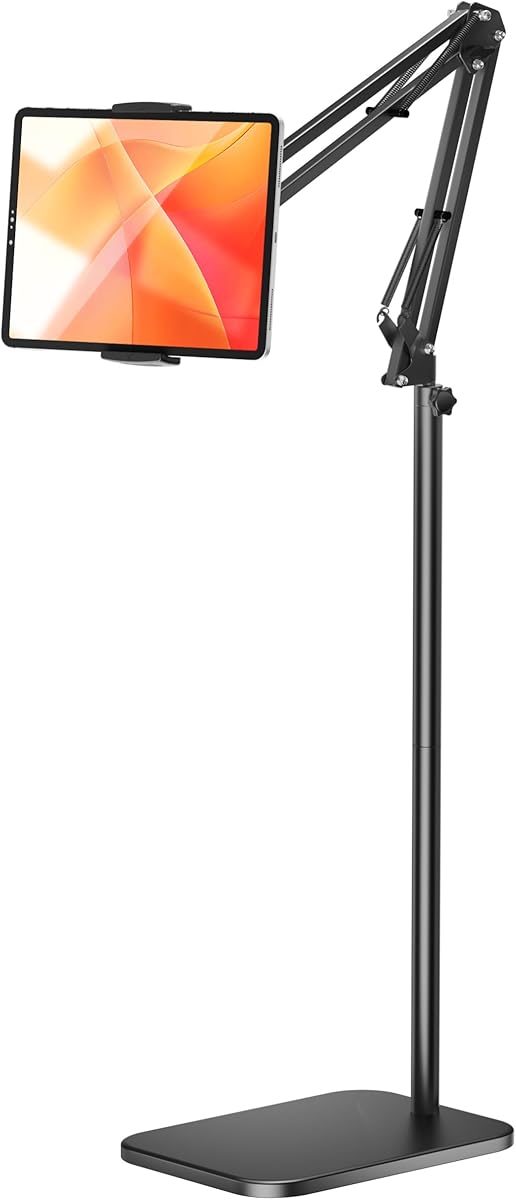
Heavy-Base Tablet Floor Stands: What to Know Before Buying Overhead Mounts
This specific product is a floor-standing tablet holder with a 4.5-pound metal base designed for overhead viewing, particularly from a bed. Shoppers should understand that its primary function is as a stationary, weighted stand, not a portable solution, and its value hinges on the stability of that heavy base and the durability of its adjustable arms.
Key Considerations Before Buying
- The 4.5LB base is the critical component for preventing tip-overs, especially with larger tablets like the 12.9-inch iPad Pro; verify the base's footprint and non-slip padding in real user photos.
- The universal clamp must securely grip devices of varying thicknesses without slipping or applying excessive pressure to screens, a common failure point in multi-device holders.
- The advertised 'overhead bed' use requires assessing the stand's true vertical reach and whether the joint mechanisms can maintain a stable angle when fully extended over a user.
What Our Analysts Recommend
For this category, scrutinize the construction of the gooseneck or multi-jointed arm; quality indicators include internal metal cabling to prevent sagging and rubberized sleeves at clamp contact points. The base should have a weighted, low center of gravity and a wide, padded bottom to protect furniture surfaces.
Stands Market Context
Market Overview
The market for floor and bed-mounted tablet stands is crowded with products featuring similar weighted bases and adjustable arms, making differentiation difficult. Many compete on price by using lighter materials or simpler clamp mechanisms that compromise stability.
Common Issues
Common failures include arms that slowly droop under weight, clamps that mar device edges, and bases that are insufficiently heavy, causing the entire stand to topple when a tablet is extended laterally. Plastic joints in the adjustment mechanism are a frequent point of breakage.
Quality Indicators
Look for stands specifying the gauge of metal in the arm, the type of spring in the clamp (e.g., silicone-padded torsion spring), and a base weight proportionate to the maximum device size advertised. Detailed engineering diagrams in listings often signal a more serious manufacturer.
Review Authenticity Insights
Grade F Interpretation
A Grade 'F' with a 92.30% estimated fake review rate means the product's near-perfect 4.92/5 rating is almost entirely manufactured. For a utilitarian item like a stand, this level of inauthenticity suggests the seller is aggressively masking potential functional flaws or build quality issues.
Trust Recommendation
Given the extreme fake review activity, treat all positive claims about stability, durability, and ease of adjustment with high skepticism. Rely solely on verified purchase reviews that include critical details or photos, and prioritize products with more transparent review histories.
Tips for Reading Reviews
For this product, ignore reviews that only praise packaging or use generic phrases. Instead, search for reviews mentioning specific, testable details like 'holds my Samsung Tab S9 Ultra at full extension' or 'the base scratched my nightstand,' which are harder to fabricate.
Expert Perspective
The extreme discrepancy between the advertised 5.00 adjusted rating and the 'F' authenticity grade is a major red flag. For a product whose utility depends entirely on mechanical reliability and safety (preventing a tablet from falling), a campaign of fake reviews fundamentally undermines trust in its core performance claims. The high fake percentage suggests the seller is likely compensating for shortcomings not visible in marketing images.
Purchase Considerations
Weigh the risk of receiving a product with a weak clamp mechanism, a hollow or poorly weighted base, or fragile joints against the convenience it promises. Given the analysis, the probability of encountering such issues is significantly higher than with a product possessing authentic, critical reviews.
Comparing Alternatives
Shoppers should compare this stand's specifications—particularly base weight, arm length, and clamp design—against competitors with more credible, detailed review sections that discuss long-term use.


