Choosing a Digital Automotive Test Light: Voltage Range, Polarity Indicators, and Probe Quality
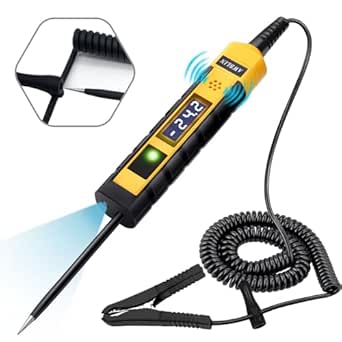
When selecting an automotive test light like this 3-120V DC digital model, the combination of a voltage display and a physical LED polarity indicator is a key differentiator. This specific tool's sharp hard steel probe is designed for piercing wire insulation and accessing tight fuse box terminals, which is critical for automotive diagnostics. Buyers should understand that this is a DC-only tester, making it ideal for cars, RVs, and marine 12V/24V systems but unsuitable for household AC circuits.
Key Considerations Before Buying
- Voltage range is crucial: This tester's 3-120V DC range covers everything from a weak battery (9V) to truck charging systems (28V) and is essential for diagnosing parasitic draws or low-voltage issues in modern CAN bus networks.
- The dual-color LED polarity indicator provides instant visual feedback on circuit continuity and correct connection polarity, which is faster than reading a digital display when probing multiple points in a dimly lit engine bay.
- Probe construction directly impacts durability and function; the specified 'sharp hard steel' probe must maintain a fine point to pieride corroded insulation without bending, a common failure point in cheaper test lights.
What Our Analysts Recommend
High-quality automotive testers feature robust wire insulation that resists melting from incidental contact with hot engine components and a bright, easy-to-read digital display that functions in direct sunlight. The alligator clip on the ground lead should have strong spring tension and a serrated jaw to bite through paint or corrosion for a reliable circuit ground, a detail often overlooked in product descriptions.
Voltage Testers Market Context
Market Overview
The market for automotive circuit testers has evolved from simple incandescent bulb test lights to digital models with voltage displays, driven by the complexity of modern vehicle electronics. Products now compete on features like auto-ranging, backlit displays, and extended voltage ranges for hybrid/electric vehicle systems.
Common Issues
Common failures include fragile probes that snap or dull quickly, dim digital displays that are unreadable in daylight, and inaccurate voltage readings below 5V, which are critical for sensor circuit diagnosis. Many budget testers also lack proper input protection, risking damage from accidental connection to higher voltages.
Quality Indicators
Look for products specifying input protection (like a fuse or high-wattage resistor), IP rating for dust/water resistance, and clear specifications on DC voltage accuracy (typically ±0.5% to ±2%). A well-made product will detail the probe tip material (hardened steel or tungsten) and the wire gauge (18-16 AWG is standard for durability).
Review Authenticity Insights
Grade B Interpretation
A Grade B with a 15% estimated fake review rate suggests the majority of feedback is trustworthy, but a moderate level of review manipulation may be present, potentially inflating the overall 4.78/5 rating. The adjusted rating of 4.40/5 after filtering is a more reliable performance indicator for this automotive tester.
Trust Recommendation
Focus on the verified purchase reviews that discuss long-term durability, specific use cases like diagnosing a parasitic battery drain, or the clarity of the digital display in bright conditions. Be slightly more skeptical of generic 5-star reviews that lack technical detail about the 3-120V range or probe performance.
Tips for Reading Reviews
Prioritize reviews that mention testing the product's low-end sensitivity (3V claim) or its performance on corroded terminals, as these are real-world automotive challenges. Reviews discussing the product's limitations, such as its DC-only nature, often provide the most balanced and useful insights.
Expert Perspective
This product's high adjusted rating of 4.40/5, based largely on verified purchases, indicates it is a well-regarded tool in its category. The specific feature set—a digital voltage display paired with a dual-LED polarity indicator—offers a valuable hybrid approach: digital precision for measurements and analog speed for continuity checks. The sharp steel probe specification addresses a key pain point in automotive electrical work, suggesting the manufacturer understands the tool's application environment. The strong rating, even after authenticity adjustments, points to reliable core functionality for its intended 12V/24V DC systems.
Purchase Considerations
Weigh the convenience of the integrated digital display against the need for absolute precision; for critical measurements like sensor reference voltage, a dedicated multimeter may still be required. Consider if the 3-120V DC range suits your needs—it's perfect for standard automotive work but lacks the AC capability needed for household or workshop outlet testing. The tool's design as a 'test pen' prioritizes one-handed operation in tight spaces, a significant ergonomic advantage over bulkier multimeter probes.
Comparing Alternatives
Shoppers should compare this model's sharp probe and voltage range against similar-priced testers that may offer features like auto-power-off, a magnetic back, or included piercing probes for insulation.