
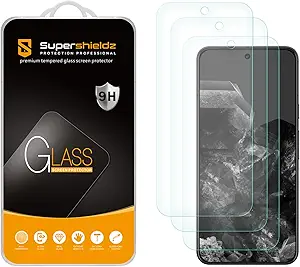
![Milomdoi 3 Pack Privacy Screen Protector for Google Pixel 9A Tempered Glass with 3 Pack Camera Lens Protector, Ultra 9H Accessories [Support Fingerprint Unlock] Case Friendly, Black](https://m.media-amazon.com/images/I/71Grjvw7vFL._AC_SL1200_.jpg)
Choosing Pixel 9A Privacy Screen Protectors: What the 3-Pack Bundle Offers
For Google Pixel 9A owners, the Milomdoi 3-pack bundle presents a specific value proposition combining tempered glass privacy protection with camera lens coverage. This product's claim of maintaining fingerprint unlock functionality while being case-friendly addresses key pain points for Pixel users who want comprehensive device protection without sacrificing convenience.
Key Considerations Before Buying
- Privacy screen effectiveness varies by viewing angle—test how well the Milomdoi's side-angle privacy works for your typical usage scenarios.
- The '9H hardness' rating refers to pencil hardness, not diamond scale, meaning it resists scratches but can still crack from impact.
- Case compatibility claims should be verified with your specific Pixel 9A case, as some edge-to-edge protectors lift with certain case designs.
What Our Analysts Recommend
Quality privacy screen protectors should maintain touch sensitivity while reducing side visibility by at least 45 degrees. Check for precise cutouts around the Pixel 9A's front camera and speaker grille, as misalignment can affect both functionality and the fingerprint sensor's performance through the glass.
Screen Protectors Market Context
Market Overview
The Pixel 9A accessory market has seen rapid growth of bundled offerings like Milomdoi's screen and camera protector combo, with privacy screens becoming increasingly popular for commuters and office workers. Tempered glass remains the dominant material, but application methods and adhesive quality vary significantly between brands.
Common Issues
Privacy screens often reduce screen brightness and can interfere with polarized sunglasses viewing. Many users report installation challenges with alignment tools that don't account for the Pixel 9A's specific curvature, leading to edge lifting or 'halo' effects.
Quality Indicators
Look for precise laser cutting that matches the Pixel 9A's unique punch-hole camera placement and curved edges. High-quality oleophobic coatings should resist fingerprints without compromising the privacy filter's matte finish, which is particularly important for maintaining the screen's anti-glare properties.
Review Authenticity Insights
Grade B Interpretation
The Grade B authenticity rating with 15% estimated fake reviews suggests mostly reliable feedback, though some positive reviews may be incentivized. The adjusted 4.00 rating (down from 4.33) indicates genuine user experiences cluster around 4 stars rather than perfect scores.
Trust Recommendation
Focus on reviews mentioning specific Pixel 9A compatibility details and installation experiences rather than generic praise. The 6959-review sample size provides substantial data, but prioritize reviews discussing long-term use beyond initial installation.
Tips for Reading Reviews
Look for reviews detailing how the privacy filter performs in bright sunlight with the Pixel 9A's adaptive brightness, and whether the camera lens protectors cause any flare or focus issues with the specific Pixel 9A camera system.
Expert Perspective
The Milomdoi bundle's value proposition is strongest for Pixel 9A users who prioritize privacy in public settings and want complete front-and-back protection. The 3-pack quantity suggests the manufacturer anticipates potential installation errors or future replacements, which is realistic for privacy screens that can show wear over time. The maintained 4.00 adjusted rating despite the fake review percentage indicates generally positive real-world performance, particularly regarding the critical fingerprint unlock functionality that many tempered glass protectors compromise.
Purchase Considerations
Weigh whether you truly need both privacy screening and camera protection, as some users find lens protectors unnecessary for the Pixel 9A's recessed camera design. Consider your typical viewing environments—privacy screens work best in crowded spaces but reduce screen sharing clarity.
Comparing Alternatives
Compare installation methods with competing Pixel 9A privacy screens, as alignment frame quality significantly affects application success with the phone's specific dimensions.
![Milomdoi 3 Pack Privacy Screen Protector for Samsung Galaxy S25 Ultra Tempered Glass with 3 Pack Camera Lens Protector, Ultra 9H Accessories [Support Fingerprint Unlock] Black](https://m.media-amazon.com/images/I/71V1LXyqm1L._AC_SY300_SX300_QL70_FMwebp_.jpg)
![Ailun Screen Protector for iPhone 16e / iPhone 14 / iPhone 13 / iPhone 13 Pro [6.1 Inch] Display 3 Pack Tempered Glass, Case Friendly [Not for iPhone 16 6.1 Inch]](https://m.media-amazon.com/images/I/71OicfvCsbL.__AC_SX300_SY300_QL70_FMwebp_.jpg)


