
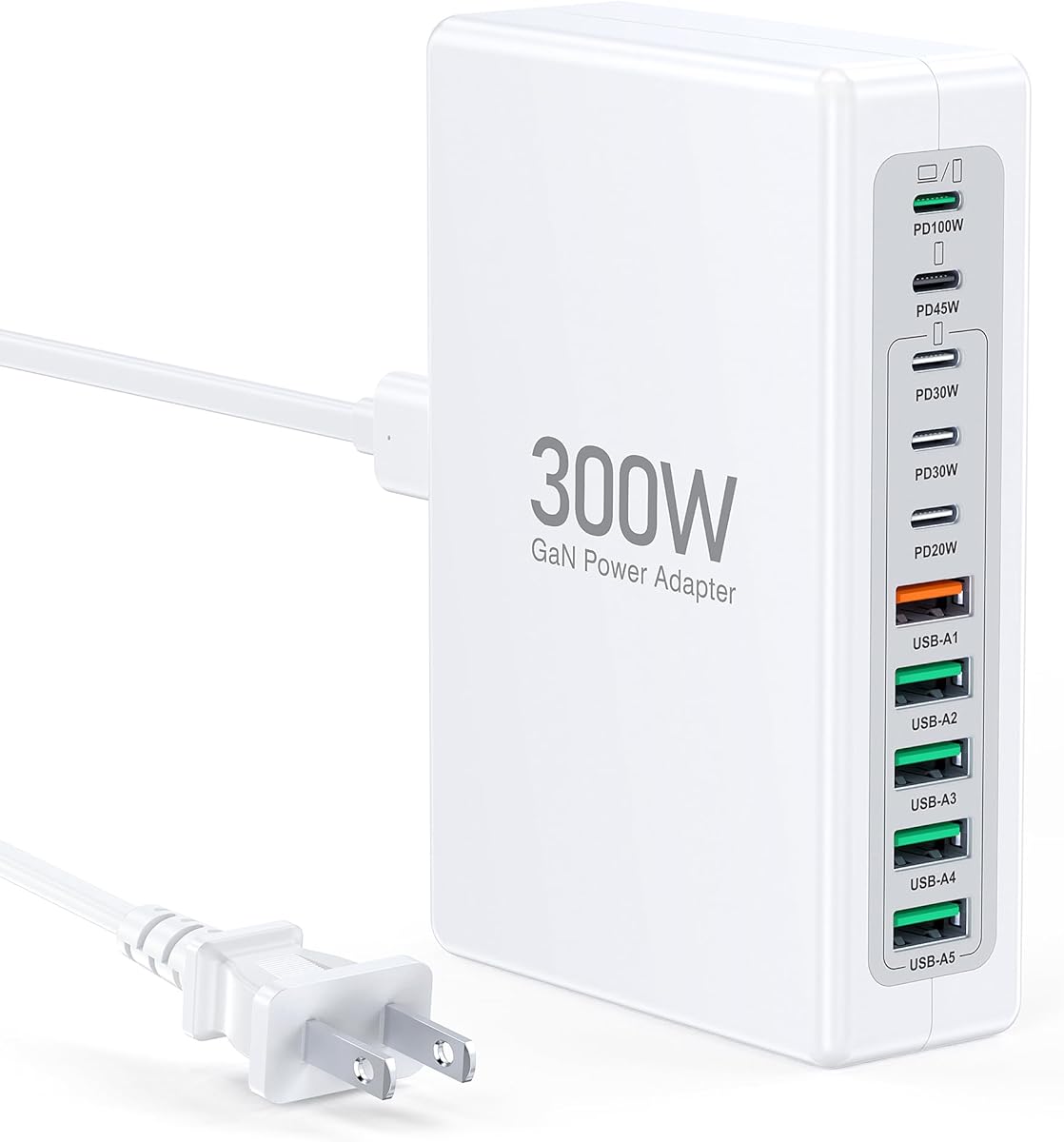
Choosing a 10-port 300W charging hub requires understanding power distribution dynamics
This 300W 10-port charging station represents a specialized category of desktop chargers designed for simultaneous multi-device charging. Unlike simpler hubs, its value lies in intelligent power allocation across USB-C PD ports rated at 100W, 65W, 45W, 25W, and 20W outputs, requiring buyers to understand how total wattage is distributed when multiple devices are connected.
Key Considerations Before Buying
- The 300W total capacity must be managed across all ports simultaneously—connecting a 100W laptop plus several phones reduces available power for other high-demand devices.
- Port configuration matters: this hub's mix of PD ports with different maximum outputs requires strategic device placement to ensure your laptop gets 100W while phones use appropriate lower-wattage ports.
- Physical placement is crucial for a desktop unit this size; its footprint and heat dissipation need adequate ventilation space unlike compact travel chargers.
What Our Analysts Recommend
Genuine GaN (Gallium Nitride) technology should be mentioned for efficient heat management in high-wattage hubs. Check for certifications like UL, CE, or FCC that validate safety standards for multi-port high-power devices, and examine reviews mentioning consistent performance under full 10-device load.
Desktop Chargers & Docks Market Context
Market Overview
The desktop charging station market has shifted from simple multi-port USB-A hubs to sophisticated PD (Power Delivery) systems capable of charging laptops alongside phones and tablets. Current offerings compete on intelligent power allocation algorithms rather than just port count.
Common Issues
Overheating under sustained multi-device load remains a concern, as does inaccurate power distribution where connected devices don't receive their advertised wattage. Some hubs fail to maintain stable output when approaching their total wattage ceiling.
Quality Indicators
Look for explicit mention of dynamic power distribution technology that reallocates unused wattage between ports. Quality units include over-current, over-voltage, and short-circuit protection specifically listed for each port, not just general safety claims.
Review Authenticity Insights
Grade B Interpretation
A Grade B authenticity rating with 10% estimated fake reviews indicates generally trustworthy feedback with minor manipulation concerns. The 4.30 adjusted rating (down from 4.56) suggests some review inflation but maintains strong genuine satisfaction.
Trust Recommendation
Focus on verified purchase reviews mentioning specific device combinations like 'MacBook Pro plus three phones and a tablet' rather than generic praise. The 88-review sample size warrants attention to detailed experiences rather than brief star ratings.
Tips for Reading Reviews
Prioritize reviews discussing real-world power distribution scenarios and thermal performance during extended use. Be skeptical of reviews that don't mention specific device combinations or that praise only packaging/shipping without addressing technical performance.
Expert Perspective
This product's specific port configuration—with dedicated 100W, 65W, and multiple lower-wattage PD ports—represents a calculated design for mixed-device households. The 300W total capacity is substantial but requires understanding that peak wattage isn't available simultaneously across all ports. The 4.30 adjusted rating from verified purchases suggests reliable performance for its intended use case, though the 10-port design may be overkill for users with fewer than 5-6 regular devices.
Purchase Considerations
Evaluate whether you genuinely need 10 ports or would benefit more from a 6-port hub with higher per-port consistency. Consider your device mix: if you regularly charge two laptops simultaneously, ensure the power distribution supports this. Desktop placement with adequate airflow is non-negotiable for sustained 200W+ operation.
Comparing Alternatives
Compare this hub's specific port wattage distribution against competitors' offerings—some provide more flexible power allocation rather than fixed port ratings.


