
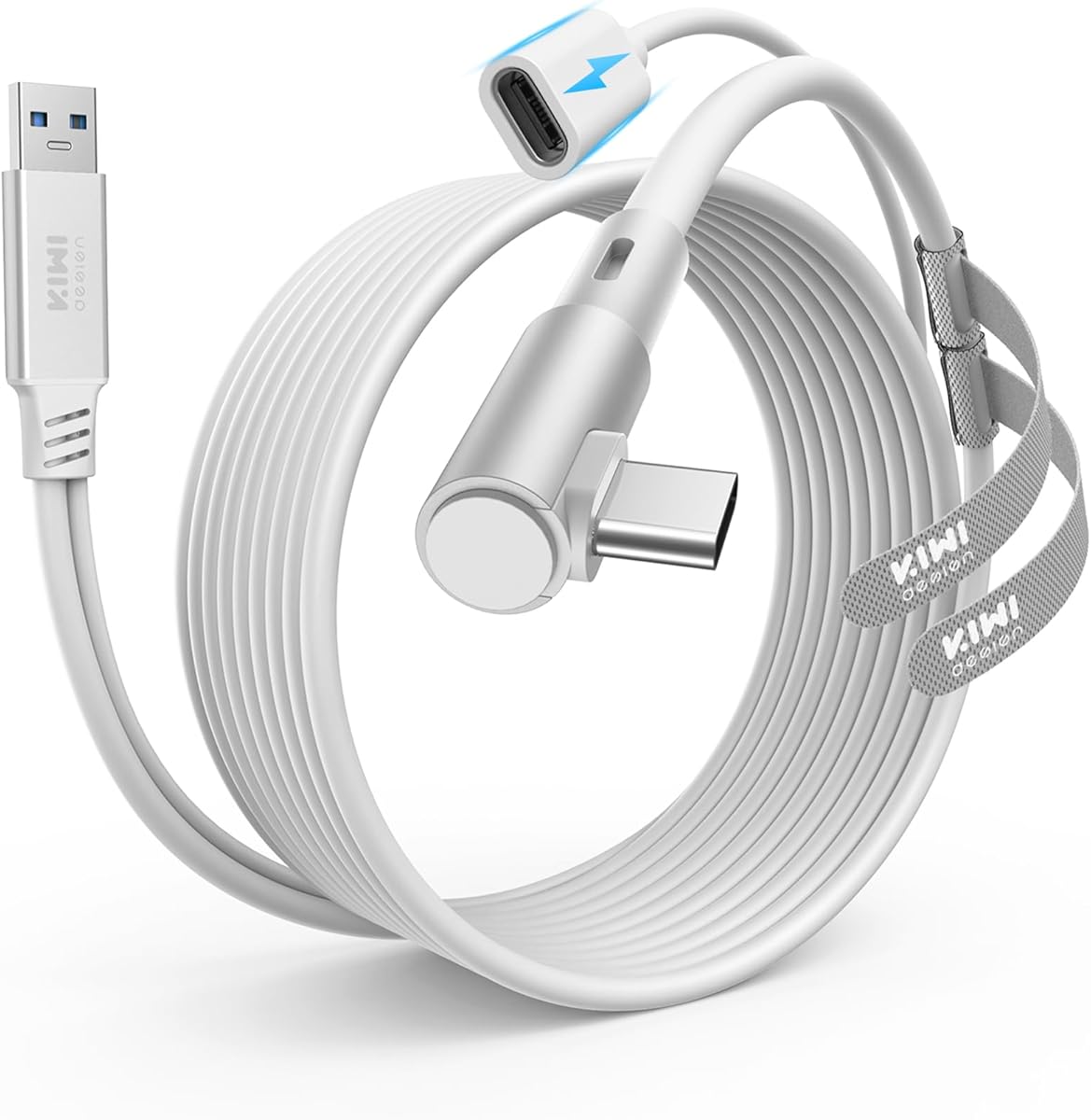
Choosing a 5-meter VR link cable: What Quest 3 and PCVR users need to know
The KIWI design 5-meter link cable promises extended PCVR gameplay with simultaneous charging, a critical feature for Meta Quest 3 users who want untethered-length freedom without battery anxiety. This specific cable's 5Gbps USB 3.0 specification targets high-bandwidth VR applications, but its 5-meter length introduces potential signal integrity challenges that shorter cables avoid. Buyers should understand how cable construction and connector quality directly impact the PCVR experience they're investing in.
Key Considerations Before Buying
- The 5-meter active length requires robust signal amplification to maintain the advertised 5Gbps speed; cheaper passive cables at this length often suffer from data drops or reduced bandwidth during intensive SteamVR sessions.
- Simultaneous charging capability is not just about having power delivery—it's about whether the cable can deliver sufficient wattage to offset the Quest 3's power draw during demanding PCVR games, or merely slow the discharge rate.
- Compatibility claims spanning Quest 3s, 3, 2, Pro, and Pico 4 mean the cable must handle varying power negotiation protocols; a one-size-fits-all approach can sometimes lead to inconsistent charging performance across devices.
What Our Analysts Recommend
Examine reviews mentioning consistent 5Gbps performance throughout extended play sessions, not just initial connection success. Quality indicators include specific mentions of stable tracking in games like Half-Life: Alyx, absence of screen flickering at full length, and actual charging performance data showing battery percentage maintenance or slow gain during use. Avoid cables where reviews only praise packaging or initial setup without substantive performance details.
Market Context
Market Overview
The VR link cable market has fragmented between official manufacturer cables (like Meta's own), premium third-party options with active signal components, and budget cables that often compromise on data integrity at longer lengths. The 5-meter segment specifically targets users wanting room-scale freedom beyond the typical 3-meter offerings, creating engineering challenges that separate quality products from disappointing ones.
Common Issues
Long cables frequently suffer from bandwidth degradation causing compression artifacts in PCVR visuals, intermittent disconnections during head movement, and insufficient power delivery that leads to battery drain despite 'charging' claims. Many cables also develop connection point fatigue where the USB-C connector loosens over time, causing intermittent data drops during gameplay.
Quality Indicators
Look for cables specifying active signal technology or built-in repeaters for 5-meter lengths, braided nylon sheathing with strain relief at both connectors, and explicit mention of power delivery specifications (ideally 15W+ for Quest 3). Premium cables often include a separate power input port for enhanced charging, while basic designs rely solely on host PC power.
Review Authenticity Insights
Grade B Interpretation
A Grade B authenticity rating with 15% estimated fake reviews indicates moderately reliable feedback, but suggests some review manipulation may be present. The adjusted rating dropping from 3.95 to 3.70 when suspicious reviews are excluded reveals that the authentic experience may be slightly less positive than the overall average suggests.
Trust Recommendation
Focus on reviews discussing specific technical performance over multiple weeks of use, particularly those mentioning compatibility with specific PC setups or games. Be skeptical of reviews that only praise generic aspects like 'fast shipping' or 'good quality' without detailing actual VR performance metrics or charging behavior during gameplay.
Tips for Reading Reviews
Prioritize reviews that mention specific PC specifications, games tested (like Microsoft Flight Simulator VR or Beat Saber PC version), and actual charging results ('gained 10% over 2 hours'). Look for patterns in critical reviews about consistent issues like disconnections when turning quickly or charging that doesn't keep pace with Quest 3 power consumption.
Expert Perspective
The KIWI design cable presents a compelling value proposition for users needing extended reach, but the authenticity analysis suggests cautious evaluation. The 3.70 adjusted rating from verified patterns indicates satisfactory but not exceptional performance, typical of mid-range cables in this category. The simultaneous charging feature is particularly valuable for Quest 3 users, but its effectiveness depends heavily on your PC's USB port power delivery capabilities. The 5-meter length makes this cable ideal for larger play spaces, but introduces more potential failure points than standard 3-meter alternatives.
Purchase Considerations
Consider your specific PC's USB-C or USB-A port power output, as insufficient power delivery will negate the charging benefit. Evaluate whether you truly need 5 meters versus 3 meters, as shorter cables generally offer more reliable connections. Check your motherboard's USB controller compatibility, as some chipsets have known issues with long USB 3.0 cables regardless of cable quality.
Comparing Alternatives
Compare this cable's performance claims against similarly priced active cables from brands like Syntech and Cable Matters, paying particular attention to power delivery specifications and warranty terms.


