
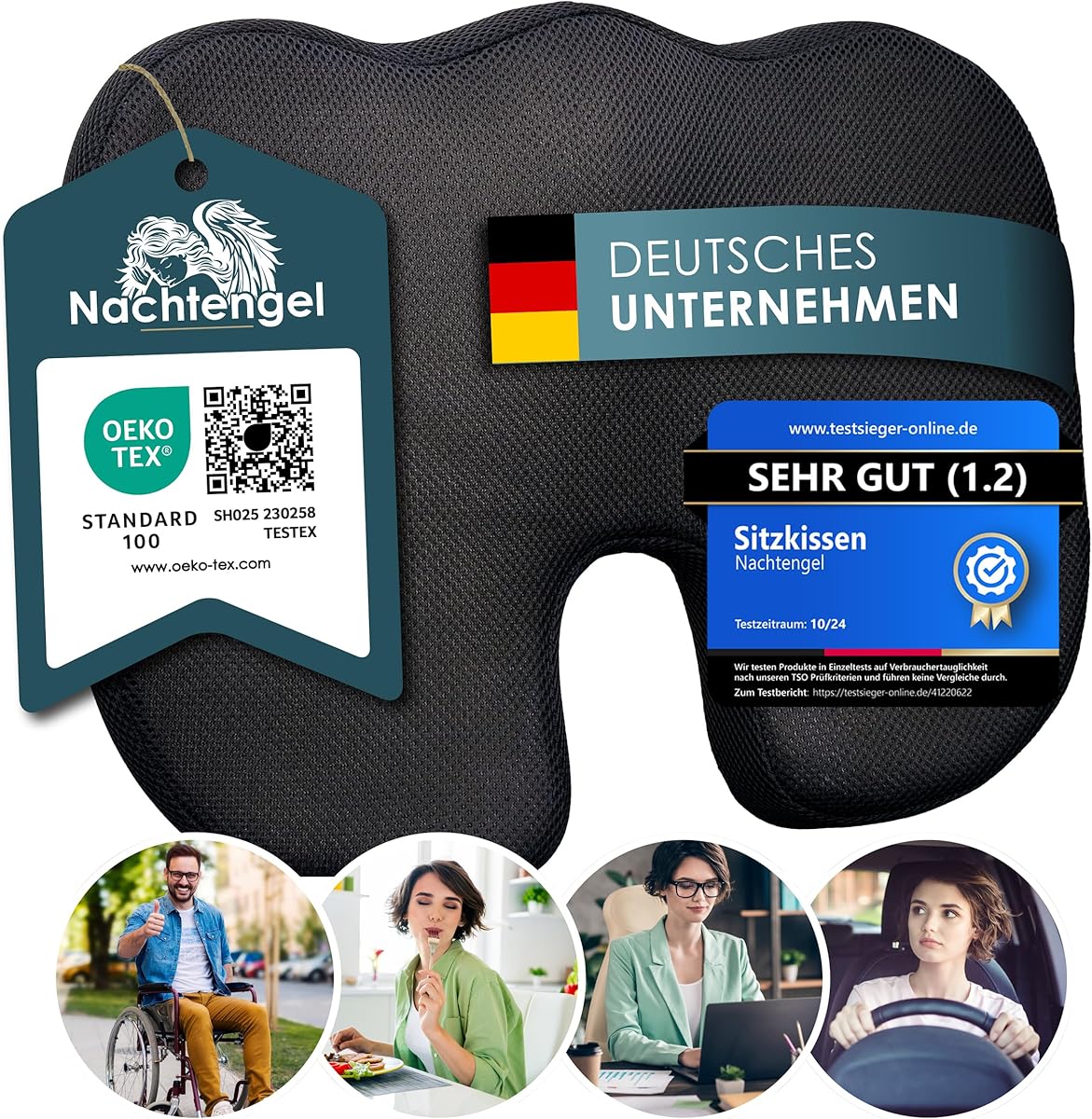
Choosing the Right Coccyx Cushion: Memory Foam Density and Weight Capacity Matter
The SITZKISSEN ORTHOPÄDISCH is specifically designed as a therapeutic seat cushion for coccyx (tailbone) relief, not just general comfort. Its medium density memory foam formulation (rated for 60-90kg users) targets pressure redistribution away from the sensitive tailbone area, making it distinct from flat seat pads or donut cushions with center voids. Buyers should understand this is an orthopedic tool first, with ergonomic benefits for prolonged sitting.
Key Considerations Before Buying
- Weight capacity alignment is critical: This 'Medium' model is engineered for 60-90kg body weights; outside this range, the memory foam may not compress optimally, reducing its therapeutic coccyx relief.
- The non-slip base and contoured 'U' shape are designed to stay positioned during transitions from chair to car, but effectiveness depends on your specific seat geometry and fabric.
- Memory foam's temperature sensitivity means firmness varies seasonally; expect a slightly firmer feel in cooler environments common in German home offices.
What Our Analysts Recommend
Genuine orthopedic cushions like this one feature high-resiliency memory foam that slowly recovers its shape, not cheap polyurethane foam that flattens permanently. Check for a structured cover with a non-slip underside—this model's grip dots prevent sliding on leather or polished office chairs. The cutout design should be precisely placed to offload the coccyx without putting pressure on the sit bones.
Back & Seat Cushions Market Context
Market Overview
The German market for orthopedic seat cushions is crowded with products claiming 'ergonomic' benefits, but true medical-grade designs for coccyx pain (Steißbeinentlastung) are distinct. This segment has seen growth with increased home office use, driving demand for solutions beyond basic comfort.
Common Issues
Many cushions fail due to poor foam density that bottoms out within months, or covers that lack breathability, causing discomfort. A frequent complaint is incorrect sizing of the relief cutout, which can actually increase pressure points rather than alleviate them.
Quality Indicators
Look for specified foam density (often missing in cheaper models) and weight-based sizing. A removable, washable cover is essential for hygiene. True orthopedic designs will clearly explain the biomechanics of pressure redistribution, as this product does by targeting the ischial tuberosities and coccyx.
Review Authenticity Insights
Grade B Interpretation
A 'B' grade with only 10% estimated fake reviews indicates a trustworthy review profile where the vast majority of feedback represents genuine user experiences. The slight drop from the displayed 4.44 to the adjusted 4.20 rating suggests minimal review manipulation, giving you a realistic performance expectation.
Trust Recommendation
Focus on the verified purchase reviews discussing long-term use (3+ months) to assess the memory foam's durability and whether the non-slip base maintains grip. The high authenticity means complaints about the medium firmness or cover breathability are likely legitimate considerations for your decision.
Tips for Reading Reviews
Pay particular attention to reviews from users within the 60-90kg weight range who describe specific sitting scenarios (e.g., '8-hour office chair use' or 'car commute'). Authentic reviews often mention break-in periods for the memory foam or specific chair types where the cushion fits well or poorly.
Expert Perspective
This cushion presents a focused solution for tailbone pain relief, with review authenticity supporting its claimed benefits. The specified weight range is a professional feature, acknowledging that foam compression is weight-dependent for proper orthopedic function. The 4.2 adjusted rating from predominantly genuine reviews suggests reliable performance, though not perfection—some users may find the medium density too firm or too soft based on individual preference and exact anatomy. Its design for multiple surfaces (Büro, Homeoffice & Auto) indicates versatility, but optimal performance will vary with each seat type.
Purchase Considerations
Weigh your primary use case: it's most effective for diagnosed coccyx discomfort or prolonged sitting pain, not as a general plush seat pad. Consider your exact weight relative to the 60-90kg range and your typical seat surface—the non-slip base works better on fabric than on smooth leather. The lack of a carrying handle may matter if you plan frequent transport between car and office.
Comparing Alternatives
Shoppers should compare this model's medium density and fixed 'U' shape against cushions with adjustable lumbar support, gel-infused foam for temperature regulation, or different cutout geometries.


