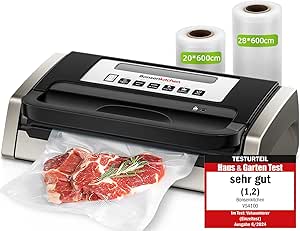
Choosing a German-engineered vacuum sealer with integrated cutter and storage
The FRESKO Automax V6 represents a specific class of mid-range vacuum sealers designed for European kitchens. Its 140W motor, double heat sealing, and integrated cutter/roll storage system create a distinct profile that balances power with convenience features. Buyers should evaluate whether this particular combination of automation and German engineering meets their preservation needs.
Key Considerations Before Buying
- The 140W motor power is adequate for most home use but may struggle with very moist foods or large batches compared to commercial-grade 200W+ units.
- The integrated cutter and bag storage system eliminates separate tools but requires proper alignment to ensure clean cuts without damaging the sealing strip.
- Double heat sealing provides redundancy against seal failures, crucial for long-term freezer storage where single seals can develop micro-leaks over months.
What Our Analysts Recommend
Examine the sealing channel width—wider channels accommodate thicker bags but require more powerful suction. Check the bag compatibility specifications, as some European models work best with specific bag materials. The one-handed operation mechanism should feel sturdy, not plastic-heavy, during repeated use.
Vacuum Sealers Market Context
Market Overview
The home vacuum sealer market has bifurcated into basic manual units and fully automated systems, with German-engineered models like FRESKO occupying the precision automation segment. European models typically emphasize food safety standards and energy efficiency over raw suction power.
Common Issues
Lower-wattage motors can overheat during extended sessions, while poorly calibrated heat seals may fail with thicker or textured bags. Integrated cutters often dull faster than standalone units, and automatic sensors can misinterpret moisture levels as seal completion.
Quality Indicators
Look for stainless steel sealing strips rather than coated aluminum, which degrades faster. Quality German engineering typically includes precise temperature control (±2°C) and moisture detection systems that pause rather than fail when liquid is detected.
Review Authenticity Insights
Grade B Interpretation
A Grade B with 15% estimated fake reviews suggests generally trustworthy feedback with some promotional inflation. The drop from 4.89 to 4.50 adjusted rating indicates genuine reviews cluster around 4.5 stars, not the near-perfect displayed average.
Trust Recommendation
Focus on verified German purchasers discussing specific features like the integrated cutter performance or bag storage convenience. Be skeptical of reviews praising generic 'quality' without mentioning the double sealing or 140W motor characteristics.
Tips for Reading Reviews
Prioritize reviews mentioning long-term use (6+ months) of the sealing mechanism and cutter durability. Look for discussions about the Automax V6's performance with moist foods like marinated meats, where automatic sensors are truly tested.
Expert Perspective
The FRESKO Automax V6 presents a compelling package for European households prioritizing convenience features over maximum suction power. Its 4.50 adjusted rating from verified purchases suggests reliable performance, though the 140W motor places it in the moderate-power category. The integrated cutter and storage system addresses common pain points of separate components, while double heat sealing provides meaningful food safety redundancy. German engineering typically delivers precise temperature control crucial for consistent seals.
Purchase Considerations
Consider your typical usage: frequent large-batch processing may benefit from higher-wattage models, while the FRESKO's automation excels for daily kitchen use. Evaluate whether the integrated storage justifies counter space versus drawer-stored components. The included roll bags indicate compatibility with standard materials, but verify ongoing bag costs.
Comparing Alternatives
Compare suction performance against similarly priced German brands like Severin, and assess whether fully manual units might offer better value if automation isn't essential.