
Choosing a USB4 10Gb Ethernet Adapter: What Mac and Windows Users Need to Know
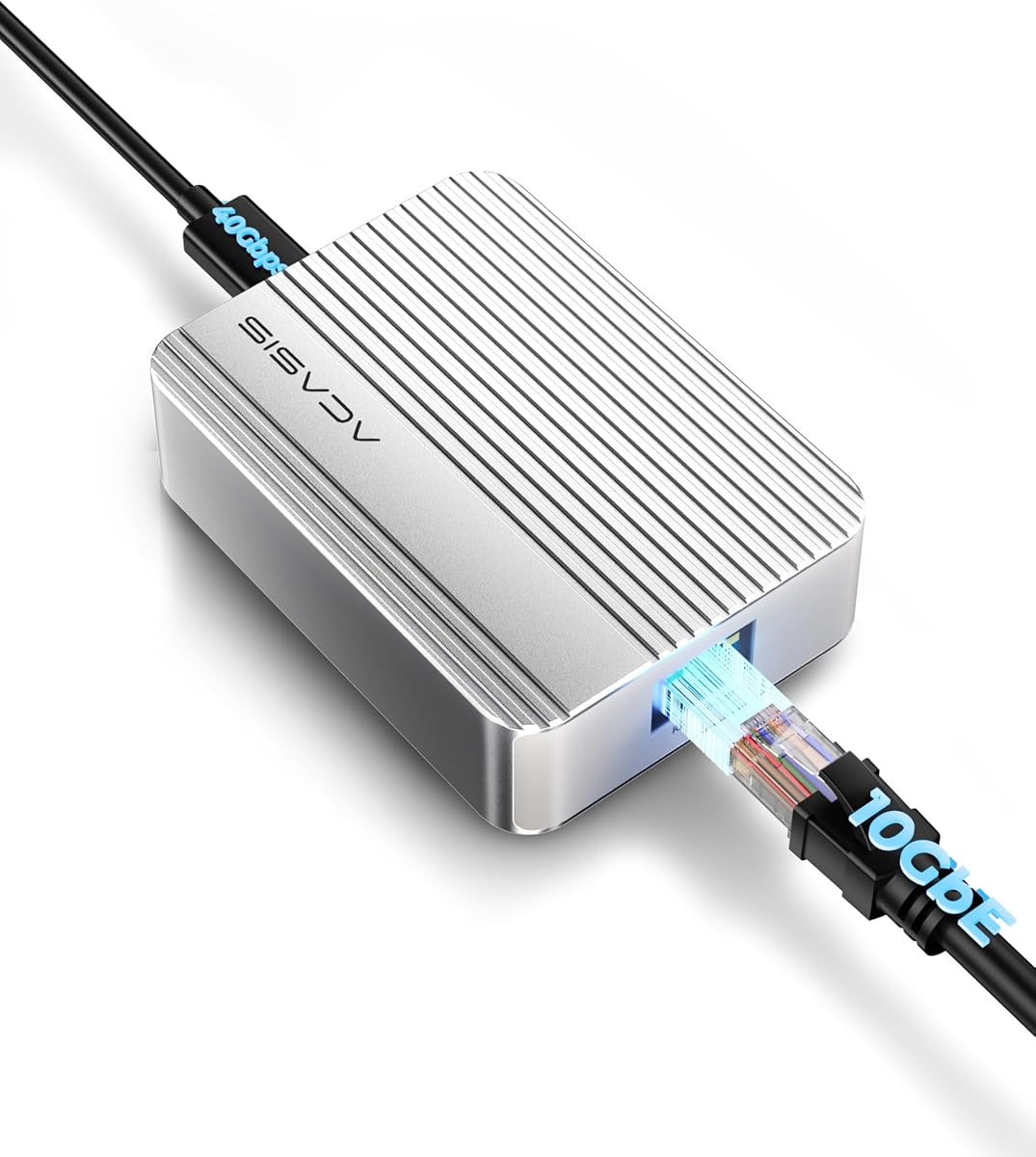
The ACASIS adapter targets users who need to add a high-speed 10Gb Ethernet port to modern laptops with only USB4 or Thunderbolt 3/4 ports. Unlike standard 1Gb adapters, this product promises multi-gigabit speeds, but its performance hinges on your specific hardware and network environment. Buyers should understand that compatibility with 'USB4' is distinct from older USB 3.2 standards and is crucial for achieving the advertised 10Gbps throughput.
Key Considerations Before Buying
- Verify your host port's true capability: A USB4 or Thunderbolt 3/4 port is mandatory for 10Gbps; a standard USB-C 3.2 port will limit you to 5Gbps or less, making the adapter's premium speed potential wasted.
- Assess your network infrastructure: To benefit from 10Gb speeds, you need a compatible 10Gb switch, router, or NAS, and Cat6a or better Ethernet cabling; otherwise, you'll be limited to your existing network's maximum speed.
- Check driver support for your OS: While this adapter supports Mac OS, Windows, and Linux, driver installation and native OS recognition can vary, especially with newer operating system updates which may require updated firmware from the manufacturer.
What Our Analysts Recommend
Quality indicators for a 10Gb USB adapter include a robust aluminum housing for heat dissipation during sustained high-speed transfers and clear documentation regarding chipset (like Aquantia or Marvell) and driver sources. Look for mentions of stable connection maintenance at 10Gb speeds in reviews, not just peak speed tests, as thermal throttling can be a common issue in compact adapters.
USB Network Adapters Market Context
Market Overview
The market for USB-to-Ethernet adapters is segmented by speed, with 10Gb models representing the premium tier for professionals in video editing, large data transfer, and high-performance computing. These adapters are bridging the gap as newer ultraportable laptops shed built-in Ethernet ports but demand faster wired connectivity than Wi-Fi can reliably provide.
Common Issues
Common problems include driver conflicts, especially on Windows where default Microsoft drivers may not enable full 10Gb functionality, and thermal performance issues where sustained data transfers cause the adapter to overheat and throttle speeds. Incompatibility claims often stem from users plugging the adapter into non-USB4/Thunderbolt ports and not achieving expected speeds.
Quality Indicators
Beyond the housing, a quality adapter will have a reputable controller chipset (often noted in technical reviews), provide accessible firmware update tools, and offer reliable, low-latency performance. Consistent user reports of plug-and-play functionality on Macs and straightforward driver installation on Windows are strong positive signals.
Review Authenticity Insights
Grade B Interpretation
A 'Grade B' with a 10% estimated fake review rate suggests the review corpus is largely trustworthy but warrants careful reading. For a niche, technical product like this, a small percentage of inauthentic reviews might aim to inflate ratings subtly, but the verified purchase status of all reviews significantly bolsters credibility.
Trust Recommendation
Focus on the detailed, verified reviews from users who describe specific use cases like connecting to a 10Gb NAS, video editing workflows, or compatibility tests with specific MacBook Pro or Windows laptop models. These contain the substantive technical insights you need.
Tips for Reading Reviews
Prioritize reviews that mention specific speeds achieved (e.g., 'sustained 900MB/s from my NAS'), driver installation experiences, and the exact computer model used. Be skeptical of overly vague, glowing reviews that lack these technical details, as they may constitute the estimated 10% of less authentic feedback.
Expert Perspective
The ACASIS adapter presents a compelling option for users with verified USB4/Thunderbolt 3/4 hosts who require 10Gb Ethernet. Its adjusted rating of 4.10/5 from verified purchasers indicates generally positive real-world performance. The aluminum housing is a thoughtful design choice for thermal management, a critical factor for 10Gb adapters. However, its value is entirely conditional on the user's existing port capabilities and network setup; it's an overpriced 1Gb adapter for someone without a 10Gb network.
Purchase Considerations
You should purchase this adapter if you have a confirmed USB4/Thunderbolt 3/4 laptop and a 10Gb network to connect to. If your primary need is simple internet access or connecting to a standard 1Gb router, a far less expensive 1Gb or 2.5Gb USB-C adapter would be more cost-effective and likely just as functional.
Comparing Alternatives
Shoppers should compare the chipset, driver support policy, and warranty of similar adapters from brands like Cable Matters, Plugable, or QNAP, which may use different controllers with varying OS compatibility nuances.

![Lightning to Ethernet Adapter for iPhone,[Apple MFi Certified] 1.6ft RJ45 Ethernet LAN Network Adapter with 8Pin Compatible for iPhone 14/13/12/11/XS/XR/8/7/6/iPad/iPod,Plug and Play,Support 100Mbps](https://m.media-amazon.com/images/I/51IpoTv+XzL._AC_SY300_SX300_.jpg)


