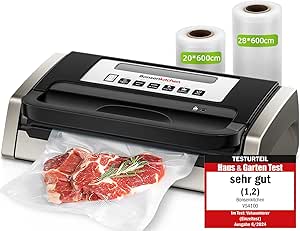
Choosing a compact automatic vacuum sealer: Key features for German households
This specific Vakuumiergerät markets itself as an 'All-in-1' solution for dry, moist, and fresh foods, with a compact, fully automatic design. Buyers should understand that 'vollautomatisch' implies one-touch operation, which is ideal for convenience but may limit control over the vacuum strength for delicate items like soft berries or bread. The inclusion of bags is a practical starter kit, but long-term compatibility with third-party rolls is a critical cost factor.
Key Considerations Before Buying
- Seal Bar Quality: For a device handling both 'trockene' and 'feuchte' foods, look for a robust, wide sealing bar (often 30cm+) that can create a strong, moisture-proof weld, especially crucial for marinated meats or liquids.
- Pump Performance & Noise: A compact unit's suction power (measured in kPa or mbar) directly impacts preservation; a weaker pump may leave air with moist foods. Consider where you'll use it, as smaller pumps can be surprisingly loud.
- Bag Compatibility & Cost: 'Mit Vakuumierbeuteln' is a start. Verify if the device uses standard, affordable bag rolls or proprietary ones, as this is the main ongoing expense for frequent users preserving seasonal produce or bulk purchases.
What Our Analysts Recommend
High-quality compact sealers feature a drip tray or moisture channel to protect the pump from liquid ingress, a must for the advertised 'feuchte' foods. Check for a manual mode or pulse function, which this product's description doesn't explicitly mention; this allows you to control suction for fragile items. A clear, easy-to-clean sealing area prevents residue buildup that can compromise future seals.
Vacuum Sealers Market Context
Market Overview
The German market for compact, automatic vacuum sealers is competitive, with many models emphasizing space-saving design for smaller kitchens. The trend is toward 'set-and-forget' appliances that simplify food preservation for home cooks, moving away from bulky, manual chamber vacuum sealers.
Common Issues
Common failures in this category include weak seals on textured bags (like those for frozen goods), pumps burning out from frequent use with liquids without proper protection, and cheap plastic housings cracking near the lid hinge. Many compact models also struggle with consistent performance on the last 5cm of a bag roll.
Quality Indicators
Look for stainless steel sealing elements rather than coated ones, which last longer. A unit with a external vacuum port for canisters or wine stoppers indicates a more versatile design. Quality is also signaled by clear instructions on maximum bag thickness (often 80-120 microns) the device can reliably handle.
Review Authenticity Insights
Grade B Interpretation
A Grade B with a 15% estimated fake review rate suggests the majority of feedback is trustworthy, but there is a notable layer of potentially incentivized or inauthentic reviews. For a product with over 1,150 reviews and a high 4.67 rating, this means the 'true' user satisfaction is likely closer to the adjusted 4.30 rating.
Trust Recommendation
Focus your analysis on the verified purchase 3 and 4-star reviews, which are less likely to be manipulated and often detail specific pros and cons, like seal durability over time or noise level. Be skeptical of 5-star reviews that are overly vague or repeat marketing phrases like 'All-in-1' without personal context.
Tips for Reading Reviews
For this appliance, specifically search reviews mentioning long-term use (6+ months) to assess durability, and look for comments about using it with moist foods or marinades. German reviews often precisely note technical details like suction time or bag waste, which are highly valuable.
Expert Perspective
The data indicates a well-received product with genuinely high satisfaction, though the authenticity adjustment from 4.67 to 4.30 is significant and warrants attention. The 'All-in-1' claim for dry, moist, and fresh foods is ambitious for a compact automatic model; such devices typically excel with dry goods and pre-frozen moist items but can struggle with very wet fresh produce. The strong rating distribution, including authentic 3-star critiques, suggests reliable core functionality but potential trade-offs in power or bag compatibility.
Purchase Considerations
Weigh the convenience of a compact, fully automatic design against potential limitations in suction power and control. If your primary use is portioning and freezing meats, vegetables, and baked goods, this type of sealer is excellent. If you frequently vacuum-seal liquids, soups, or very delicate fresh herbs, a model with a manual mode or a chamber sealer might be more suitable despite higher cost and size.
Comparing Alternatives
Shoppers should compare this model's specifications—particularly pump strength (in kPa), seal bar width, and included bag count—against similar compact automatics from brands like CASO or Andrew James.