Choosing a Digital Kids' Microscope: Balancing 4K Resolution with Educational Value
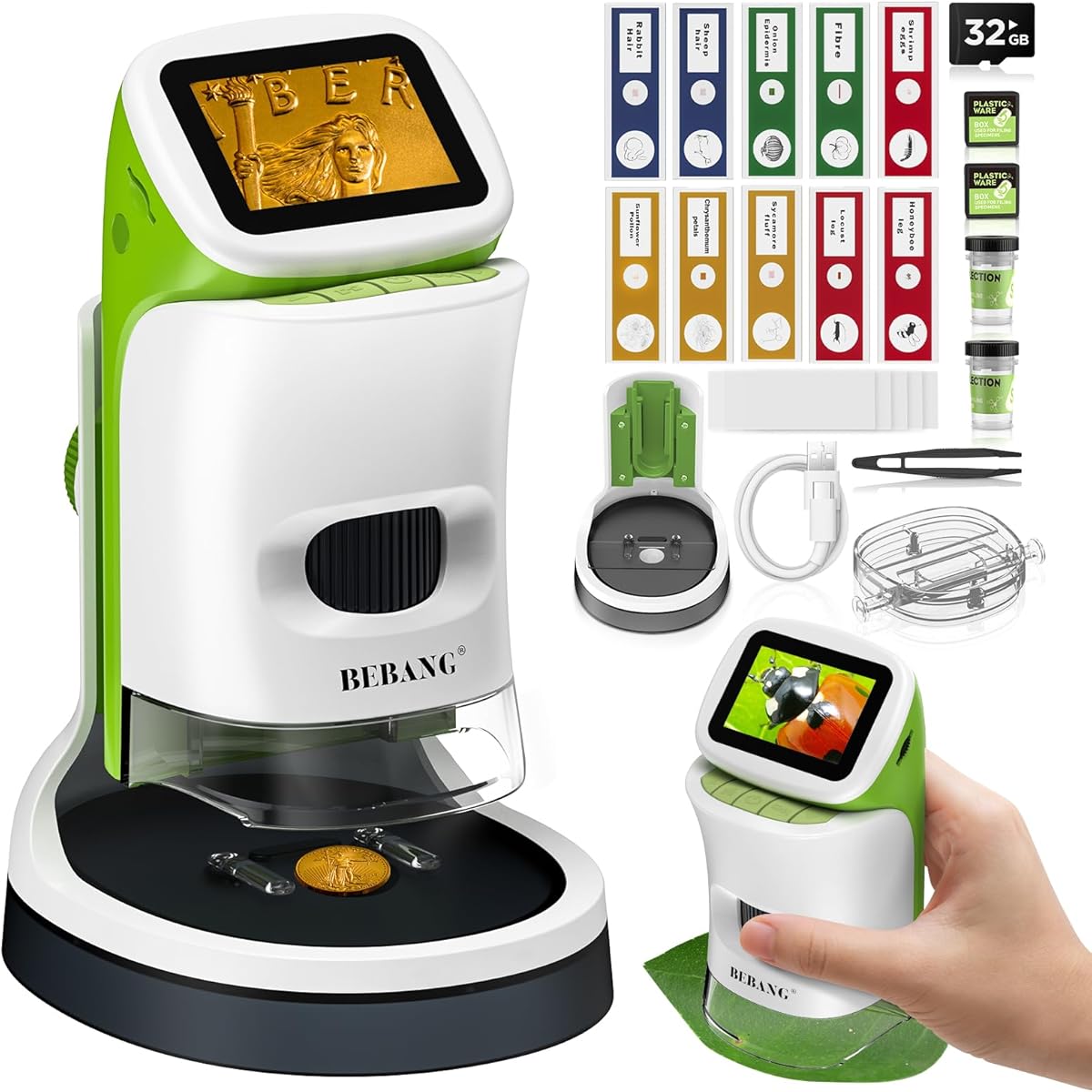
This specific microscope kit targets children aged 6-12 with a portable digital design featuring a 2-inch 4K screen and a 1000X magnification claim. Buyers should understand that '1000X' in this context is a digital zoom, not optical magnification, and the real educational value lies in the included accessories and ease of use for young hands. The built-in stand is crucial for stable observation, a feature not all handheld models include.
Key Considerations Before Buying
- For this age group, durability and simple, intuitive controls are more critical than maximum magnification specs; look for one-button operation and drop-resistant casing.
- The 2-inch screen size is adequate for individual use but may be small for group viewing; consider if you need to connect it to a larger display via USB or Wi-Fi for shared learning.
- The 'kit' aspect with prepared slides and tools is what transforms this from a toy into a genuine scientific starter set, directly impacting engagement and repeat use.
What Our Analysts Recommend
Quality indicators include a robust metal or high-grade plastic stand that holds position without wobbling, and a camera sensor capable of clear focus at various distances, not just when pressed against a surface. Genuine 4K resolution on a small screen is less important than good color accuracy and a responsive, lag-free display for live exploration.
Handheld Digital Microscopes Market Context
Market Overview
The market for children's digital microscopes is crowded with products making similar claims of high magnification and resolution, often prioritizing flashy specs over educational design. This Italian-market product stands out by bundling a physical stand and sample kit, which is less common in purely handheld 'pen-style' models.
Common Issues
Common problems include poor battery life, fragile plastic components, and digital zoom that produces pixelated, unusable images. Many models also suffer from inadequate lighting, making indoor use difficult without perfect ambient light.
Quality Indicators
Look for products that specify the optical magnification (e.g., 50X-200X) separately from digital zoom, include adjustable LED illumination rings around the lens, and offer physical focusing wheels rather than relying solely on digital autofocus, which can frustrate children.
Review Authenticity Insights
Grade B Interpretation
A Grade B with a 15% estimated fake review rate suggests a generally trustworthy review profile, but advises healthy skepticism. The adjusted rating of 4.40/5 (down from 4.78) indicates that while overwhelmingly positive, the raw score is slightly inflated.
Trust Recommendation
Focus on the verified purchase reviews that describe specific use cases, like examining leaves, coins, or the included prepared slides. Be wary of reviews that only generically praise it as a 'great gift' without detailing the child's interaction with the microscope's functions.
Tips for Reading Reviews
Prioritize reviews that mention the product's limitations for a balanced view, such as comments on battery life, the stand's stability, or the practicality of the 1000X zoom. Reviews with photos or videos of the actual microscope output are particularly valuable for assessing true image quality.
Expert Perspective
This product's high rating, even when adjusted, and its 'B' authenticity grade point to a well-received entry in the kids' digital microscope category. Its key strength is the bundled kit with stand, which addresses the major usability hurdle for children: holding a handheld scope steady. The 4K screen is a marketing highlight, but on a 2-inch display, its primary benefit is sharpness for fine details like textile weaves or insect wings, not resolution in the traditional sense. The target age range of 6-12 is appropriate given the design, but younger children will need supervision.
Purchase Considerations
Weigh the convenience of the all-in-one portable kit against the need for potential peripheral purchases, like higher-capacity rechargeable batteries. Consider if the child's interest is casual curiosity or a deeper STEM inclination; the former is well-served here, while the latter might outgrow the fixed magnification options quickly.
Comparing Alternatives
Shoppers should compare the included accessory quality and stand design with similar kits, as these practical elements often differ more than the core magnification specs.