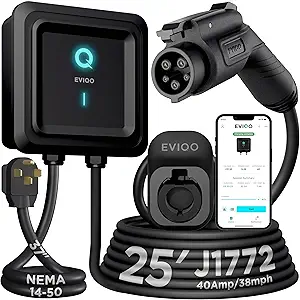
Choosing a Portable Tesla Charger: What 16A Dual-Voltage Models Offer
This specific Level 1/2 charger's defining feature is its dual-voltage capability via the included NEMA 6-20P plug and 5-15P adapter, allowing for both 240V and 120V charging. Buyers should understand that its 16A maximum current on 240V offers a middle-ground speed, faster than standard 120V but slower than a 32A or 48A hardwired station.
Key Considerations Before Buying
- The 25ft cable length is a practical advantage for garage setups where the outlet may not be near the car's charge port, but verify your specific parking arrangement.
- The included NACS connector is Tesla-specific; this unit will not work with non-Tesla EVs without a separate adapter, unlike universal J1772 chargers.
- Wi-Fi app connectivity for a portable charger is an added feature for monitoring and scheduling, but consider if you need remote control for a primarily travel-oriented device.
What Our Analysts Recommend
For portable chargers, ETL certification (like this model has) is a crucial safety and quality benchmark, indicating independent laboratory testing. Also inspect reviews for mentions of consistent thermal management and plug fitment, as these are failure points for budget units.
Charging Stations Market Context
Market Overview
The market for third-party portable Tesla chargers is growing, offering alternatives to Tesla's Mobile Connector, often with longer cables or dual-voltage kits included. These products compete on price, included adapters, and features like app control.
Common Issues
Common concerns include overheating at the plug or connector head during sustained 240V charging, finicky Wi-Fi setup, and durability issues with the adapter plugs or cable casing after repeated coiling.
Quality Indicators
Look for clear mention of safety certifications (ETL or UL), robust construction of the NEMA 6-20 plug, and detailed user feedback on real-world charging speed consistency and heat management over multiple sessions.
Review Authenticity Insights
Grade B Interpretation
A 'B' grade with an estimated 15% fake review rate suggests the review corpus is generally reliable but requires discerning reading. The adjusted rating of 4.10/5 is a more trustworthy performance indicator than the raw 4.44/5.
Trust Recommendation
Prioritize reviews that discuss specific use cases, like charging a Model Y from 20% to 80% on 240V, or that mention long-term durability over several months. Be slightly more skeptical of brief, overly effusive 5-star reviews lacking detail.
Tips for Reading Reviews
For technical products like EVSE, focus on reviews that mention actual miles-per-hour gained, performance in hot/cold weather, and the ease of switching between the included plugs. These details indicate hands-on experience.
Expert Perspective
The data indicates a well-received product, with a solid adjusted rating of 4.10 suggesting genuine satisfaction. Its value proposition centers on the convenience of a bundled 240V/120V solution with a long cable, which appeals to owners wanting a single portable unit for home and travel. The Wi-Fi app is a differentiating feature in the portable category, though its utility versus reliability should be weighed.
Purchase Considerations
This charger is ideal for Tesla owners who have access to a 240V NEMA 6-20 outlet and want faster portable charging than standard 120V, but don't require the maximum 32A speed. Consider if the included plug types match your existing home outlets or if you'd need an electrician to install a 6-20 receptacle.
Comparing Alternatives
Shoppers should compare this unit's amp rating, included adapter set, and price directly against the Tesla Mobile Connector and other third-party options like Lectron or Mustart.