
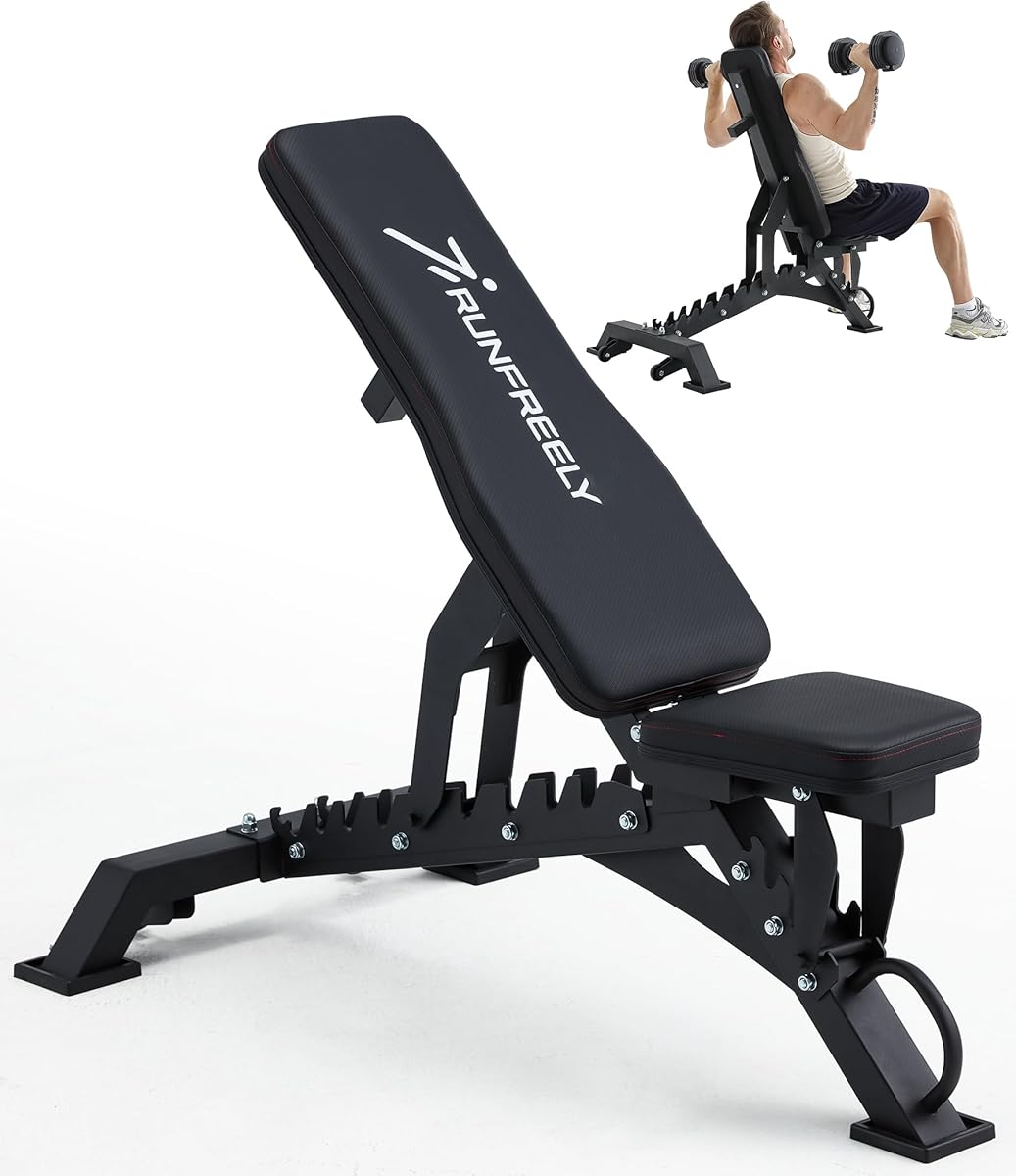
Choosing a 1000LB Capacity FID Bench: Stability, Adjustability, and Home Gym Fit
When evaluating this specific 1000LB capacity FID (Flat, Incline, Decline) bench, the core considerations extend beyond the headline weight rating. For a bench marketed for both heavy compound lifts and versatile accessory work, the real-world stability at various angles, the precision of the adjustment mechanism, and its footprint in a home setting are paramount. This particular model's promise hinges on delivering commercial-grade rigidity in a potentially more compact home design.
Key Considerations Before Buying
- Verify the bench's stability in the decline position, a common weak point for FID benches; look for mentions of wobble or 'walking' during leg raises or decline presses in reviews.
- Assess the seat and back pad adjustment system: a smooth, positive-locking mechanism with clear angle settings (like this bench's multiple back positions) is crucial for safe, repeatable setups between sets.
- Measure your available space against the bench's assembled dimensions and consider the utility of integrated features like leg holders or wheels, which affect both storage and daily use.
What Our Analysts Recommend
High-quality indicators for a bench at this capacity include a welded, box-style steel frame (not bolted-together main joints), thick vinyl upholstery over high-density foam that resists permanent deformation, and wide, grippy feet that protect flooring. The hardware quality, especially on pivot points and adjustment pins, directly correlates to long-term durability and lack of play.
Adjustable Benches Market Context
Market Overview
The market for heavy-duty home FID benches is fiercely competitive, with brands balancing cost against features like weight capacity, pad width, and transport wheels. A 1000LB user capacity like this model's sits at the premium end of the consumer market, aiming to bridge the gap between light-duty home equipment and commercial gym fixtures.
Common Issues
Common pitfalls include backrests that flex under heavy incline presses, adjustment mechanisms that become sloppy or difficult to engage over time, and pads that are too narrow or slick for secure positioning. Many benches struggle with a true, stable decline function, making it more of a marketing checkbox than a usable feature.
Quality Indicators
Beyond the weight rating, scrutinize the frame's gauge and construction (11-gauge steel is robust), the number of backrest adjustment positions (7+ is ideal for precision), and the width of the main pad (12 inches or wider is preferred for bench press stability). Integrated ladder-style back supports generally offer more stability than single-pin designs.
Review Authenticity Insights
Grade B Interpretation
A 'Grade B' authenticity rating with an estimated 10% fake review rate suggests the vast majority of feedback is reliable, but a small portion requires scrutiny. For this bench, it means the high 4.44/5 rating is slightly inflated; the adjusted 4.20/5 rating based on authentic reviews is a more accurate performance indicator.
Trust Recommendation
Focus on the verified purchase reviews that discuss long-term use (3+ months), specific exercises like heavy decline work, and details about assembly challenges or hardware quality. Be slightly more skeptical of overly vague 5-star reviews that don't mention specific features of this FID mechanism.
Tips for Reading Reviews
Prioritize reviews that mention the bench's performance with 300+ lbs on the bar, the feel of the vinyl, and the ease of switching between incline and decline settings. Look for photos from users showing the bench in their actual home gym setup to gauge real-world proportions and build quality.
Expert Perspective
The data presents a robust product with strong authentic reviews, indicating it largely delivers on its core promise of heavy-duty stability for flat and incline pressing. The slight dip from the raw to adjusted rating (4.44 to 4.20) typically points to minor, consistent drawbacks mentioned in genuine critiques, such as assembly complexity or pad firmness, rather than fundamental flaws. The high weight capacity suggests a properly engineered frame, which is the most critical element for safety and longevity.
Purchase Considerations
This bench is a serious commitment for a home gym user focused on barbell training. The decision should weigh the need for a true, heavy-duty decline function against potentially more stable dedicated flat-incline benches. Consider if your training regimen justifies the footprint and cost of a full FID bench versus a simpler, potentially sturdier FI model.
Comparing Alternatives
Shoppers should compare this model's specific adjustment mechanism, pad dimensions, and warranty terms against competitors like Rep Fitness AB-3000 or Titan Fitness's FID benches to find the best fit.


