Choosing a Variable Bench Power Supply: Voltage Range, Current Capacity, and Control Precision
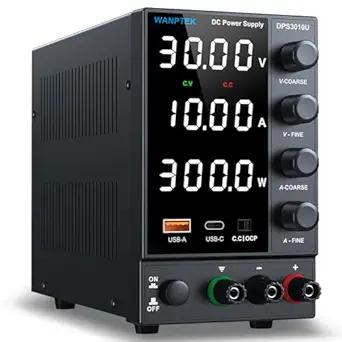
When selecting a switching bench power supply like the SPS-3010V, focus on how its 0-32V/0-10A range matches your projects. The encoder knob system for coarse and fine adjustment is critical for precision work, while the integrated 20W USB/Type-C quick-charge ports add modern convenience to a traditional instrument.
Key Considerations Before Buying
- Evaluate if the 320W maximum output (32V × 10A) provides sufficient headroom for your typical circuits, including inrush currents for motors or capacitive loads.
- Assess the usability of the dual-resolution encoder knob—coarse for rapid changes and fine for millivolt/milliamp adjustments—which is essential for sensitive electronics testing.
- Consider the utility of the dedicated output enable/disable switch for safe connection of devices, a feature not always present on budget power supplies.
What Our Analysts Recommend
A stable, low-ripple switching design is key for clean DC output. The 4-digit LED display should offer clear, simultaneous voltage and current readouts. Check that the chassis and binding posts feel robust, as these endure frequent connection cycles.
Power Supplies Market Context
Market Overview
The market for benchtop DC power supplies is increasingly split between traditional linear designs and more efficient, compact switching models like this one. Features like USB-C power delivery, once rare, are becoming differentiators for hobbyist and professional workbenches.
Common Issues
Common complaints include noisy cooling fans, inaccurate displays or current limiting, and binding posts that loosen over time. Some switching supplies can introduce high-frequency noise into sensitive circuits if not properly filtered.
Quality Indicators
Look for clear specifications on line and load regulation (e.g., <0.01% + 2mV) and ripple/noise (e.g., <5mV RMS). A well-implemented constant current (CC) mode that holds reliably is more valuable than a high maximum amperage you'll never use.
Review Authenticity Insights
Grade B Interpretation
A 'B' grade with a 10% estimated fake review rate suggests a generally trustworthy review pool. The slight dip from the 4.89 displayed rating to a 4.60 adjusted rating indicates some inflated praise, but the core feedback is reliable.
Trust Recommendation
Prioritize the verified purchase reviews that discuss specific use cases—like testing Arduino projects or repairing PCBs—over vague, glowing praise. The high volume of reviews (over 2000) lends statistical weight to the consensus.
Tips for Reading Reviews
Focus on reviews that mention long-term reliability over months of use, the actual behavior of the current limit, and the real-world noise of the fan. Be skeptical of reviews that don't mention any minor drawbacks, as even good products have trade-offs.
Expert Perspective
The SPS-3010V presents a strong value proposition, blending a useful power range with modern features like USB-C QC. The exceptionally high user rating, even when adjusted, points to satisfaction with its core performance and feature set for the price. The inclusion of both coarse and fine adjustment knobs addresses a key pain point in variable power supply usability.
Purchase Considerations
This unit is best suited for electronics hobbyists, students, and technicians whose work stays within its 320W envelope. If your projects require ultra-low noise (for audio circuits) or very high current at low voltages, a linear supply or a different model might be necessary. The switching design makes it lighter and more efficient for general use.
Comparing Alternatives
Shoppers should compare this model's feature set and specifications against similar units from brands like Korad, Riden, or Siglent to find the best fit.