
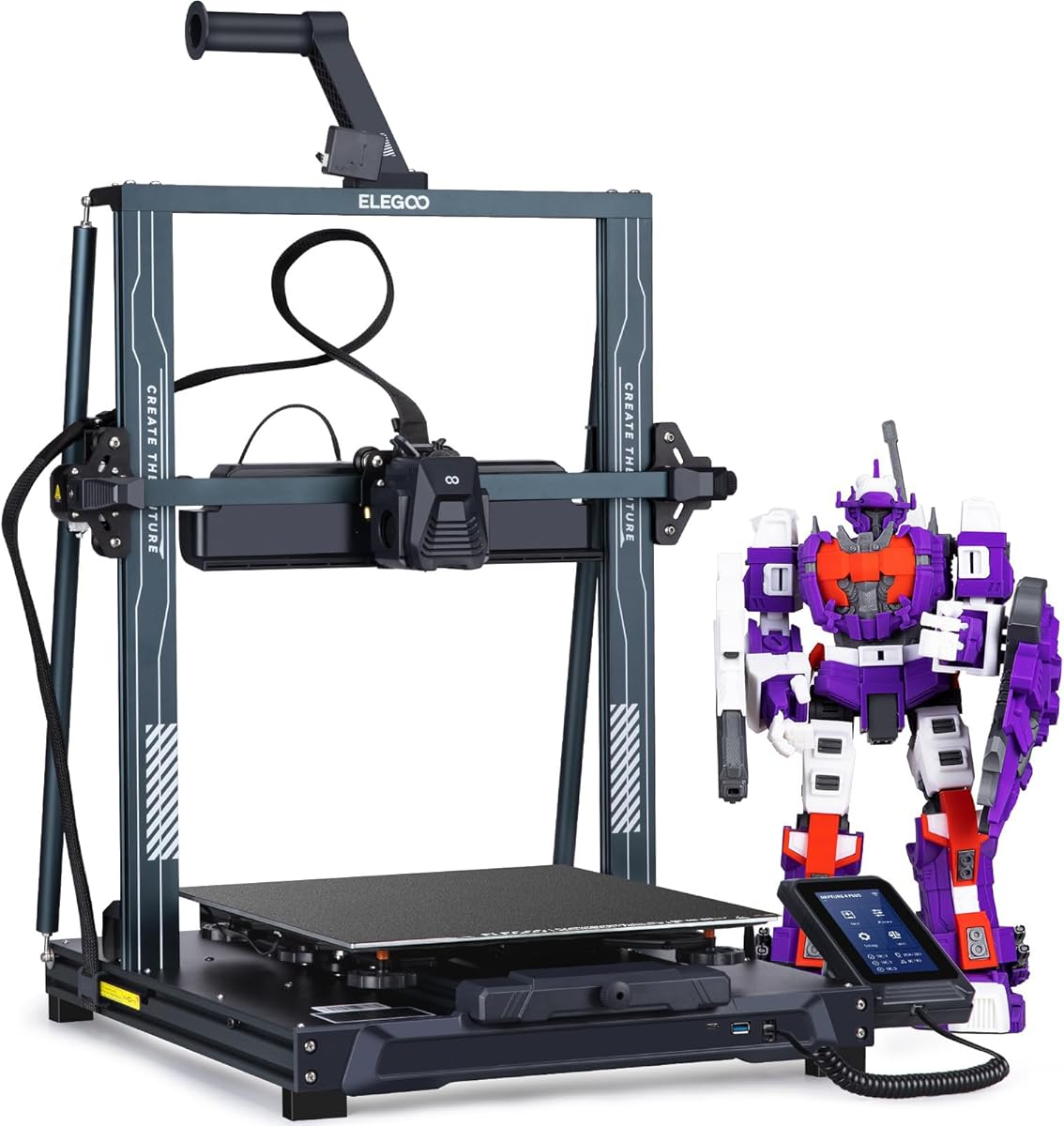
Evaluating the Neptune 4 Plus: When High Speed Meets Large Format 3D Printing
The ELEGOO Neptune 4 Plus targets users who need both speed and volume, combining a 500mm/s claimed print speed with a substantial 320x320x385mm build volume. This specific configuration of direct drive extruder, 300°C nozzle, and auto-leveling positions it as a bridge between hobbyist and semi-professional use. Buyers should understand that achieving the advertised high speeds often requires optimal tuning and specific filament types.
Key Considerations Before Buying
- The 500mm/s speed is a maximum theoretical value; real-world usable speeds for quality prints are typically 150-250mm/s, heavily dependent on your slicer settings and the model's geometry.
- The large 320x320mm heated bed requires consistent heating; check reviews for comments on bed temperature uniformity, especially when printing large, flat first layers that need even adhesion.
- The direct drive extruder is excellent for flexible filaments but adds moving mass to the print head; assess feedback on ringing or ghosting artifacts at high speeds, which can require input shaping calibration.
What Our Analysts Recommend
For large-format FDM printers like this, prioritize reviews discussing long-duration print reliability, power-loss recovery success, and z-axis stability over the full 385mm height. Quality indicators include consistent layer lines on tall prints and minimal warping on large, flat surfaces that fully utilize the bed. Pay close attention to comments about the stock cooling solution's effectiveness at high speeds.
Market Context
Market Overview
The sub-$500 large-format 3D printer market is increasingly competitive, with brands like Creality, Anycubic, and ELEGOO pushing features like linear rails, Klipper firmware, and high-flow hotends downstream. The Neptune 4 Plus competes by bundling speed, volume, and auto-bed leveling at a specific price point, rather than excelling in any single ultra-high-end feature.
Common Issues
Common pain points in this category include inconsistent auto-bed leveling sensor accuracy over large surfaces, resonance and vibration at high speeds leading to print artifacts, and firmware bugs in early production runs. Users often need to perform manual calibrations like pressure advance and input shaping to realize a printer's full potential, despite 'out-of-box' claims.
Quality Indicators
Look for robust construction of the gantry and z-axis lead screws, a rigid frame that minimizes wobble at the top of the 385mm Z-height, and a genuine, well-reviewed mainboard (like the ELEGOO's own or an open-source alternative). High-quality large-format printers demonstrate good part cooling duct design and reliable bed adhesion methods, such as a effective PEI spring steel sheet.
Review Authenticity Insights
Grade B Interpretation
A 'Grade B' with an estimated 10% fake review rate suggests the majority of the 2,114 reviews are trustworthy, but a modest portion may be incentivized or inauthentic. The adjusted rating of 4.20/5 (down from 4.40/5) indicates the genuine user experience is still very positive, but slightly more critical than the raw average implies.
Trust Recommendation
Focus on verified purchase reviews that detail specific use cases, calibration steps, or mods, as these are harder to fake. Be slightly more skeptical of overly simplistic 5-star reviews that don't mention print quality, setup, or long-term use. The strong volume of reviews (>2000) allows you to identify consistent patterns of praise or complaint with high confidence.
Tips for Reading Reviews
Prioritize reviews that mention specific slicer profiles (Cura, OrcaSlicer), print speeds actually achieved, and experiences with different filament types (PLA, PETG, TPU). Look for detailed discussions of the Klipper-based firmware interface and the LED light bar's utility, as these are product-specific details often glossed over in generic reviews.
Expert Perspective
The Neptune 4 Plus presents a compelling value proposition for makers and small businesses needing to produce large prototypes or multiple parts in a single batch quickly. Its 4.20 adjusted rating from a large, mostly authentic review pool signals strong user satisfaction, particularly regarding its feature set for the price. The key differentiator is the attempt to marry high-speed printing capabilities, enabled by Klipper firmware and a direct-drive extruder, with a genuinely large build volume, a combination that often forces compromises in rigidity or cost. Potential buyers should be prepared for the learning curve associated with tuning a high-speed printer to achieve quality results, as this is not a truly 'plug-and-play' device for beginners.
Purchase Considerations
Weigh your need for speed against your need for volume. If you primarily print large, detailed models slowly, a more rigid coreXY printer might be better. If you need speed for many smaller parts, a printer with a smaller, lighter gantry might achieve higher quality at speed. Consider your willingness to perform calibrations like input shaping and pressure advance, which are crucial for this printer's performance.
Comparing Alternatives
Shoppers should compare the Neptune 4 Plus directly with the Creality Ender-3 V3 Plus and the Anycubic Kobra 2 Plus, which offer similar large-format, high-speed profiles in the same price bracket.


