
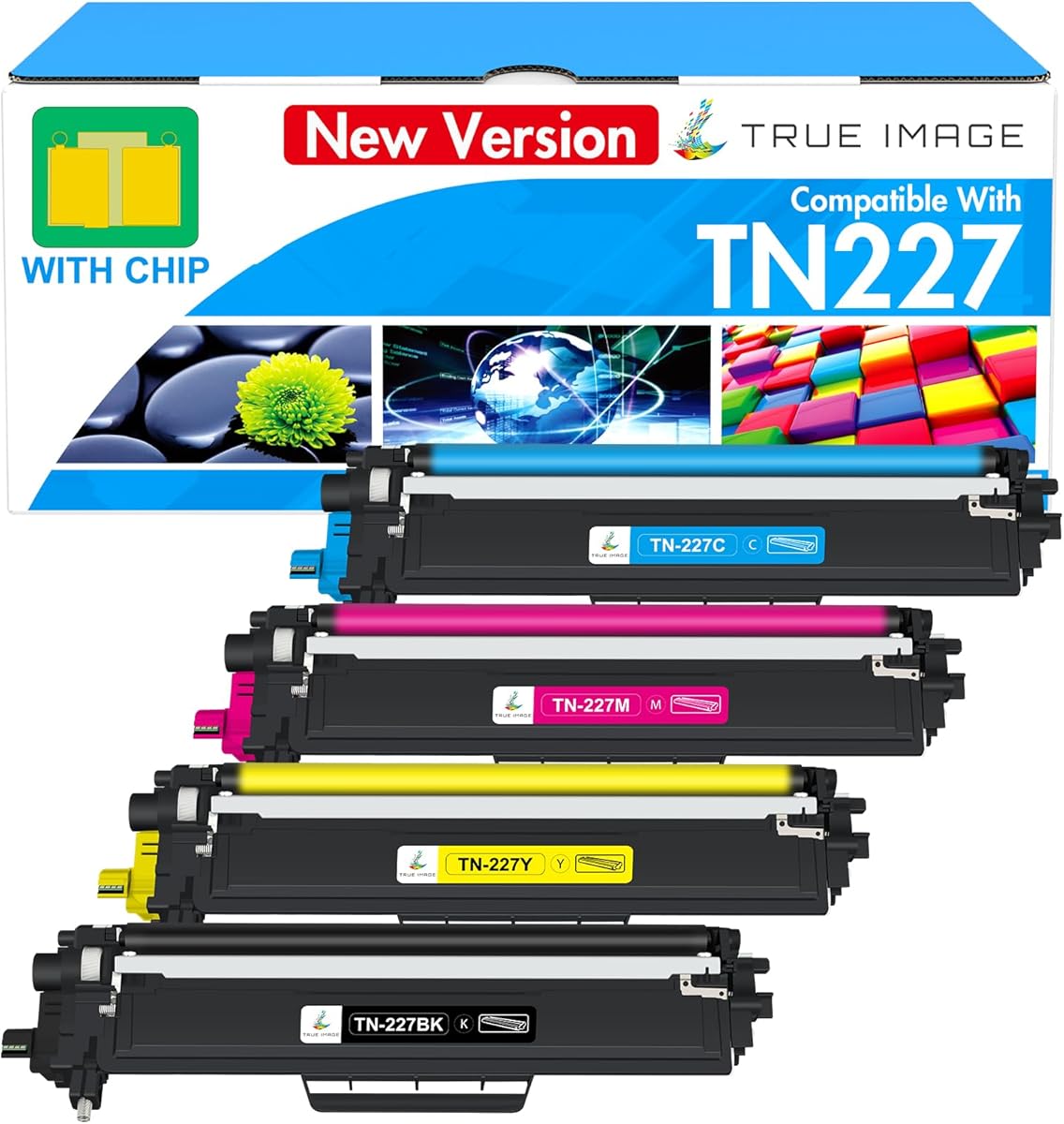
Choosing compatible toner for Brother color lasers: What matters beyond price
When selecting aftermarket toner for Brother HL-L3290CDW and similar color laser printers, compatibility claims are just the starting point. This TN-227BK/C/M/Y 4-pack offers high-yield capacity, but performance depends on precise formulation and chip communication. Buyers should focus on print quality consistency and cartridge reliability rather than just page yield claims.
Key Considerations Before Buying
- Verify your printer's exact model number—this cartridge set works with Brother's TN-223 and TN-227 series printers including HL-L3290CDW and MFC-L3770CDW, but not all Brother color lasers use these cartridges.
- High-yield cartridges should deliver more pages than standard, but actual yield varies based on print density; look for reviews mentioning how long cartridges lasted with typical office use.
- Compatible cartridges must communicate properly with Brother's toner monitoring system; installation issues or error messages indicate poor chip compatibility.
What Our Analysts Recommend
Quality indicators include consistent color reproduction across all four cartridges and minimal toner dusting inside the printer. Reviews mentioning sharp text edges and vibrant color graphics without banding suggest proper pigment formulation. Packaging that protects cartridges from light exposure during shipping also matters for toner stability.
Toner Cartridges Market Context
Market Overview
The compatible toner market for Brother color laser printers has expanded significantly, with third-party manufacturers offering alternatives to OEM cartridges at 40-60% lower cost. Quality varies dramatically between suppliers, with some achieving near-OEM performance while others cause printer damage.
Common Issues
Users frequently report inconsistent color matching between cartridges, premature 'low toner' warnings due to chip miscalibration, and occasional leakage during installation. Some compatible cartridges work initially but develop print quality issues after several hundred pages.
Quality Indicators
Look for manufacturers who specify their toner formulation process and include anti-static packaging. Quality cartridges maintain consistent particle size distribution, which affects both print quality and printer maintenance requirements over time.
Review Authenticity Insights
Grade B Interpretation
A Grade B authenticity rating with 15% estimated fake reviews indicates generally trustworthy feedback but requires careful reading. The 4.10 adjusted rating (down from 4.44) suggests some inflated positive reviews, but the majority of feedback appears genuine.
Trust Recommendation
Focus on reviews that mention specific printer models like HL-L3270CDW or MFC-L3750CDW, as these demonstrate actual usage. Verified purchase reviews discussing installation experiences or print sample comparisons provide more reliable insights than generic praise.
Tips for Reading Reviews
Prioritize reviews that detail print quality over time rather than initial impressions, as toner performance can degrade. Look for mentions of page counts achieved and whether all four colors depleted evenly—this indicates balanced formulation.
Expert Perspective
With a solid 4.10 adjusted rating from predominantly genuine reviews, this TN-227 compatible set appears to be a reliable aftermarket option for Brother color laser owners. The high-yield designation suggests cost-effectiveness for moderate to heavy printing volumes, particularly for the HL-L3290CDW and MFC-L3770CDW models mentioned in reviews. The consistency across color cartridges appears to be a strength based on authentic user feedback.
Purchase Considerations
Weigh the significant cost savings against potential minor color variations from OEM standards. Consider your print volume—high-yield cartridges make most sense for users printing several hundred color pages monthly. Check if your specific Brother model requires any firmware updates for third-party cartridge compatibility.
Comparing Alternatives
Compare this 4-pack's per-cartridge cost against individual OEM cartridges and other compatible brands, factoring in yield differences and return policies.


