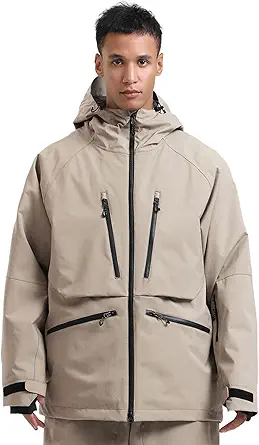
Balancing waterproof performance, insulation warmth, and mobility for versatile winter sports use
This specific jacket positions itself as a multi-activity winter shell, suitable for skiing, snowboarding, hiking, and travel. Buyers should evaluate its claimed waterproofing and insulation against the specific demands of their primary activity, as a true ski jacket often prioritizes different features than a hiking windbreaker.
Key Considerations Before Buying
- Assess the waterproof rating and seam sealing; a jacket marketed for skiing and snowboarding should have a minimum 10,000mm waterproof rating and fully taped seams to handle wet snow and chairlift moisture.
- Evaluate the insulation type and weight; the 'warm winter' claim suggests synthetic fill, but its effectiveness in sub-freezing mountain conditions versus casual winter travel varies significantly.
- Check mobility features like articulated elbows, gusseted underarms, and powder skirts; these are critical for skiing but less common in general hiking jackets, impacting performance in your intended use.
What Our Analysts Recommend
For this category, examine the zipper quality (YKK is a reliable indicator), the presence of a helmet-compatible hood with adjustable cinches, and ventilation zips in the pits. A dedicated ski/snowboard jacket will include a goggle wipe, lift pass pocket, and snow-specific cuff closures, which this product's description ambiguously covers.
Jackets Market Context
Market Overview
The men's ski and snowsport jacket market is saturated with products blurring lines between specialized performance gear and casual winter fashion, often at competitive price points. This jacket's multi-activity title is a common strategy to appeal to a broader audience beyond core skiers.
Common Issues
Common problems include waterproof coatings that degrade after a season, inadequate insulation for stationary lift rides, and poor seam construction leading to leaks at stress points. Many jackets over-promise on breathability, causing wearers to overheat during high-output activities.
Quality Indicators
Look for specific technical fabric names (e.g., mentions of DWR treatments, specific membrane tech like proprietary 'waterproof' claims), reinforced areas on shoulders and cuffs, and multiple internal/external pocket configurations designed for ski resort essentials like passes and phones.
Review Authenticity Insights
Grade B Interpretation
A 'Grade B' with an estimated 15% fake review rate suggests generally reliable feedback but warrants caution. For this jacket, it means most reviews reflect real use, but a portion may exaggerate performance across its claimed diverse activities (skiing, hiking, travel).
Trust Recommendation
Focus on reviews that detail specific conditions, like 'kept me dry during a day of heavy Sierra snow' or 'ventilated well during resort skiing,' rather than generic 'great jacket' comments. The adjusted 4.10 rating from a more authentic subset is a strong, realistic score for this category.
Tips for Reading Reviews
Prioritize reviews mentioning actual ski days or winter hiking trips over those describing only casual wear. Look for mentions of fit over layers, hood compatibility with helmets, and long-term durability after multiple washes, as these are pain points for multi-use winter shells.
Expert Perspective
The product's high volume of reviews (1,779) and solid adjusted 4.10 rating indicate it meets core expectations for a budget-to-mid-tier multi-activity winter jacket. Its broad title suggests versatility, but experts would caution that it likely excels in 2-3 of its named uses rather than all equally. The 'B' authenticity grade is typical for high-volume apparel listings where some incentivized reviews are present but don't dominate the narrative.
Purchase Considerations
Weigh its value if your primary need is resort skiing or snowboarding versus occasional winter travel. The waterproof and warmth claims must be scrutinized against your local climate; a jacket adequate for Colorado resort skiing may differ from one for Pacific Northwest wet snow. Consider the lack of a brand name—this often means cost savings but less consistent quality control.
Comparing Alternatives
Shoppers should compare its feature set and price directly with established outdoor brands' entry-level ski shells and insulated hiking jackets to gauge true value.