Choosing an Adjustable Grip Strengthener: Resistance Range and Durability Matter Most
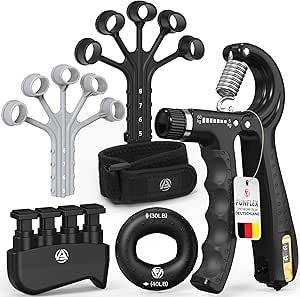
When evaluating this specific 5-100 kg adjustable grip strengthener with an automatic counter, focus on how the wide resistance range matches your goals, from rehabilitation to advanced training. The digital counter and ergonomic handles are key features that differentiate it from basic spring models, making it suitable for both athletes and musicians seeking precise progress tracking.
Key Considerations Before Buying
- Assess if the 5-100 kg adjustable range aligns with your starting strength and progression goals, as moving from rehabilitation (5-15 kg) to advanced training (80-100 kg) requires substantial mechanical durability.
- Consider the automatic counter's utility for your training style; it's valuable for structured rep/set tracking but adds complexity compared to simple mechanical clickers on some competitors.
- Evaluate the handle ergonomics and non-slip material for your intended use duration, as musicians doing repetitive exercises need different comfort than athletes doing high-intensity grip sessions.
What Our Analysts Recommend
High-quality adjustable grip trainers feature robust metal springs or resistance mechanisms that maintain consistent tension across the full 100 kg range without plastic deformation. Check for precise dial mechanisms that click securely into resistance settings, preventing accidental slippage during intense squeezes, which is a common failure point in cheaper models.
Grip Strengtheners Market Context
Market Overview
The grip strengthener market has evolved from basic spring-handle devices to sophisticated adjustable trainers with tracking features, driven by demand from rock climbers, strength athletes, and rehabilitation patients. Products like this model with 5-100 kg ranges and digital counters represent the premium segment, competing against simpler 20-50 kg spring models and expensive professional-grade equipment.
Common Issues
Lower-end adjustable models often suffer from resistance mechanisms that lose calibration over time, with springs that fatigue or dials that slip under high load. Digital counters can fail due to battery issues or impact damage, while poor handle ergonomics cause hot spots during extended training sessions.
Quality Indicators
Look for all-metal internal components, especially in the spring and adjustment mechanism, as plastic parts degrade under repeated 100 kg loads. Premium models feature sealed digital counters with replaceable batteries and handles with dual-density rubber that provides both cushioning and secure grip during sweaty workouts.
Review Authenticity Insights
Grade B Interpretation
The Grade B authenticity rating with 10% estimated fake reviews indicates generally reliable feedback, though shoppers should be slightly more critical than with Grade A products. The 4.30 adjusted rating (down from 4.56) suggests some review inflation, but the high percentage of verified purchases provides meaningful validation.
Trust Recommendation
Focus on reviews discussing specific use cases like rock climbing training, physical therapy recovery, or musician's hand conditioning, as these contain authentic details about the 5-100 kg adjustment range in practice. Be particularly skeptical of reviews that don't mention the automatic counter's functionality or the handle comfort during extended use.
Tips for Reading Reviews
Prioritize reviews that mention long-term durability (3+ months of use) and consistency of the resistance mechanism across the full adjustment range. Look for discussions about the counter's battery life and readability during workouts, as these operational details rarely appear in manipulated feedback.
Expert Perspective
This product's 4.30 adjusted rating from verified purchasers suggests it delivers on its core promise as an adjustable grip trainer, particularly for users needing the wide 5-100 kg resistance range. The automatic counter adds value for progress tracking but represents a potential failure point compared to purely mechanical models. The B authenticity grade indicates generally trustworthy reviews, though the 10% fake review rate warrants careful reading of detailed, specific feedback rather than relying on star ratings alone.
Purchase Considerations
Weigh whether you truly need the full 100 kg maximum resistance—most users plateau at 60-80 kg for advanced training—and if the digital counter justifies potential maintenance versus simpler mechanical alternatives. Consider your primary use case: musicians and rehabilitation users benefit most from the low-end 5-20 kg range, while strength athletes need the high-end durability.
Comparing Alternatives
Compare this model's digital features and adjustment mechanism against purely mechanical adjustable grippers and basic spring-handle models at different price points to ensure you're paying for features you'll actually use.