
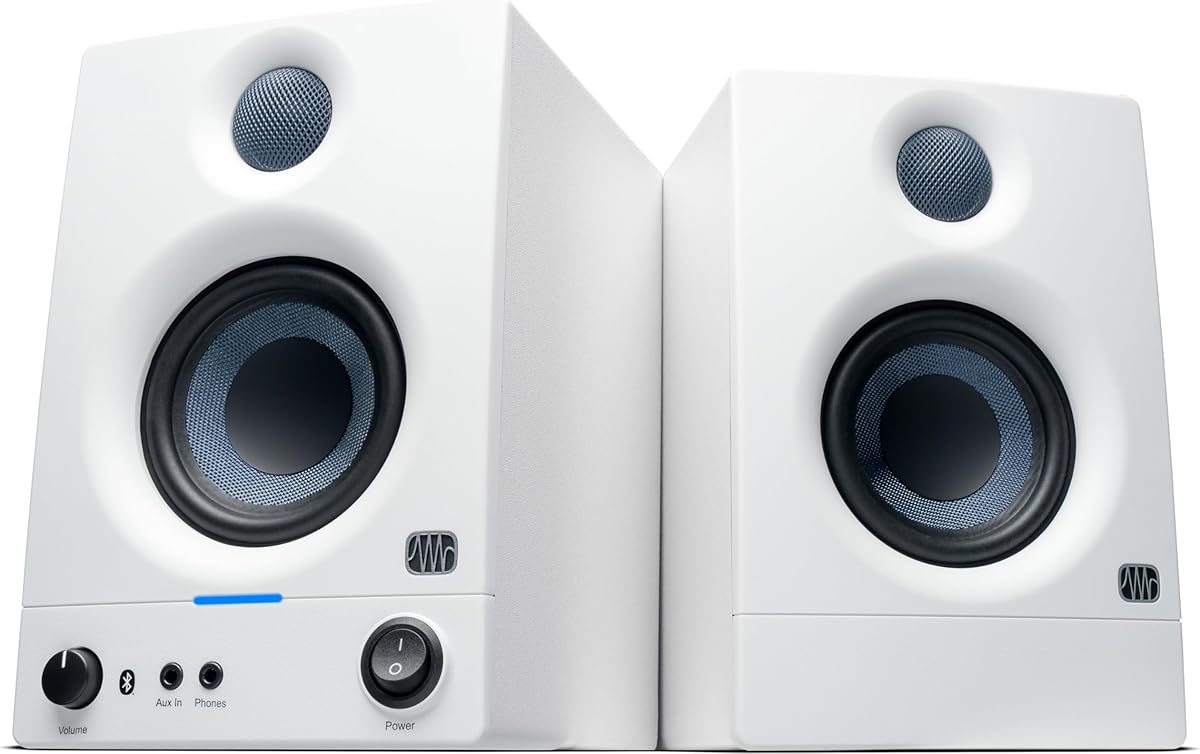
Choosing 3.5-inch studio monitors for desktop mixing and casual listening
The PreSonus Eris 3.5BT occupies a specific niche: compact powered monitors designed for near-field desktop use. Unlike standard computer speakers, these are engineered for accurate frequency response, making them suitable for both music production and critical listening. Their 3.5-inch woofer size dictates their optimal use case and placement requirements.
Key Considerations Before Buying
- The 3.5-inch woofer provides tight, accurate midrange but lacks substantial sub-bass; plan to pair with a subwoofer for full-range electronic music production or if you expect deep bass response for listening.
- Bluetooth connectivity (the 'BT' model) adds versatility for casual streaming but introduces latency; it's ideal for reference listening, not for real-time monitoring while recording.
- These are 'powered' or 'active' monitors with built-in amplifiers, requiring only an audio source and power outlet—simplifying setup but demanding proper placement on isolation pads to prevent desktop resonance.
What Our Analysts Recommend
For monitors in this class, examine the rear panel for acoustic tuning controls (like the Eris's High Frequency and Low Frequency trim), which are essential for adapting to imperfect room acoustics. Genuine studio monitors will publish frequency response specs (the Eris 3.5BT claims 80Hz - 20kHz); be wary of products that only list power output. Quality is also indicated by a dedicated, shielded power supply to minimize electronic interference.
Studio Monitors Market Context
Market Overview
The sub-$150/pair market for compact studio monitors is highly competitive, with models from Mackie, Kali Audio, and iLoud targeting beginners and space-constrained creators. These products bridge the gap between consumer multimedia speakers and professional-grade monitoring, often prioritizing value and connectivity.
Common Issues
Users often underestimate the importance of speaker placement and room treatment, leading to inaccurate bass response and stereo imaging. Another frequent mismatch is using near-field monitors (designed for a 3-4 foot listening triangle) in a large living room, where their output will sound thin. Driver distortion at high volumes is also common with smaller woofers.
Quality Indicators
Look for monitors with a waveguide around the tweeter (like the Eris's proprietary design), which improves high-frequency dispersion and creates a wider 'sweet spot.' A front-firing bass port (as on these PreSonus models) allows for flexible placement closer to walls compared to rear-ported designs. Build quality is evident in weight (heavier often means a more robust internal power supply and cabinet) and the use of composite or woven fiber drivers rather than basic paper cones.
Review Authenticity Insights
Grade B Interpretation
A 'B' grade with a 15% estimated fake review rate suggests the overall sentiment is reliable, but shoppers should be slightly more critical of excessively glowing 5-star reviews. The high volume of verified purchases (all reviews) significantly bolsters the credibility of the average rating, which remains strong at 4.5 after adjustment.
Trust Recommendation
Focus on detailed 4-star reviews from users describing specific use cases like 'podcast editing' or 'bedroom guitar recording,' as these often provide the most balanced insights into real-world performance. The adjusted rating of 4.5 is a more trustworthy performance indicator than the raw 4.89 average.
Tips for Reading Reviews
For technical gear like monitors, prioritize reviews that mention comparative listening tests with other brands or describe the acoustic tuning process. Be skeptical of reviews that only praise 'loudness' or 'bass' without context, as these may come from users unfamiliar with the flat response expected from studio monitors.
Expert Perspective
The PreSonus Eris 3.5BT presents a compelling package for its price and size, evidenced by its robust adjusted rating of 4.5 from thousands of verified owners. Its strength lies in serving as an accurate, compact reference for desktop producers, podcasters, and discerning listeners where space is premium. The inclusion of Bluetooth and multiple inputs adds practical flexibility, though the fundamental physics of a 3.5-inch driver sets realistic expectations for bass extension. The high rate of verified purchases increases confidence in the consistently reported positives: clear midrange, easy setup, and good value.
Purchase Considerations
You should purchase these if your primary need is accurate audio for mixing vocals, acoustic instruments, or podcasts on a desktop under 4 feet wide. Consider alternatives or adding a subwoofer if your work involves heavy bass synthesis, hip-hop production, or if you primarily want powerful speakers for casual movie and music enjoyment in a larger room.
Comparing Alternatives
Shoppers should compare the Eris 3.5BT directly with the Mackie CR3-X and the Kali Audio LP-UNF, which compete in the same compact, entry-level monitor segment.


