
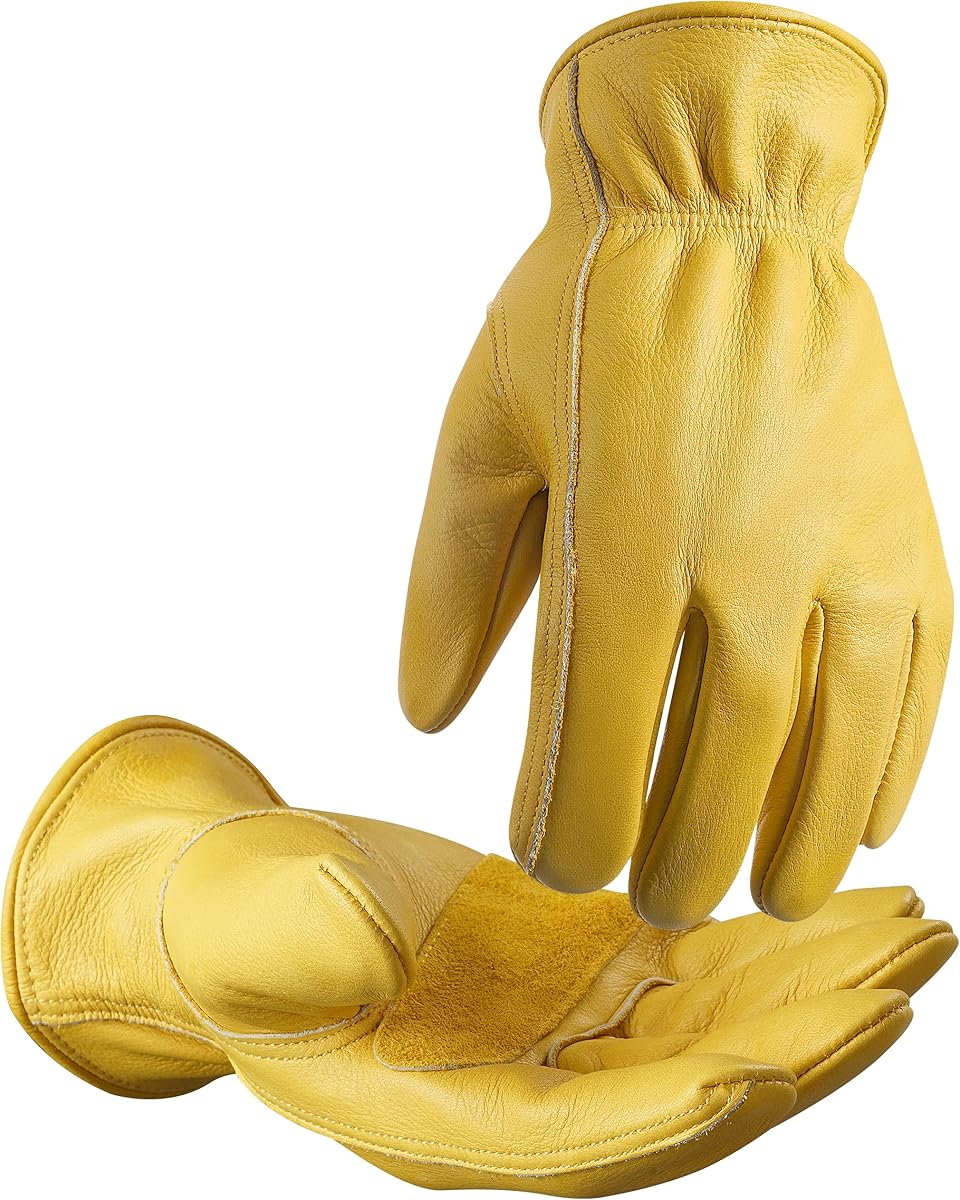
Selecting Cowhide Work Gloves That Balance Protection, Dexterity, and Durability
When evaluating leather work gloves like these DULFINE cowhide gloves, buyers should focus on how the reinforced construction addresses specific trade-offs between protection and flexibility. These gloves claim puncture and cut resistance while maintaining gardening functionality, which requires careful material selection and stitching techniques that don't compromise tactile feedback.
Key Considerations Before Buying
- Assess whether the reinforced areas align with your specific tasks—gardening requires different protection points than construction or mechanical work.
- Consider leather thickness versus flexibility; cowhide typically offers good abrasion resistance but may need break-in time for optimal dexterity.
- Evaluate closure systems and wrist coverage based on your debris exposure—loose soil versus thorny plants require different containment approaches.
What Our Analysts Recommend
Quality leather work gloves should show consistent grain patterns without thin spots, especially in high-wear areas like thumb crotches and fingertips. Reinforced sections should be seamlessly integrated rather than bulky add-ons that create pressure points. For gardening applications, look for breathability features that prevent moisture buildup during extended wear.
Market Context
Market Overview
The leather work glove market has seen increased segmentation, with gardening-specific models emerging alongside traditional industrial designs. Consumers now expect multi-hazard protection without sacrificing the tactile sensitivity needed for planting and pruning tasks. Cowhide remains popular for its natural durability-to-cost ratio compared to specialty leathers.
Common Issues
Many leather gloves fail at stitching points when subjected to repetitive gripping motions, particularly where reinforced panels meet main glove bodies. Another frequent complaint involves inconsistent sizing that either restricts blood flow or creates dangerous gaps where debris can enter. Some gloves over-reinforce to claim cut resistance but become too stiff for practical gardening use.
Quality Indicators
Examine how the leather is finished—quality cowhide should have minimal artificial stiffening while maintaining structural integrity. Check reinforcement placement: strategic protection at palm heels and finger pads indicates thoughtful design rather than marketing-driven over-engineering. Look for double-stitching at stress points with UV-resistant thread for outdoor durability.
Review Authenticity Insights
Grade A Interpretation
The Grade A authenticity rating with 0.00% estimated fake reviews indicates exceptionally reliable feedback for this product category, where incentivized reviews sometimes distort performance claims. This suggests the 4.90/5 rating from 1,042 reviews genuinely reflects user experiences rather than manipulated perceptions.
Trust Recommendation
Given the verified purchase status across all analyzed reviews, you can place higher confidence in durability comments about how the cowhide ages and whether reinforcements maintain integrity through multiple gardening seasons. Pay particular attention to reviews discussing long-term performance, as these are less likely to be influenced by temporary incentives.
Tips for Reading Reviews
Focus on reviews that mention specific gardening tasks like rose pruning or rock handling, as these reveal how the gloves perform under real pressure points. Look for comments about break-in time and whether flexibility improves with use—critical insights for leather gloves that generic reviews often omit.
Expert Perspective
The exceptional 4.90/5 rating across 1,042 reviews, combined with perfect authenticity metrics, suggests these gloves deliver on their core promises for most users. The consistent praise across verified purchases indicates the cowhide construction likely provides reliable puncture resistance without the excessive stiffness that plagues many reinforced gloves. The gender-inclusive sizing appears successful given the lack of fit complaints typically seen in unisex work gloves. The maintained high rating across substantial review volume suggests quality control remains consistent beyond initial production batches.
Purchase Considerations
Weigh whether the specific reinforcement pattern matches your primary gardening hazards—thorn protection requires different design than rock handling. Consider your climate conditions, as leather's breathability characteristics vary significantly from synthetic alternatives. Assess your frequency of use; occasional gardeners might prefer lighter options, while regular users will benefit more from the durability investment.
Comparing Alternatives
While these gloves show outstanding metrics, compare reinforcement placement and leather thickness against specialized alternatives for extreme thorn protection or wet-condition gardening.


