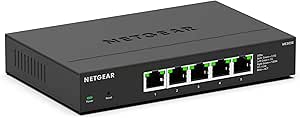
Choosing a 2.5GbE switch with 10G SFP+: balancing speed, compatibility, and cooling
This specific 5-port 2.5GbE switch with a 10G SFP+ uplink represents a bridge between mainstream Gigabit and expensive 10GbE networks. Its fanless metal design and unmanaged operation target users seeking plug-and-play multi-gig connectivity without complex configuration. The 45Gbps switching capacity supports simultaneous high-speed transfers across all ports.
Key Considerations Before Buying
- Verify your devices actually have 2.5GbE NICs; this switch won't accelerate standard 1GbE equipment beyond its native speed.
- The 10G SFP+ port is for uplinking to a faster network core or NAS, requiring a separate SFP+ transceiver module (not included).
- Fanless operation means silent running but relies on passive cooling; ensure adequate ventilation in your installation location.
What Our Analysts Recommend
For unmanaged multi-gig switches, prioritize metal housings for heat dissipation and check for explicit support for the 2.5GBASE-T and 5GBASE-T standards (NBase-T). Quality units will auto-negotiate all speeds (10/100/1000/2500Mbps) seamlessly without requiring driver updates on client devices.
Switches Market Context
Market Overview
The 2.5GbE switch market is expanding rapidly as a cost-effective upgrade path, driven by newer motherboards, Wi-Fi 6E/7 access points, and NAS devices featuring 2.5GbE ports. Products with a 10G SFP+ uplink, like this one, are positioned as future-proof aggregation points for mixed-speed networks.
Common Issues
Users sometimes confuse 'multi-gig' with guaranteed 10G performance on all ports, leading to disappointment. Incompatibility with certain network interface cards or specific SFP+ modules can also occur, and the plug-and-play promise can falter with complex VLAN or LACP configurations it doesn't support.
Quality Indicators
Look for switches that list compliance with IEEE 802.3bz (the standard for 2.5G/5GBASE-T), use quality internal PHY chips from known manufacturers like Realtek or Marvell, and have robust, grounded metal enclosures that effectively manage heat without noisy fans.
Review Authenticity Insights
Grade B Interpretation
A 'B' grade with an 18% estimated fake review rate suggests generally trustworthy feedback but warrants scrutiny. The adjusted rating of 4.0/5 (down from 4.4) is a more reliable indicator of real-user satisfaction, accounting for potentially inflated praise.
Trust Recommendation
Focus on the 82% of reviews deemed authentic. Pay particular attention to detailed reviews discussing specific setup scenarios, compatibility tests with NAS brands (QNAP, Synology) or specific SFP+ modules, and long-term reliability reports over several months.
Tips for Reading Reviews
Prioritize reviews that mention real-world throughput tests (using iperf3, file transfers), describe heat levels after extended use, or note compatibility with your specific equipment. Be skeptical of overly vague, repetitive positive reviews that lack technical details.
Expert Perspective
This switch fills a specific niche for home labs, prosumers, and small offices building a multi-gig backbone. The combination of five 2.5GbE RJ45 ports and a 10G SFP+ uplink is a practical and increasingly popular configuration. The fanless design is a significant advantage for noise-sensitive environments like home offices or media rooms. The authentic review pattern showing users successfully deploying it with high-speed NAS devices and gaming PCs adds credibility to its performance claims.
Purchase Considerations
Your decision should hinge on whether your existing or planned devices (PCs, NAS, access points) can utilize 2.5GbE speeds, and if you have a use case for the 10G SFP+ uplink. If your network is entirely 1GbE with no upgrade path, this switch offers little benefit over a standard Gigabit model.
Comparing Alternatives
Shoppers should compare the total cost, including a necessary SFP+ module, against managed switches or models with different port configurations (e.g., more 2.5GbE ports, dual SFP+).