
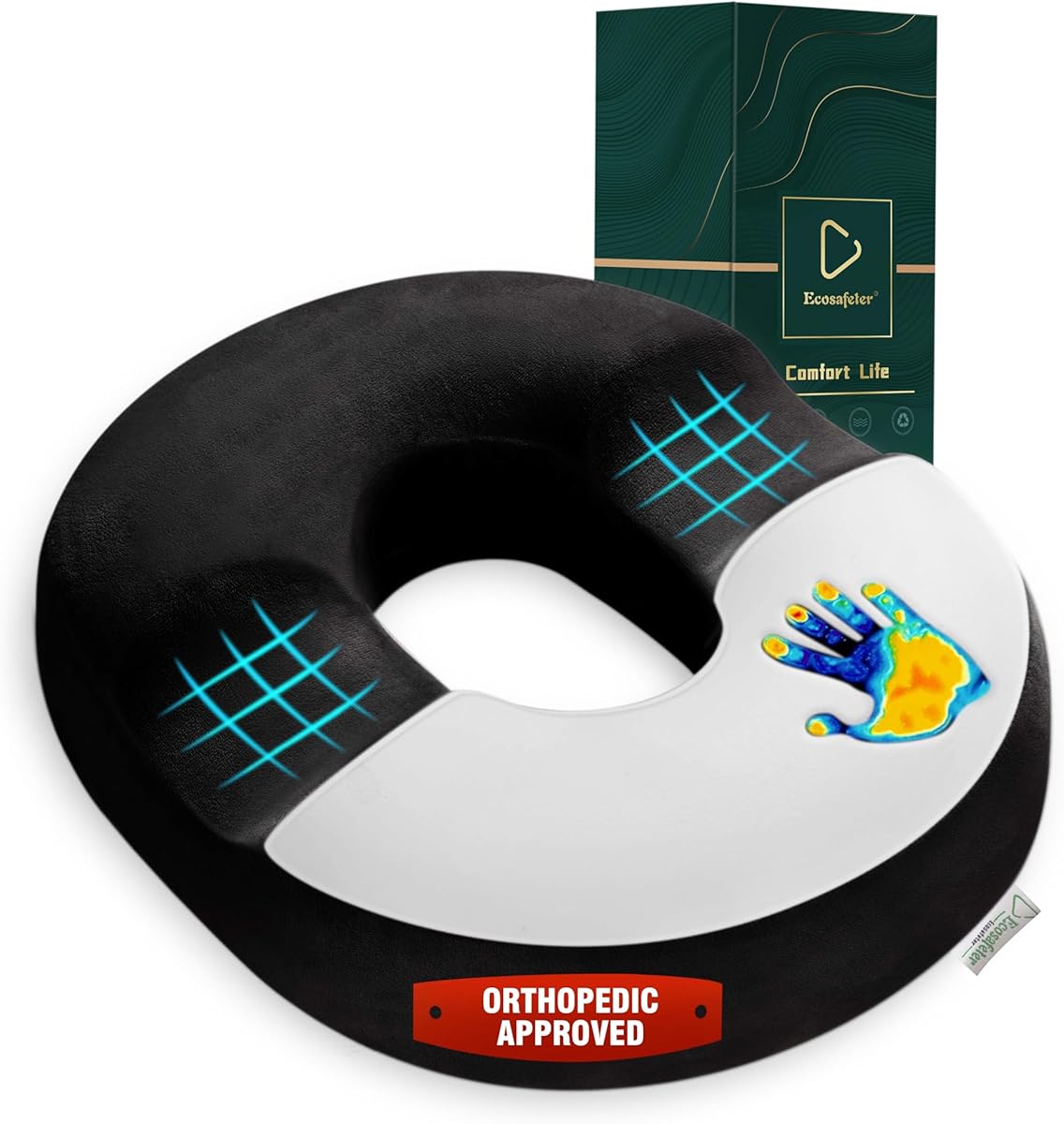
Choosing a Donut Cushion: Memory Foam Quality and Medical Support Considerations
When selecting a donut cushion for hemorrhoid, coccyx, or postpartum relief, the specific construction of this French-market product matters. This cushion uses memory foam rather than basic polyurethane, which affects both pressure redistribution and long-term durability. Understanding how the cutout design interacts with your specific condition is crucial for effective pain management.
Key Considerations Before Buying
- The central cutout design must align precisely with your area of discomfort—whether for coccyx pain, postpartum healing, or hemorrhoid relief—as improper alignment can create pressure points rather than relieve them.
- Memory foam density and responsiveness are critical; too soft and it bottoms out, too firm and it defeats the purpose of pressure relief, especially for prolonged sitting during recovery or office work.
- Consider the cover's breathability and washability, as medical recovery and extended use require hygienic maintenance that doesn't compromise the cushion's structural integrity.
What Our Analysts Recommend
Examine product specifications for memory foam density (typically measured in kg/m³) and the thickness of the base foam layer beneath the memory foam. A quality donut cushion will have a graduated edge that prevents you from sliding into the center hole, maintaining proper pelvic alignment. The cover should be removable with a non-slip bottom to prevent shifting during use.
Back & Seat Cushions Market Context
Market Overview
The therapeutic seat cushion market is crowded with products making similar medical claims, but genuine quality varies significantly between basic foam rings and properly engineered orthopedic supports. French consumers in particular show high demand for products addressing postpartum recovery and office-related discomfort, creating a competitive segment focused on both medical and ergonomic benefits.
Common Issues
Many inexpensive donut cushions suffer from rapid foam compression loss, creating a 'hammock effect' that actually increases pressure on sensitive areas. Poorly designed cutouts can place pressure on the ischial tuberosities (sit bones) rather than relieving them, and non-breathable covers can cause moisture buildup during extended sitting.
Quality Indicators
Look for multi-layer foam construction where a supportive base foam is topped with memory foam, not just a single material. High-quality medical cushions typically feature a contoured, U-shaped cutout rather than a simple round hole, and include a carrying handle for practical portability between home, office, and car.
Review Authenticity Insights
Grade B Interpretation
A Grade B authenticity rating with an estimated 10% fake review rate indicates this product's reviews are generally reliable but require careful reading. The adjusted rating of 4.40/5 (down from 4.67/5) suggests some review inflation exists, but the core feedback from genuine users remains valuable for decision-making.
Trust Recommendation
Focus on the detailed reviews mentioning specific conditions like sciatica, postpartum recovery, or coccyx injuries, as these demonstrate authentic usage. Be slightly more skeptical of overly enthusiastic 5-star reviews that lack specific details about how the cushion addressed particular pain points or recovery timelines.
Tips for Reading Reviews
Prioritize reviews that discuss long-term use (beyond 30 days) to assess durability, and pay special attention to comments about the foam's resilience after months of daily use. Look for mentions of the cover's practicality for washing, as this indicates real-world experience rather than superficial testing.
Expert Perspective
This cushion's strong adjusted rating of 4.40/5 from nearly 1,000 reviews suggests it performs well for its intended medical and ergonomic purposes. The memory foam construction differentiates it from basic polyurethane options, potentially offering better pressure redistribution for conditions like coccyx pain and postpartum recovery. The authenticity analysis indicates that while some review manipulation exists, the overwhelming majority of feedback appears genuine, with users specifically noting relief for hemorrhoids, sciatica, and pressure sores.
Purchase Considerations
Weigh the memory foam's potential for better pressure relief against its typically higher heat retention compared to gel or ventilated foams. Consider whether the cushion's height (implied by memory foam construction) will work with your existing seating, particularly for office chairs with fixed armrests. The product's multiple indicated uses suggest versatility but verify that the specific cutout shape addresses your primary discomfort area.
Comparing Alternatives
Shoppers should compare this memory foam donut design with gel-core cushions for temperature regulation and inflatable options for adjustable firmness and travel convenience.


